
Exoplanets That Can Preserve Their Atmospheres for Billions of Years
Space

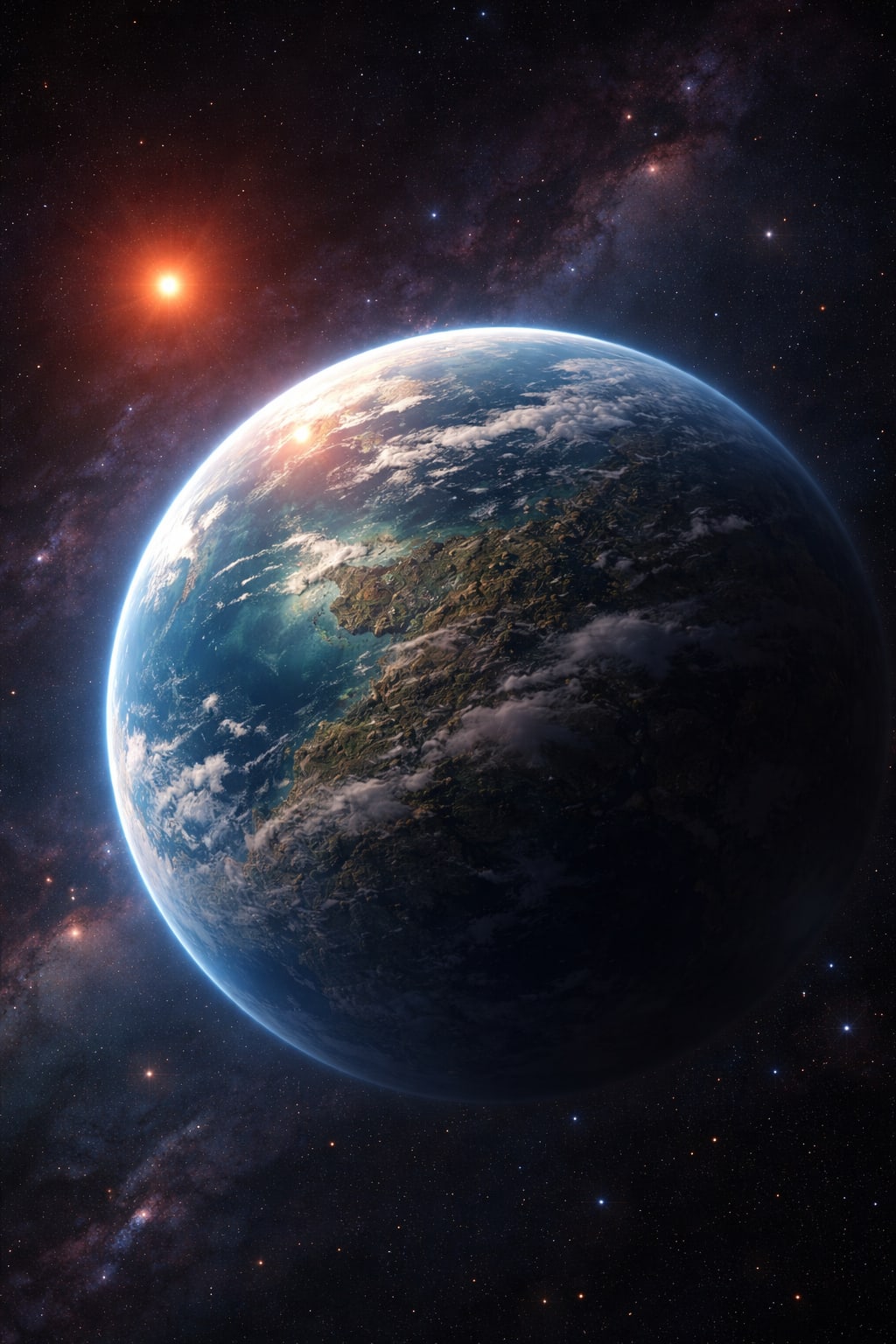
When astronomers talk about potentially habitable worlds, the discussion often centers on surface temperature, liquid water, and orbital distance. Yet there is a more fundamental requirement that receives less public attention: atmospheric longevity. A planet may lie in the so-called habitable zone, but if it cannot retain its atmosphere over geological timescales, its prospects for long-term stability diminish dramatically.
An atmosphere is not a static shell. It is a dynamic, evolving system constantly interacting with stellar radiation, charged particles, internal geology, and even impacts. The question is not simply whether a planet has an atmosphere today—but whether it can keep one for billions of years.
Why Atmospheres Disappear
Planetary atmospheres are vulnerable to several escape mechanisms.
- Thermal escape occurs when gas molecules move fast enough to exceed a planet’s escape velocity. Lighter elements such as hydrogen and helium are especially susceptible. On smaller planets with weak gravity, this process can gradually strip the atmosphere away.
- Photoevaporation is driven by intense ultraviolet and X-ray radiation from the host star. High-energy photons ionize atmospheric particles, giving them enough energy to escape into space.
- Stellar wind stripping represents another threat. Streams of charged particles emitted by the star can erode the atmosphere, particularly if the planet lacks a protective magnetic field.
Finally, large impacts can eject significant portions of atmospheric gas in a single event. Early in a planetary system’s history—when collisions are frequent—this effect can be substantial.
For an atmosphere to survive over billions of years, a planet must counteract or mitigate these processes.
The Role of Planetary Mass
Mass is the most straightforward protective factor. The stronger a planet’s gravity, the more effectively it can hold onto gas molecules.
This is why astronomers are especially interested in **super-Earths, planets between roughly 2 and 10 times the mass of Earth. With higher escape velocities, these worlds can retain volatile compounds far longer than smaller rocky planets.
Consider Kepler-452b, often described as a “super-Earth cousin” of our planet. If it possesses sufficient density and internal activity, its gravitational pull alone could significantly slow atmospheric loss. Similarly, TOI-700 d, located within the habitable zone of its star, may benefit from its mass when it comes to atmospheric retention.
The emerging pattern is clear: slightly larger rocky planets may be more stable over deep time than Earth-sized worlds.
Magnetic Fields as Shields
Gravity alone is not always enough. A global magnetic field can dramatically increase atmospheric survival.
Earth’s magnetosphere deflects much of the solar wind, preventing direct erosion of the upper atmosphere. Mars offers a counterexample. After losing its global magnetic field billions of years ago, the Martian atmosphere became vulnerable to solar wind stripping. Over time, the once thicker atmosphere diminished to a thin envelope incapable of sustaining stable surface water.
For exoplanets, magnetic fields are difficult to detect directly. However, theoretical models suggest that massive rocky planets with molten metallic cores could sustain long-lived dynamo effects. If a super-Earth maintains internal heat and active convection, it may generate a magnetosphere lasting billions of years.
The Influence of the Host Star
The type and age of the host star strongly influence atmospheric stability.
Red dwarf stars (M-type stars) are the most common stars in the galaxy. They live for trillions of years—far longer than Sun-like stars. However, in their youth they emit intense flares and high levels of ultraviolet radiation. Planets orbiting close to these stars, even within the habitable zone, may experience severe atmospheric erosion early in their history.
Yet the situation is nuanced. If a planet is sufficiently massive, or if it begins with a thick primordial atmosphere, it may endure this active phase. Once the star settles into a quieter state, the planet could retain a stable atmosphere for extraordinary durations.
In effect, surviving the first few hundred million years may secure atmospheric stability for trillions.
Hydrogen-Rich Atmospheres: A Revised Perspective
For decades, hydrogen-rich atmospheres were considered unfavorable for life. However, recent modeling has reshaped that view.
Hydrogen is a powerful greenhouse gas under certain pressure conditions. A relatively thick hydrogen envelope can trap heat efficiently, allowing liquid water to exist at greater orbital distances from the host star.
This has led to growing interest in **Hycean planets**—water-rich worlds enveloped in hydrogen-dominated atmospheres. These planets may not resemble Earth, but their atmospheres could remain stable for immense timescales due to both gravitational retention and chemical buffering processes.
In some scenarios, such worlds could preserve surface or subsurface oceans long after Earth itself becomes uninhabitable.
Geological Recycling and Atmospheric Renewal
Even when atmospheric loss occurs, planets are not necessarily passive victims. Internal geology can replenish atmospheric gases.
Volcanism releases carbon dioxide, water vapor, and other volatiles from the mantle. Plate tectonics—if present—regulates the carbon cycle, stabilizing long-term climate through feedback mechanisms.
Earth’s atmospheric stability over 4.5 billion years owes much to this geological recycling. In contrast, Mars, which became geologically inactive relatively early, lost both its magnetic field and much of its atmospheric renewal capacity.
If exoplanets maintain internal heat for extended periods—particularly those with higher mass—they may continue resurfacing and replenishing their atmospheres far longer than Earth.
Observational Evidence and Future Prospects
Modern space telescopes have begun to probe atmospheric composition directly. The James Webb Space Telescope, for example, analyzes exoplanet atmospheres through transmission spectroscopy, identifying molecular signatures such as water vapor, methane, and carbon dioxide.
By measuring atmospheric composition and escape rates, astronomers can estimate whether a planet’s gaseous envelope is stable or transient. In some systems older than 8–10 billion years, planets still exhibit substantial atmospheres—strong evidence of long-term retention.
Future missions aimed at direct imaging and high-resolution spectroscopy will refine these measurements further. Instead of speculation, atmospheric longevity is becoming a measurable parameter.
A Broader Implication
Planets capable of preserving their atmospheres for billions—or even trillions—of years may be common in the galaxy. Super-Earths with strong gravity, sustained magnetic fields, and active geology represent particularly compelling candidates.
The broader implication is significant. If stable atmospheres are not rare, then long-term climate stability may also be widespread. In that case, the window for biological evolution on other worlds could be far longer than the one available on Earth.
Atmospheric survival is not merely a technical detail. It is the foundation of planetary persistence. And in a universe where time spans trillions of years, the worlds that endure may ultimately be the ones that matter most.
About the Creator
Keep reading
More stories from Holianyk Ihor and writers in Futurism and other communities.
The Surprisingly High Abundance of Water Worlds
For years, water worlds were treated as an exotic possibility — scientifically plausible, but statistically rare. Planets dominated by deep global oceans, wrapped in thick atmospheres and layered with high-pressure ice, seemed like outliers in the cosmic inventory. The search for exoplanets focused primarily on “Earth-like” rocky worlds with thin atmospheres and moderate climates. However, as observational data have accumulated, a different picture has emerged. Water-rich planets may not be exceptional at all. They could be one of the most common planetary types in our galaxy.
By Holianyk Ihorabout 14 hours ago in Futurism
GCC 3D Printing Market Analysis: Industry Overview, Key Players & Growth Outlook
According to IMARC Group's latest research publication, the GCC 3D printing market size reached USD 653.7 Million in 2025. The market is projected to reach USD 3,265.5 Million by 2034, exhibiting a growth rate (CAGR) of 18.98% during 2026-2034.
By Abhay Rajputabout 21 hours ago in Futurism
The Saddest Thing - The Billionaires Who Rule America Aren't Even Enjoying Themselves
This single post says more about our ruling class than a thousand policy papers. The saddest thing about today's system is that the men robbing the rest of us - sabotaging our economic prospects, our pensions, our access to affordable healthcare - are not even happy.
By Scott Christenson🌴5 days ago in The Swamp



Comments
There are no comments for this story
Be the first to respond and start the conversation.