
Elon Musk: The Visionary Disruptor of the 21st Century
A Look at the Man Who’s Revolutionizing Industries While Challenging Norms

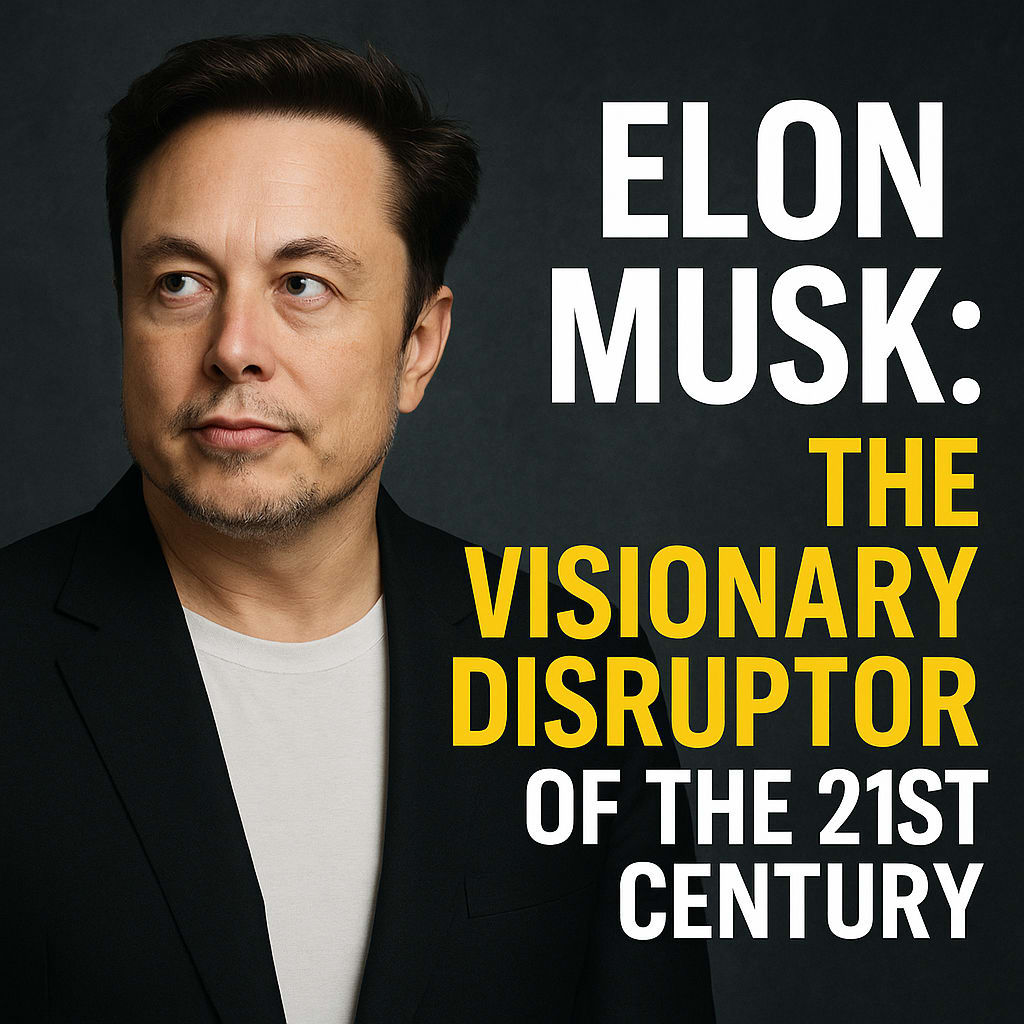
Elon Musk: A Look at the Man Who’s Revolutionizing Industries While Challenging Norms
Elon Musk occupies a singular place in the zeitgeist—equal parts visionary engineer, pop-culture icon, and lightning rod for controversy. In two whirlwind decades he has built (and sometimes broken) rules across automotive, aerospace, energy, neurotech, AI, and social media. Admirers hail him as the greatest innovator since Edison; detractors warn he courts catastrophe with hubris and half-finished ideas. To understand why Musk inspires such devotion and derision, we have to examine the breadth of his disruption—and the norms he so eagerly upends.
From Internet Riches to Rocket Dreams
Born in Pretoria, South Africa, in 1971, Musk showed an early talent for self-taught programming and an almost stubborn refusal to accept limits. After brief stints at Queen’s University and the University of Pennsylvania, he leapt into Silicon Valley’s first internet boom. His web-software startup Zip2 sold to Compaq in 1999 for $307 million. Most thirty-something entrepreneurs might have coasted; Musk funneled his winnings into X.com, an online banking experiment that morphed into PayPal and was acquired by eBay for $1.5 billion in 2002.
Yet it wasn’t money that stoked Musk’s imagination—it was Mars. The prevailing norm in 2002 held that private companies had no business tackling orbital rocketry. Musk rejected that as complacency. He founded SpaceX with a single audacious goal: make humanity a multi-planet species. Industry experts laughed; his engineers slept on factory floors. Three explosions nearly bankrupted the company, but the fourth Falcon 1 launch succeeded in 2008, earning a NASA resupply contract that kept the dream alive. Today, SpaceX’s Falcon 9 boosters land themselves on drone ships, Starlink blankets the globe with satellite internet, and the gargantuan Starship is being prepped for missions once reserved for Apollo-era giants. Musk’s challenge to aerospace orthodoxy—reuse, iterate fast, and risk spectacular failure—has become the new standard for the industry.
Electrifying the Auto Industry
If SpaceX made him a pioneer, Tesla made him a household name. Joining the fledgling EV startup in 2004, Musk faced a car culture enamored with horsepower and cheap gasoline. Electric vehicles, if discussed at all, were dismissed as glorified golf carts. Musk pushed Tesla to make the Roadster, then the Model S—sleek, fast, software-centric cars that proved electrons could outshine premium gasoline. His demand that EVs be desirable, not just dutiful, forced legacy automakers to scramble. By 2023 every major brand, from Ford to Volkswagen, had committed tens of billions toward electrification.
But Tesla’s rise has not been smooth. Musk’s aggressive production timetables create manufacturing miracles—and quality-control nightmares. His Twitter pronouncements have triggered SEC investigations and wiped billions from Tesla’s market cap. Factory workers laud the mission yet complain of burnout culture. In typical Musk fashion, the very practices that accelerate disruption also spark ethical and regulatory alarm bells.
The Twitter—now X—Experiment
In 2022 he executed his most unexpected pivot: purchasing Twitter for $44 billion. Musk framed the move as a defense of “free speech absolutism,” then promptly fired half the staff, reinstated banned accounts, and rebranded the platform as X. His gut-driven approach—rolling out features live, asking users to pay for verification, teasing payments and AI chatbots—broke virtually every rule of cautious product management. Critics argue the platform has become more chaotic, advertisers fled, and content moderation eroded. Yet X still sets news agendas daily, and Musk insists the turmoil is proof of healthy creative destruction. Whether X emerges as the “everything app” he envisions or a cautionary tale about unchecked influence remains an open question.
Neuralink, Boring Company, and the Endless To-Do List
For Musk, disruption is never singular. Neuralink seeks to merge brains with silicon, aiming to cure paralysis and perhaps one day enable “symbiosis” with AI. In January 2024 the company implanted its first human trial device—an achievement greeted with both awe and anxiety over neuro-ethical frontiers. Simultaneously, the Boring Company is digging tunnels beneath Las Vegas while pitching hyperloop transportation elsewhere. On top of that, xAI and its Grok chatbot want to upend the artificial-intelligence race dominated by OpenAI and Google. Each venture attacks entrenched norms—medical-device caution, public-infrastructure bureaucracy, AI alignment orthodoxy—and each attracts regulators determined to slow Musk down.
Leadership Style: Cult of Personality or Catalyst for Progress?
Musk’s modus operandi follows a pattern: set seemingly impossible deadlines, broadcast them publicly, and tolerate enormous stress to hit them—or at least approach them. This “move fast, break stuff, tweet faster” ethos spurs innovation at warp speed, but it also fractures trust with employees, investors, and the public. Former Tesla engineers describe a workplace where weekend emails at 2 a.m. are routine and dissent is unwelcome. Yet many remain, fueled by a sense of mission they say is unmatched elsewhere.
His communication style—unfiltered memes, sarcastic replies, and market-moving statements typed between meetings—defies corporate norms of polished PR. Regulators fine him; fans retweet him. The spectacle ensures that every Musk initiative, from Starship tests to Cybertruck deliveries, enjoys wall-to-wall coverage. Disruption thrives on attention, and Musk commands it better than any CEO alive.
Measuring Impact
Even detractors concede Musk has accelerated electrification, lowered launch costs, and re-energized public enthusiasm for space. The International Energy Agency credits aggressive EV targets—sparked largely by Tesla—for helping global electric-car sales top 17 million in 2024. NASA’s reliance on commercial crew flights saved taxpayers billions. And by proving reusable rockets viable, SpaceX forced competitors like Blue Origin and Europe’s ArianeGroup to rethink designs.
Yet the costs are tangible. Labor activists decry injury rates at Tesla’s Fremont plant. Environmentalists question lithium mining and rocket emissions. Free-speech advocates worry X amplifies extremism, while moderation advocates argue his laissez-faire stance silences vulnerable voices. Musk’s legacy thus oscillates between monumental progress and potential collateral damage.
Conclusion: Disruption’s Double Edge
Elon Musk embodies the paradox of 21st-century innovation: extraordinary breakthroughs paired with boundary-pushing behavior that unsettles society. He revolutionizes industries by refusing to accept their rules, but the same refusal complicates ethics, governance, and even basic civility online. Whether history crowns him as a Da Vinci-like polymath or a cautionary tale of unchecked ego will depend on outcomes still unfolding—Mars landings, fully autonomous Teslas, brain-computer interfaces that heal rather than hack.
For now, one truth is undeniable: Musk has shattered the complacency of sectors once thought impervious to change. In doing so, he forces the rest of us—competitors, regulators, and citizens alike—to decide which norms are worth keeping and which must yield to the audacity of new ideas. That relentless challenge may be his most disruptive contribution of all.
About the Creator
Abid khan
"Writer, dreamer, and lifelong learner. Sharing stories, insights, and ideas to spark connection."
About Binding Prometheus
I want to start actively advocating on behalf of my own work, and the most valuable part of my canon is, without a doubt, Binding Prometheus, the play I have been working on since 2019 and only finished in 2023 as part of my MA. The play itself is an amalgamation of a million different inspirations. On one end, it evokes the Ancient Greek myth-play, deriving its own title from the earliest extant work of Western drama we have, Aeschylus’s Prometheus Bound. On the other end, it borrows significantly from the sci-fi bulwarks from over the years, namely Mary Shelley’s Frankenstein and Karel Capek’s Rossum’s Universal Robots. The play could be an episode of Black Mirror, I fear. I don’t know. I’ve only ever seen one episode of Black Mirror.
By Steven Christopher McKnight18 days ago in Futurism
United States Kitchen Appliance Market Size and Forecast 2025–2033
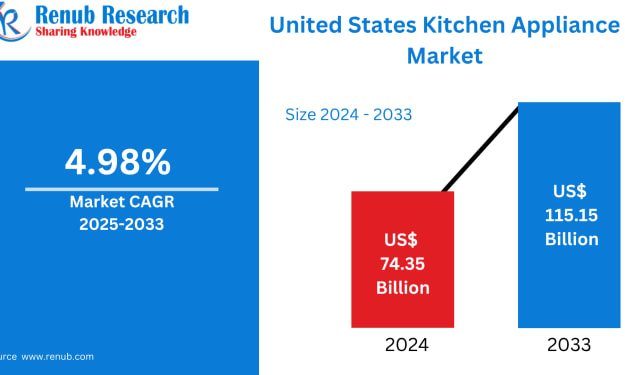
The United States kitchen appliance market is entering a defining decade shaped by innovation, sustainability, and evolving consumer lifestyles. According to Renub Research, the market is projected to reach US$ 115.15 billion by 2033, rising from US$ 74.35 billion in 2024, at a compound annual growth rate (CAGR) of 4.98% during 2025–2033.
By Marthan Sir3 days ago in Futurism
Wild Card Weekend Recap: What Happens Now?
I think I figured out why I love Wild Card Weekend so much. It's because it's the first playoff anything of the calendar year. The NFL season starts in the fall, and once upon a time, the champion was crowned either on or slightly before New Year's. The evolution of the NFL schedule has resulted in the playoffs starting just into the New Year, and currently, the final week of the season falls on the first weekend of the New Year, with Wild Card Weekend coming a week after that. So yes, chronologically, the NFL's Wild Card Weekend serves as the first playoff anything of the calendar year.
By Clyde E. Dawkins6 days ago in Unbalanced


Comments
There are no comments for this story
Be the first to respond and start the conversation.