
Egypt Textiles and Apparel Market: Fashion Demand, Production Expansion & Industry Trends
How Manufacturing Expansion and Export Demand Are Transforming the Egypt Textiles and Apparel Market

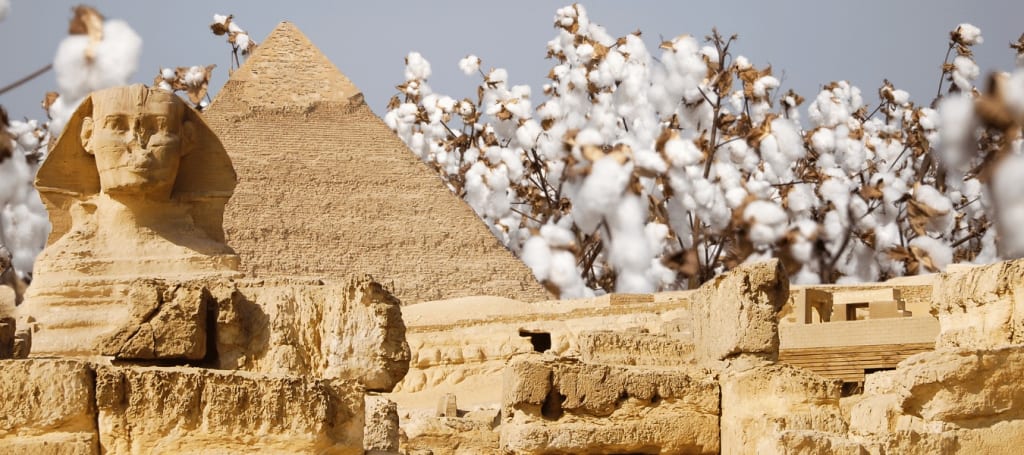
According to IMARC Group's latest research publication, Egypt textiles and apparel market size reached USD 23,538.3 Million in 2024. The market is projected to reach USD 36,924.5 Million by 2033, exhibiting a growth rate of 5.13% during 2025-2033.
How AI is Reshaping the Future of Egypt Textiles and Apparel Market
- Automated Quality Inspection: AI-powered vision systems detect fabric defects, color variations, and stitching errors instantly during production, reducing waste by up to 50% while maintaining consistent quality standards.
- Predictive Maintenance: Machine learning algorithms monitor equipment performance in real-time, predicting loom and spindle failures days in advance, cutting unplanned downtime significantly across textile mills.
- Demand Forecasting and Inventory Optimization: Advanced analytics process sales patterns, seasonal trends, and consumer behavior to predict demand accurately, helping manufacturers reduce excess stock and improve cash flow.
- Smart Manufacturing and Process Control: AI systems adjust yarn tension, weave density, and machine parameters autonomously, ensuring consistent fabric specifications regardless of environmental variations and operator changes.
- Supply Chain Intelligence: Digital platforms powered by AI streamline raw material procurement, production scheduling, and logistics coordination, enabling faster response to market demands and reducing lead times.
How Vision 2030 is Revolutionizing Egypt Textiles and Apparel Industry
Egypt Vision 2030 is transforming the textiles sector through ambitious infrastructure projects and strategic industrial planning. The government is establishing two integrated textile cities in Minya and Fayyoum, each spanning 5.5 million square meters, expected to attract USD 3.5 billion in investment and boost textile exports to USD 11.5 billion. Wadi Al-Asria in Minya will become Upper Egypt's first textile-dedicated city with EGP 12 billion in construction investments. The Ningxia Mankai project alone will cover over 3 million square meters hosting nearly 600 factories with USD 9 billion in investments. These cities will encompass the full textile value chain from spinning and weaving to dyeing and garments, featuring training schools, R&D hubs, logistics zones, and investor support centers. Industry currently contributes 14% to GDP, with targets to raise this above 20%, positioning Egypt as a regional manufacturing hub.
Egypt Textiles and Apparel Market Trends & Drivers:
The Egyptian textiles market is experiencing strong momentum driven by modernization initiatives and strategic positioning. With over 2,500 garment factories employing 1.5 million workers, the sector represents 34% of industrial production, 8% of exports, and 3.4% of GDP. The government's Sustainable Development Strategy supports industry improvement through modernization programs and greater integration between textiles and apparel segments. The Suez Canal Economic Zone has become a critical hub, with a USD 10 million Jiangsu Guotai facility launched to produce 4 million garments annually for European fast-fashion chains. Over 700 QIZ-certified exporters benefit from preferential trade gateways to the United States and Europe, reinforcing Egypt's cost and speed-to-market advantages. Turkish relocations and regional near-shoring investments continue strengthening production capacity and attracting foreign capital to Egyptian textile facilities.
Automation and digital transformation are revolutionizing production capabilities across Egypt's textile landscape. Manufacturers are adopting advanced technologies including 3D printing, computer-aided design, computer-aided manufacturing, and robotics to streamline operations and reduce labor costs. The Ministry of Public Business Sector announced a textile factory in Mahalla al-Kubra targeting 188,000 tonnes of annual yarn production and 198 million meters of textiles. The Suez Canal Economic Zone partnered with TEDA-Egypt to construct a USD 60 million eco-friendly textile factory specializing in smart manufacturing techniques. Digital Production Management systems utilizing Internet of Things sensors and advanced analytics now provide production managers with real-time key performance indicators, enhancing transparency and enabling data-driven decisions that optimize efficiency and quality control throughout manufacturing processes.
Sustainability and export diversification are reshaping market strategies and opening new growth opportunities. Premium Giza cotton is staging a rebound with traceability premiums and sustainability pledges from European retailers, with farm-gate prices rising 18% following quality-based auctions. Manufacturers are implementing eco-friendly practices including organic materials, reduced water consumption, and fair labor standards throughout supply chains. Egypt aims to reach USD 20 billion in apparel exports, targeting new markets beyond traditional regions including Africa, Asia, and Latin America. E-commerce expansion through smartphones, internet connectivity, and digital payment systems is transforming retail landscapes. Textile manufacturers leverage online platforms, social media marketing, and influencer partnerships to reach broader audiences and increase sales, while export-oriented strategies capitalize on global supply chain realignments favoring Egypt's strategic geographical advantages.
Stay Ahead with Updated 2026 Market Intelligence
Egypt Textiles and Apparel Market Industry Segmentation:
The report has segmented the market into the following categories:
Material Type Insights:
- Natural
- Cotton
- Silk
- Others
- Synthetic
- Nylon
- Polyester
- Others
Application Insights:
- Clothing Textiles
- Technical Textiles
- Fashion Textiles
- Home-Decor Textiles
- Others
Regional Insights:
- Greater Cairo
- Alexandria
- Suez Canal
- Delta
- Others
Competitive Landscape:
The market research report has also provided a comprehensive analysis of the competitive landscape. Competitive analysis such as market structure, key player positioning, top winning strategies, competitive dashboard, and company evaluation quadrant has been covered in the report. Also, detailed profiles of all major companies have been provided.
Recent News and Developments in Egypt Textiles and Apparel Market
- January 2024: Mahmoud Esmat, Egypt's Minister of Public Business Sector, announced the imminent opening of a textile factory in Mahalla al-Kubra. This initiative, part of Egypt's textile industry development project, aims to increase annual yarn production to 188,000 tonnes and textiles to 198 million meters.
- August 2023: SCZONE and TEDA-Egypt initiated the construction of a USD 60 million eco-friendly textile factory, Egypt Cady Textiles, at the Sokhna Integrated Industrial Zone. The foundation stone laying ceremony marked the collaboration between the two entities to establish the factory, which aims to bolster Egypt's textile industry.
Note: If you require specific details, data, or insights that are not currently included in the scope of this report, we are happy to accommodate your request. As part of our customization service, we will gather and provide the additional information you need, tailored to your specific requirements. Please let us know your exact needs, and we will ensure the report is updated accordingly to meet your expectations.
About the Creator
Abhay Rajput
I am working in market research company that provides market and business research intelligence across the globe.
Keep reading
More stories from Abhay Rajput and writers in Futurism and other communities.
Egypt Hospitality Market: Leisure Tourism Boom, Service Innovation & Forecast
According to IMARC Group's latest research publication, Egypt hospitality market size reached USD 6,101.5 Million in 2024. The market is projected to reach USD 8,820.6 Million by 2033, exhibiting a growth rate of 4.18% during 2025-2033.
By Abhay Rajput4 days ago in Futurism
About Binding Prometheus
I want to start actively advocating on behalf of my own work, and the most valuable part of my canon is, without a doubt, Binding Prometheus, the play I have been working on since 2019 and only finished in 2023 as part of my MA. The play itself is an amalgamation of a million different inspirations. On one end, it evokes the Ancient Greek myth-play, deriving its own title from the earliest extant work of Western drama we have, Aeschylus’s Prometheus Bound. On the other end, it borrows significantly from the sci-fi bulwarks from over the years, namely Mary Shelley’s Frankenstein and Karel Capek’s Rossum’s Universal Robots. The play could be an episode of Black Mirror, I fear. I don’t know. I’ve only ever seen one episode of Black Mirror.
By Steven Christopher McKnight19 days ago in Futurism



Comments
There are no comments for this story
Be the first to respond and start the conversation.