
Digital Camera Market Size, Growth Trends & Forecast 2026–2034
Technological Innovation, Social Media Influence, and Professional Imaging Fuel Global Market Expansion


Digital Camera Market Outlook at a Glance
The global digital camera market is poised for steady growth over the next decade, reflecting renewed consumer interest in high-quality imaging and video creation. According to Renub Research, the Digital Camera Market is expected to reach US$ 14.42 billion by 2034, up from US$ 9.52 billion in 2025, expanding at a CAGR of 4.72% from 2026 to 2034.
Market momentum is being driven by the rising demand for professional photography, social media content generation, and high-resolution imagery across personal, commercial, and creative applications. Rapid technological innovation—such as mirrorless systems, 4K/8K video recording, Wi-Fi connectivity, AI-powered autofocus, and compact designs—is redefining what modern digital cameras can achieve, attracting both professionals and everyday creators.
Digital Camera Industry Overview
Unlike traditional film cameras, digital cameras capture images and videos electronically, enabling instant viewing, editing, and sharing. Equipped with advanced sensors, processors, lenses, and displays, digital cameras range from basic point-and-shoot models to professional-grade DSLRs and mirrorless systems used in filmmaking, journalism, advertising, and online content creation.
Key features such as high-resolution sensors, optical zoom, image stabilization, wireless connectivity, and cinematic video recording make digital cameras indispensable tools in photography, videography, surveillance, e-commerce, and digital storytelling. Their flexibility, convenience, and superior image quality continue to position them as a preferred choice over traditional imaging solutions.
The market’s evolution is closely tied to the rise of the creator economy, expanding tourism, digital marketing, and the need for visual storytelling across social platforms and commercial channels.
Key Growth Drivers of the Digital Camera Market
1. Rapid Technological Advancements
Technological innovation remains the backbone of digital camera market growth. Modern cameras now feature full-frame sensors, mirrorless designs, faster processors, advanced image stabilization, and AI-assisted autofocus, significantly improving performance for both still photography and video.
Innovations such as high-speed continuous shooting, low-light optimization, and 4K/8K video recording are expanding the use of cameras in vlogging, livestreaming, and filmmaking. Wireless connectivity through Wi-Fi and Bluetooth enables instant content sharing and remote operation—an essential feature for creators on the go.
In July 2024, Canon introduced the EOS R1 and EOS R5 Mark II, showcasing major breakthroughs in sensor technology and autofocus performance, setting new benchmarks for professional imaging equipment. Compact, lightweight designs further enhance portability without compromising quality, making high-performance cameras more accessible across segments.
2. Social Media & Content Creation Boom
The explosive growth of platforms such as Instagram, TikTok, YouTube, Twitch, and Facebook Reels has transformed digital cameras into essential tools for content creators. Influencers, vloggers, educators, and brands demand superior video clarity, fast autofocus, and cinematic depth that smartphones cannot consistently deliver.
The rise of influencer marketing, livestreaming, and user-generated content has accelerated adoption of mirrorless and DSLR cameras. Millennials and Gen Z, in particular, prioritize visual aesthetics, storytelling, and production quality—driving demand for advanced imaging devices that enhance audience engagement.
From travel blogging and lifestyle documentation to product photography and online retail, digital cameras now support an expanding ecosystem of creative and commercial applications.
3. Professional Photography & Media Expansion
The global expansion of media, entertainment, advertising, tourism, and corporate branding continues to sustain demand for professional imaging equipment. Photographers, filmmakers, journalists, and studios rely on high-performance cameras to deliver precise, high-resolution visuals across platforms.
Corporate marketing, fashion shoots, event coverage, and real estate photography increasingly depend on advanced digital cameras with superior sensors, optical performance, and video capabilities. Photography education, workshops, and creative communities further drive adoption among aspiring professionals.
With continuous upgrades in low-light performance, stabilization, and AI-powered shooting, digital cameras remain essential productivity tools for professionals worldwide.
Challenges in the Digital Camera Market
Competition from Smartphones
Smartphones present the most significant challenge to the digital camera market. Modern devices now feature multi-lens systems, AI-enhanced photography, optical stabilization, and 4K/8K video, meeting the needs of casual users.
Their convenience, portability, and seamless integration with social platforms have led to declining demand for compact and entry-level cameras. To remain competitive, manufacturers must continue differentiating their products with professional-grade quality, interchangeable lenses, and advanced imaging capabilities that smartphones cannot replicate.
High Cost of Advanced Cameras
Premium digital cameras—especially full-frame mirrorless systems and DSLRs—require significant investment, including lenses and accessories. This limits accessibility for beginners and price-sensitive consumers, particularly in emerging markets.
Economic fluctuations, import duties, and regional pricing disparities further impact affordability. While professionals remain willing to invest, manufacturers face ongoing pressure to balance innovation, performance, and competitive pricing.
Regional Market Insights
United States Digital Camera Market
The U.S. market remains strong due to a culture of content creation, professional photography, and social media usage. Influencers, vloggers, and filmmakers continue to adopt advanced mirrorless and DSLR cameras for superior results.
Leading brands such as Canon, Nikon, Sony, and GoPro benefit from robust retail networks and e-commerce platforms. Although smartphone competition persists, professional and creative demand ensures stable growth.
Germany Digital Camera Market
Germany’s market is shaped by a technologically savvy consumer base and a strong tradition of photography. Hobbyists and professionals prioritize optical precision, durability, and innovation, supporting demand for premium models.
Brands like Leica, Sony, Canon, and Nikon enjoy strong loyalty, while photography education and creative studios promote advanced camera adoption.
China Digital Camera Market
China is among the fastest-growing digital camera markets, fueled by rising disposable income, influencer culture, and booming e-commerce. Cameras are widely used for livestreaming, product photography, vlogging, and social content creation.
Domestic players like DJI and Xiaomi compete with global leaders such as Canon and Sony, offering technology-rich models across price tiers. Despite smartphone competition, professional and creative demand continues to surge.
Saudi Arabia Digital Camera Market
Saudi Arabia’s digital camera market is expanding due to growing tourism, social media influence, and professional photography demand. Event coverage, real estate marketing, and cultural documentation drive sales of mirrorless and DSLR systems.
Strong retail presence, rising e-commerce adoption, and increasing interest in content creation position Saudi Arabia as a high-potential emerging market.
Recent Developments in the Digital Camera Market
July 2025: Canon celebrated the 20th anniversary of its EOS 5 series, highlighting AI-powered upgrades in the EOS R5 Mark II
April 2025: Canon implemented automated camera and lens manufacturing to boost production efficiency
January 2025: CIPA reported an 11% rise in global compact camera shipments, with China leading growth
July 2024: Leica launched the D-Lux 8 compact camera with improved usability and ergonomic design
June 2024: Nikon introduced the NIKKOR Z 35mm f/1.4 lens for professional full-frame cameras
May 2024: LVMH partnered with Alibaba to integrate AI solutions across retail operations in China, enhancing customer experience and supply chain efficiency
Market Segmentation Overview
By Product Type
DSLR
Digital Rangefinders
Line-Scan Camera Systems
Compact Digital Cameras
Bridge Cameras
Integration Cameras
By Lens Type
Built-in Lens Cameras
Interchangeable Lens Cameras
By Geography
North America: U.S., Canada
Europe: France, Germany, Italy, Spain, UK, Belgium, Netherlands, Turkey
Asia Pacific: China, Japan, India, South Korea, Thailand, Malaysia, Indonesia, Australia, New Zealand
Latin America: Brazil, Mexico, Argentina
Middle East & Africa: Saudi Arabia, UAE, South Africa
Key Players in the Global Digital Camera Market
All major players are analyzed across five viewpoints: business overview, key personnel, recent developments, SWOT analysis, and financial insights.
Canon Inc.
Nikon Corporation
Sony Corporation
Panasonic Corporation
Olympus Corporation
Final Thoughts
The global digital camera market is entering a new era of transformation, driven by technology, creativity, and the expanding digital economy. While smartphones dominate casual photography, professional and enthusiast demand continues to grow, fueled by social media, content creation, and commercial imaging needs.
With a projected market size of US$ 14.42 billion by 2034, digital cameras are no longer just photography tools—they are essential devices for storytelling, branding, and digital engagement. Companies that balance innovation, affordability, and user experience will lead the next phase of growth in this evolving industry.
About the Creator
jaiklin Fanandish
Jaiklin Fanandish, a passionate storyteller with 10 years of experience, crafts engaging narratives that blend creativity, emotion, and imagination to inspire and connect with readers worldwide.
Keep reading
More stories from jaiklin Fanandish and writers in Futurism and other communities.
Cloud Services Brokerage Market Size and Forecast 2026–2034
Introduction: The Rise of Cloud Intermediaries in a Multi-Cloud World The global Cloud Services Brokerage (CSB) Market is entering a decisive growth phase as enterprises worldwide struggle to manage increasingly complex cloud ecosystems. According to Renub Research, the market is projected to expand from US$ 14.22 billion in 2025 to US$ 50.14 billion by 2034, registering a strong CAGR of 15.03% during 2026–2034.
By jaiklin Fanandishabout 12 hours ago in Futurism
About Binding Prometheus
I want to start actively advocating on behalf of my own work, and the most valuable part of my canon is, without a doubt, Binding Prometheus, the play I have been working on since 2019 and only finished in 2023 as part of my MA. The play itself is an amalgamation of a million different inspirations. On one end, it evokes the Ancient Greek myth-play, deriving its own title from the earliest extant work of Western drama we have, Aeschylus’s Prometheus Bound. On the other end, it borrows significantly from the sci-fi bulwarks from over the years, namely Mary Shelley’s Frankenstein and Karel Capek’s Rossum’s Universal Robots. The play could be an episode of Black Mirror, I fear. I don’t know. I’ve only ever seen one episode of Black Mirror.
By Steven Christopher McKnight24 days ago in Futurism
Laptop Market Size and Forecast 2025–2033: Global Industry Outlook, Growth Drivers, and Future Trends
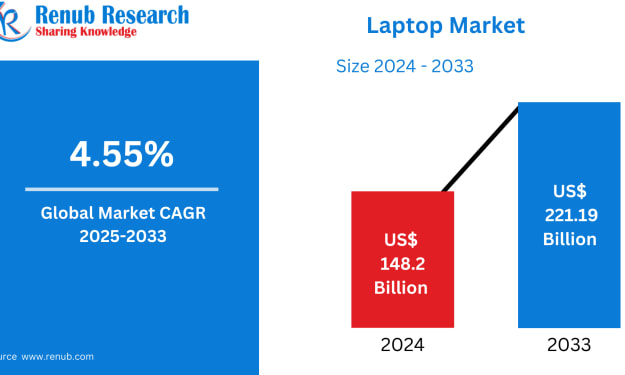
Global Laptop Market Outlook 2025–2033 The Global Laptop Market is entering a new phase of sustained growth, driven by evolving work cultures, rapid digital transformation, and rising demand for portable computing solutions. According to Renub Research, the global laptop market was valued at US$ 148.2 billion in 2024 and is expected to reach US$ 221.19 billion by 2033, growing at a CAGR of 4.55% from 2025 to 2033.
By Aaina Oberoi2 days ago in Futurism



Comments
There are no comments for this story
Be the first to respond and start the conversation.