


Imagine embarking on a journey so long that no one who starts it will ever see its end. A voyage lasting not decades or centuries, but an entire millennium. As humanity begins to dream more seriously about interstellar travel, the idea of a 1,000 year mission once the stuff of science fiction is becoming a question of science, engineering, psychology, and even philosophy. Could we really survive such a journey?
A One-Way Trip into the Unknown
To put it in perspective, a thousand years is longer than the lifespan of many civilizations. From the fall of the Roman Empire to today spans roughly 1,500 years. A 1,000 year space voyage would mean entire generations living and dying aboard a ship, never knowing anything beyond the metal walls and artificial skies of their floating home.
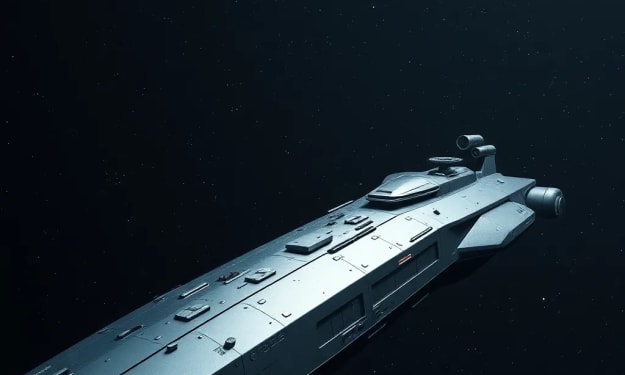
This is the concept of a generation ship a self contained world where society must function in isolation. People would be born, grow up, and pass on the mission to their children, and so on for countless generations. It would become a civilization detached from Earth, evolving on its own path.
Biology in Isolation: Staying Healthy Over Centuries
One of the biggest threats in such a closed environment is genetic degradation. A small initial population, if not carefully managed, could lead to inbreeding and the rise of genetic disorders. Studies suggest that a minimum of 1,000 to 5,000 genetically diverse individuals would be needed to preserve a healthy gene pool over the course of the journey.
And then there’s the question of sustaining life without Earth. The ship would require a fully closed-loop ecosystem recycling waste, purifying air and water, and producing food internally. A real-world experiment, Biosphere 2, attempted to simulate such a system in Arizona. Though not without challenges and failures, the project offered valuable insights into what such a closed biosphere might require.
Mental Resilience: How Not to Lose Our Minds
Biological survival is only part of the puzzle. What about the mental health of people who live their entire lives aboard a ship, never seeing a horizon, a sunset, or even real weather?
Life in a confined, repetitive environment can lead to depression, aggression, and emotional stagnation. Now imagine this stretched over generations. To address this, researchers propose the use of virtual reality, engaging educational systems, and dynamic entertainment to stimulate the mind and foster community. Some even suggest the need for a new cultural philosophy, one where meaning is found not in the destination but in the journey itself.
A new mythology might arise: the ship as a sacred home, the mission as a collective purpose, and the stars as distant gods guiding their path.
Technology to the Rescue: Sleeping Through the Centuries?
There’s another possible approach: hibernation or suspended animation. If humans could be safely frozen and revived centuries later, we might avoid many of the sociological and psychological problems altogether. While still science fiction today, cryogenics and metabolic suppression are areas of active research.
Alternatively, a ship could be designed to be self-evolving. It could adapt to its environment, repair itself, and possibly even “learn.” Such a system would integrate advanced AI, robotics, and biotechnology effectively creating a ship that is not just a vehicle, but a living system in itself.
Is the Goal Worth the Cost?
A thousand-year journey is not a casual venture. The destination must be truly worth it perhaps the colonization of another habitable planet. This is not about tourism or exploration. It’s about the survival of the species.
But the deeper question is this: can we build a society capable of such delayed gratification? A culture where people willingly live their lives for the sake of a goal they will never personally reach? That’s no longer a scientific question it’s an ethical, even spiritual one.
So, Could We Survive?
The short answer: yes, theoretically.
With the right combination of technology, population planning, cultural adaptation, and psychological support, humanity could endure a 1,000-year journey through the stars. It would require commitment unlike anything we’ve ever seen before. A fusion of engineering precision, social cohesion, and unwavering faith in the future.
But it’s possible. And maybe just maybe a thousand years from now, descendants of Earth will step onto the soil of a distant world. They will breathe alien air, see unfamiliar stars, and look back at their ship the ark that carried them across the abyss.
They will be the living proof that humanity can dream beyond time.
About the Creator
Keep reading
More stories from Holianyk Ihor and writers in Futurism and other communities.
How to Navigate Intergalactic Space: The Future of Cosmic Navigation
Traveling between galaxies isn’t just the stuff of science fiction it’s one of the most complex scientific and engineering challenges humanity may ever face. Among the many hurdles we’ll have to overcome, one of the biggest is this: how do you know where you’re going when you’re surrounded by near total emptiness? Without familiar reference points like planets, stars, or even nearby galaxies, how can we determine our direction in the vast void between galactic realms?
By Holianyk Ihor7 months ago in Futurism
About Binding Prometheus
I want to start actively advocating on behalf of my own work, and the most valuable part of my canon is, without a doubt, Binding Prometheus, the play I have been working on since 2019 and only finished in 2023 as part of my MA. The play itself is an amalgamation of a million different inspirations. On one end, it evokes the Ancient Greek myth-play, deriving its own title from the earliest extant work of Western drama we have, Aeschylus’s Prometheus Bound. On the other end, it borrows significantly from the sci-fi bulwarks from over the years, namely Mary Shelley’s Frankenstein and Karel Capek’s Rossum’s Universal Robots. The play could be an episode of Black Mirror, I fear. I don’t know. I’ve only ever seen one episode of Black Mirror.
By Steven Christopher McKnight14 days ago in Futurism
GCC Coconut Water Market: Retail Expansion, Brand Penetration & Growth Drivers
According to IMARC Group's latest research publication, GCC Coconut Water Market size was valued at USD 340.55 Million in 2025 and is projected to reach USD 597.78 Million by 2034, growing at a compound annual growth rate of 6.45% from 2026-2034.
By Abhay Rajput7 days ago in Futurism



Comments
There are no comments for this story
Be the first to respond and start the conversation.