
How to Navigate Intergalactic Space: The Future of Cosmic Navigation
Space

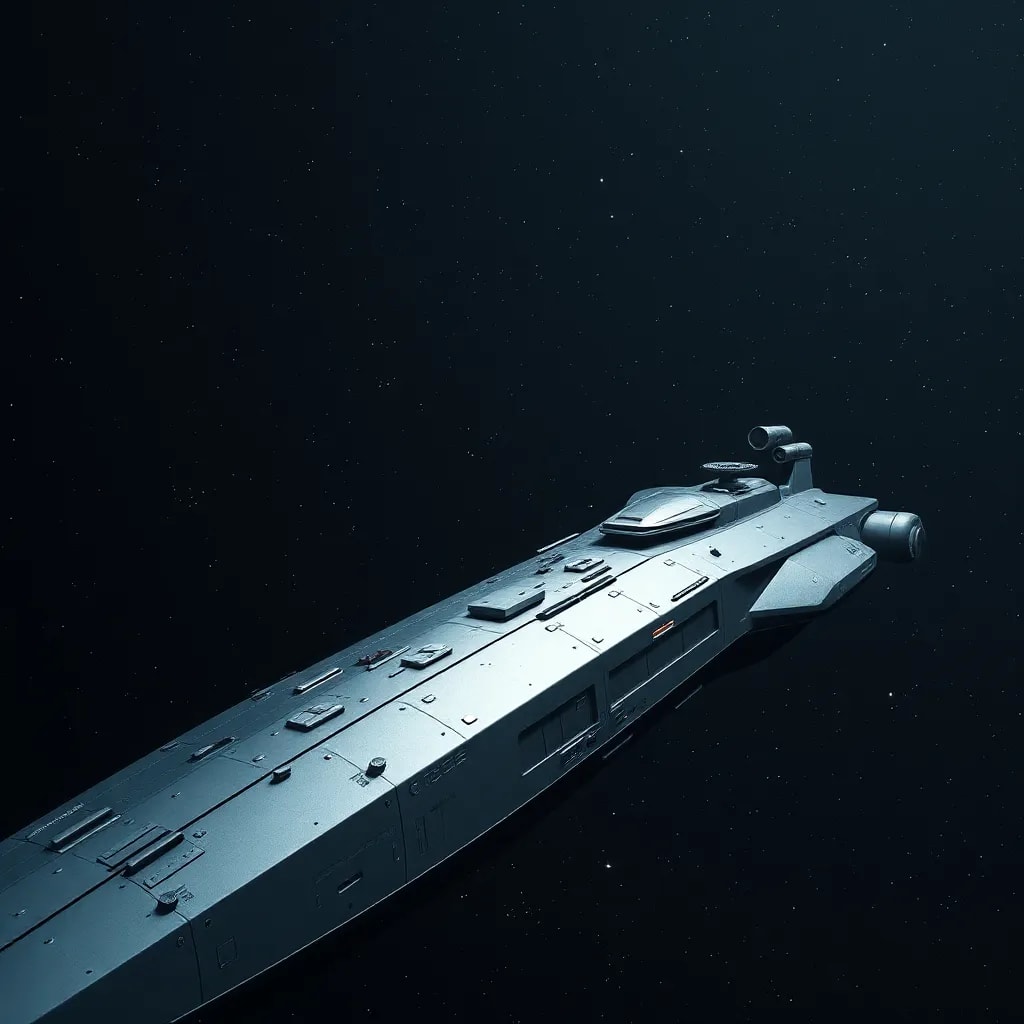
Traveling between galaxies isn’t just the stuff of science fiction it’s one of the most complex scientific and engineering challenges humanity may ever face. Among the many hurdles we’ll have to overcome, one of the biggest is this: how do you know where you’re going when you’re surrounded by near total emptiness? Without familiar reference points like planets, stars, or even nearby galaxies, how can we determine our direction in the vast void between galactic realms?
Let’s explore the mind-bending possibilities of intergalactic navigation and how future travelers might find their way in the darkness between the stars.
The Problem of Scale
Here on Earth, we use GPS, magnetic compasses, and celestial bodies to orient ourselves. In our Solar System, space probes rely on signals from Earth or reference the positions of known stars and pulsars. But once you venture beyond the edges of the galaxy, none of those systems work anymore.
There are no satellites. No reliable signals from Earth. And often, not even nearby stars. Just endless darkness dotted with the occasional photon drifting through space. Direction becomes a matter of deep cosmic understanding not just technology.
Intergalactic Compasses: Pulsars and Quasars
One of the most promising navigation aids in deep space are millisecond pulsars neutron stars spinning incredibly fast, emitting regular radio pulses like natural lighthouses. These cosmic beacons are so precise they’ve been called "the Universe’s atomic clocks."
If a spacecraft can detect enough of these pulsars, especially in galactic halos or intergalactic voids, it can triangulate its position with surprising precision. Scientists estimate such a system could pinpoint location to within just a few kilometers an extraordinary feat on a cosmic scale.
Another natural landmark is the quasar some of the brightest and most distant objects in the known universe. Because of their immense distance and fixed positions, quasars serve as stable points on the cosmic horizon. In fact, modern astronomy already uses them to build the International Celestial Reference System (ICRS). They could be key to helping intergalactic ships maintain orientation.
Cosmic Microwave Background: Echoes of the Beginning
Another fascinating tool for navigation might be the Cosmic Microwave Background Radiation (CMB) a faint glow left over from the Big Bang. This radiation is evenly spread across the universe but contains subtle temperature variations called anisotropies.
If a spacecraft were equipped with sensors sensitive enough to detect these fluctuations, it could use the CMB as a kind of cosmic map, orienting itself based on the "echo" of the universe’s origin. It's like navigating using the ripples of time itself.
Riding the Cosmic Web
Cosmologists describe the large-scale structure of the universe as a cosmic web a vast network of filaments composed of dark matter, galaxies, and gas. Future spacecraft might be able to follow these filaments like train tracks, minimizing energy use and gravitational resistance as they glide from galaxy to galaxy.
Even more fascinating, dark matter distorts light through gravitational lensing. By precisely measuring these distortions, ships could not only identify their location but predict optimal paths based on how spacetime itself is bent.
Inertial Navigation on a Quantum Scale
Just like modern aircraft and submarines use gyroscopes and accelerometers for inertial navigation, intergalactic ships will need similar systems but on a much higher level. These systems must remain stable over vast distances and time periods, possibly using quantum level technology to eliminate noise and drift.
Atomic clocks, already used in GPS satellites, could be upgraded and synchronized with external cosmic signals like pulsars to maintain hyper accurate time and position tracking even after decades or centuries of travel.
AI as a Celestial Navigator
With so many variables at play cosmic radiation, gravitational lensing, pulsar timing, dark matter distributions navigation becomes a task far beyond the capabilities of human pilots.
This is where Artificial Intelligence becomes essential. A ship’s AI would process astronomical data in real time, compare observations to dynamic 3D maps of the universe, and suggest or correct trajectories. Think of it not just as an autopilot, but as a galactic cartographer, capable of guiding travelers through the most remote regions of the cosmos where there is nothing but vacuum, photons, and time itself.
Conclusion: Reading the Cosmic Clues
Determining direction in intergalactic space isn’t a job for a single instrument it’s a symphony of physics, engineering, and imagination. From pulsar triangulation to the glow of the Big Bang, the universe offers subtle clues for those who know where to look.
One day, when humanity (or its AI descendants) sets out beyond the Milky Way, it won’t be flying blind. The tools to find our way already exist in the cosmos we just need to learn to read them.
Even in the darkest corners of the universe, there is always a way forward.
About the Creator
Keep reading
More stories from Holianyk Ihor and writers in Futurism and other communities.
Can We “Put a Crew to Sleep” During a Galactic Voyage?
When we imagine humanity’s future among the stars, our minds leap to advanced propulsion systems, cosmic radiation shields, and the challenges of navigating the vastness of space. But there’s one fundamental problem that overshadows all the others: time. Even with the most cutting edge propulsion technology we can conceive, a journey to the nearest star could take decades or longer. And that’s just the beginning if we’re talking about galactic travel spanning thousands of light years.
By Holianyk Ihor7 months ago in Futurism
About Binding Prometheus
I want to start actively advocating on behalf of my own work, and the most valuable part of my canon is, without a doubt, Binding Prometheus, the play I have been working on since 2019 and only finished in 2023 as part of my MA. The play itself is an amalgamation of a million different inspirations. On one end, it evokes the Ancient Greek myth-play, deriving its own title from the earliest extant work of Western drama we have, Aeschylus’s Prometheus Bound. On the other end, it borrows significantly from the sci-fi bulwarks from over the years, namely Mary Shelley’s Frankenstein and Karel Capek’s Rossum’s Universal Robots. The play could be an episode of Black Mirror, I fear. I don’t know. I’ve only ever seen one episode of Black Mirror.
By Steven Christopher McKnight13 days ago in Futurism
GCC Drones Market: Security Needs, Infrastructure Monitoring & Industry Growth
According to IMARC Group's latest research publication, GCC Drones Market size reached USD 666.4 Million in 2025. Looking forward, IMARC Group expects the market to reach USD 2,083.1 Million by 2034, exhibiting a growth rate (CAGR) of 13.50% during 2026-2034.
By Abhay Rajput5 days ago in Futurism



Comments
There are no comments for this story
Be the first to respond and start the conversation.