

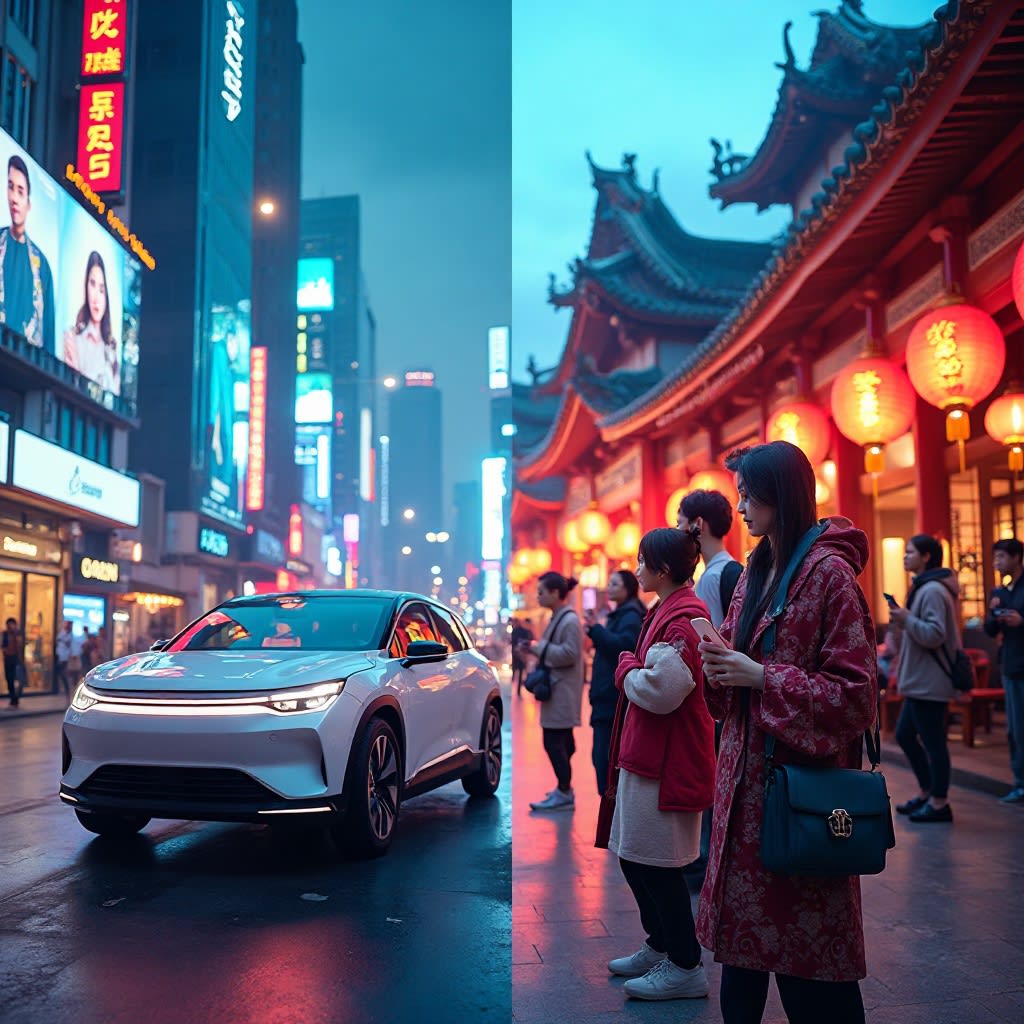
How the World’s Factory Became the World’s Trendsetter
For decades, China was known as the “world’s factory”—a country synonymous with low-cost manufacturing and high-output exports. But in 2025, that image has radically shifted. From cutting-edge AI models to futuristic electric vehicles (EVs) and viral cultural trends, China is no longer just following global innovation—it's leading it. This transformation isn't only technological—it's also cultural, and it's making China... cool.
From Catching Up to Setting the Pace
In the early 2000s, China focused heavily on industrial growth and infrastructure. By 2010, it was already becoming a major player in consumer electronics, telecommunications, and global trade. Fast forward to today, and China has become a global powerhouse of original innovation—and more importantly, it's becoming aspirational.
Take the rise of BYD (Build Your Dreams), for example. Once dismissed as a local carmaker, it’s now outselling Tesla globally in electric vehicle sales. BYD’s sleek, futuristic designs and eco-friendly tech have made it a symbol of China’s engineering prowess. Meanwhile, tech companies like Huawei, Xiaomi, and DJI are redefining what “Made in China” means—now it means cutting-edge.
The AI Boom: DeepSeek and Open Source Glory
In 2025, one of China’s biggest stories is the rise of DeepSeek-V2, an open-source large language model that rivals—and in some areas, outperforms—Western AI giants like OpenAI and Google. DeepSeek’s transparency, accessibility, and multilingual support have made it a hit across Asia and even parts of Europe and Africa.
This development marks a huge shift in the tech world: China is no longer trying to just catch up to Western AI models—it’s now setting its own global standards. With state-backed research, private-sector ambition, and a thriving tech startup scene in cities like Shenzhen, Hangzhou, and Beijing, China’s innovation ecosystem is humming at full speed.
Cultural Soft Power: Where Tradition Meets Trend
China’s growing influence isn’t just in labs and factories—it’s in hearts, screens, and streets. Across TikTok, YouTube, and Instagram, Chinese fashion, streetwear, and skincare brands are going viral. What was once labeled “niche” is now mainstream cool.
Hanfu, the traditional Chinese robe, has made a comeback among Gen Z.
C-dramas (Chinese television dramas) like The Longest Promise and Who Rules the World have found global audiences on Netflix and Viki.
Chinese pop idols, actors, and influencers are now style icons and trendsetters far beyond Asia.
Even Chinese cuisine is experiencing a rebranding—regional dishes from Sichuan hotpot to Yunnan rice noodles are being presented in ultra-modern settings, winning global foodies over on both taste and presentation.
The Social Commerce Revolution
China’s version of e-commerce is way ahead of the West. Platforms like Douyin (China’s TikTok) and Xiaohongshu (Little Red Book) combine short-form videos, product reviews, and direct shopping links into seamless, scrollable experiences. Users can watch a video, ask a question, and buy the product—all in under a minute.
In 2025, the Western world is now borrowing from China’s social commerce playbook, not the other way around.
Gaming and Digital Realms
China is home to some of the largest game studios in the world, like Tencent and NetEase, which have launched globally successful titles such as Honor of Kings, PUBG Mobile, and Genshin Impact. These games don’t just entertain—they export Chinese myths, art styles, and narratives to hundreds of millions.
With the rise of AI avatars, VR cities, and blockchain-based economies, Chinese platforms are creating immersive digital experiences that blur the line between tech and culture.
Challenges Still Exist
Despite the excitement, China’s innovation story isn’t without challenges. Internet censorship, data privacy concerns, and U.S.-China tech tensions still cast shadows. And many Western nations remain skeptical about China's rise in AI and cybersecurity.
But if there's one truth 2025 has made clear, it's this: you can't ignore China anymore—not in tech, not in culture, not in coolness.
Conclusion: Redefining the Global Narrative
The term “Cool China” isn’t a marketing gimmick—it’s a reality shaped by the fusion of deep tradition and futuristic vision. In a world that once saw China as a silent player behind the scenes, the country is now a loud, confident, and creative force reshaping how the world sees innovation, identity, and influence.
From the factory floor to fashion runways, and from super apps to sci-fi cities, China is crafting a new image—one that is undeniably, unforgettably cool.
About the Creator
Mehtab Ahmad
“Legally curious, I find purpose in untangling complex problems with clarity and conviction .My stories are inspired by real people and their experiences.I aim to spread love, kindness and positivity through my words."
Keep reading
More stories from Mehtab Ahmad and writers in Futurism and other communities.
Thailand vs Cambodia War
When Ancient Stones Became Grounds for Modern Guns In the heart of Southeast Asia, two countries—Thailand and Cambodia—share not only borders but centuries of cultural, religious, and political history. While their people often interact peacefully through trade, tourism, and regional cooperation, a cloud of conflict once loomed over a sacred site high atop a cliff: Preah Vihear Temple. The conflict, commonly referred to as the Thailand vs Cambodia war, wasn’t a full-scale war in traditional terms, but it was a bitter, dangerous, and deadly border dispute that held global attention during the late 2000s and early 2010s.
By Mehtab Ahmad7 months ago in History
Inkjet Printers Market: Mobile & Cloud Printing Integration, Seamless Connectivity & Growth Outlook
According to IMARC Group's latest research publication, the global inkjet printers market size reached USD 50.9 Billion in 2024. Looking forward, IMARC Group expects the market to reach USD 81.0 Billion by 2033, exhibiting a growth rate (CAGR) of 4.88% during 2025-2033.
By sujeet. imarcgroup6 days ago in Futurism



Comments
There are no comments for this story
Be the first to respond and start the conversation.