
Cocoa Processing Market Size and Forecast 2025–2033: How Innovation, Ethics, and Premiumization Are Reshaping the Global Chocolate Industry
From Bean to Bar: Global Cocoa Processing Market to Reach US$ 18.88 Billion by 2033 Amid Rising Demand for Ethical, Functional, and Premium Cocoa Products

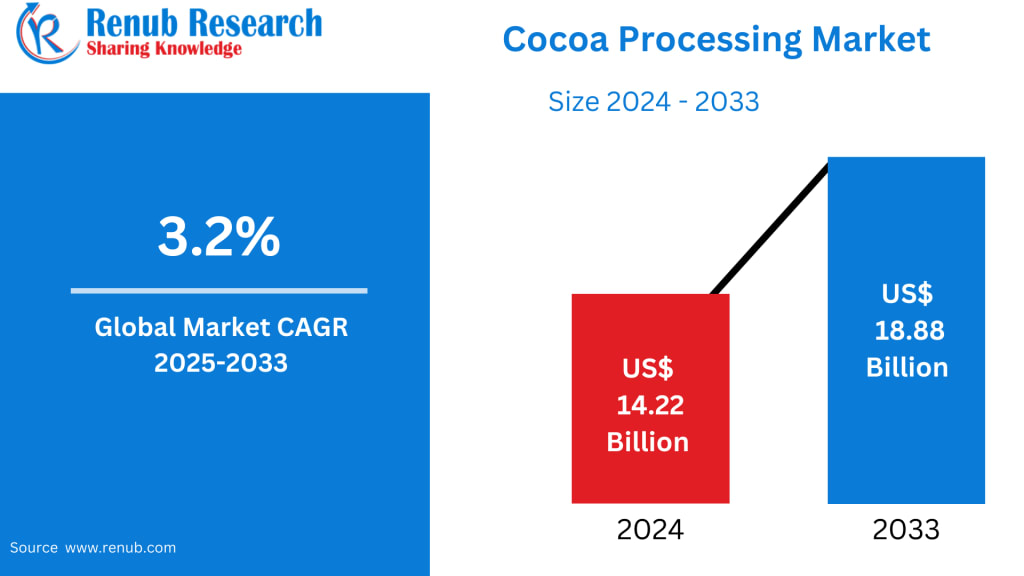
Global Cocoa Processing Market Outlook 2025–2033
The global cocoa processing market is entering a transformative decade, shaped by evolving consumer tastes, sustainability pressures, and technological innovation across the value chain. According to Renub Research, the market is expected to grow from US$ 14.22 billion in 2024 to US$ 18.88 billion by 2033, expanding at a CAGR of 3.2% from 2025 to 2033.
This steady growth reflects cocoa’s expanding role beyond traditional chocolate products. Once limited to confectionery, cocoa is now a critical ingredient in functional foods, beverages, cosmetics, pharmaceuticals, and even savory culinary applications. At the same time, the rise of bean-to-bar chocolate, artisanal craftsmanship, and ethical sourcing is redefining how cocoa is processed, marketed, and consumed globally.
Understanding Cocoa Processing: From Raw Beans to Refined Excellence
Cocoa processing refers to the series of steps used to transform raw cocoa beans into usable products such as cocoa powder, cocoa butter, cocoa liquor, and specialty fats. The process typically includes:
Sorting to remove foreign materials
Roasting to develop flavor and aroma
Winnowing to separate shells from nibs
Grinding nibs into cocoa liquor
Pressing to extract cocoa butter
Refining and conching to enhance texture, taste, and shelf life
Each step plays a critical role in determining the final flavor profile, quality, and functionality of cocoa-based products. With modern processing technologies, manufacturers can now create cocoa ingredients tailored for health, beauty, and performance-driven markets.
Key Drivers Powering the Cocoa Processing Market
1. The Rise of Premium and Health-Conscious Chocolate
Consumers worldwide are shifting toward premium, low-sugar, organic, and functional chocolates, driving demand for high-quality cocoa ingredients. Dark chocolate with higher cocoa content is increasingly associated with antioxidant benefits, heart health, and mood enhancement, reinforcing cocoa’s image as a “better-for-you” indulgence.
2. Growing Popularity of Bean-to-Bar and Craft Chocolate
The bean-to-bar movement has brought transparency and craftsmanship to the forefront. Consumers now want to know where their cocoa comes from, how it’s processed, and who grows it. This trend has encouraged processors to invest in traceability systems, small-batch processing, and direct trade partnerships, adding value at every step of the supply chain.
3. Expansion of Cocoa into Functional Foods and Beverages
Cocoa is increasingly used in protein bars, energy drinks, nutraceuticals, and wellness beverages, thanks to its flavonoid content and rich flavor. This diversification is opening new revenue streams for processors and pushing innovation in processing methods that preserve nutritional integrity.
Chocolate Tourism: An Emerging Growth Catalyst
One of the most unique growth drivers in the cocoa processing industry is the rise of chocolate tourism. Around the world, consumers are traveling to cocoa plantations, chocolate museums, and processing facilities to experience the journey from bean to bar.
This immersive trend not only boosts brand loyalty but also raises awareness of quality, ethics, and craftsmanship, encouraging higher demand for professionally processed, ethically sourced cocoa. As tourism experiences directly influence purchasing decisions, processors are under increasing pressure to maintain exceptional standards in flavor, sustainability, and transparency.
Innovation in Cocoa-Based Snacks and Confectionery
Innovation is at the heart of cocoa processing growth. Manufacturers are developing new chocolate-based snacks such as cocoa-dusted nuts, protein bites, luxury truffles, functional bars, and premium baking ingredients.
These innovations require consistent access to high-quality cocoa butter, powder, and liquor — reinforcing the importance of efficient, advanced processing facilities. As product differentiation becomes a competitive necessity, cocoa processors are playing a more strategic role in shaping final consumer products.
Ethical and Certified Cocoa: No Longer Optional
Ethical sourcing has become a defining factor in cocoa processing. Consumers increasingly demand products that are Fair Trade, Rainforest Alliance certified, and child-labor free. In response, processors are investing heavily in:
Sustainable farming programs
Farmer training initiatives
Traceable supply chains
Community development partnerships
While these efforts raise costs, they also unlock access to premium markets and strengthen long-term brand trust — making sustainability a strategic investment rather than a compliance burden.
Challenges Facing the Cocoa Processing Industry
Sustainability and Ethical Sourcing Pressures
The cocoa industry continues to face scrutiny over deforestation, child labor, and farmer poverty, particularly in West Africa, which supplies the majority of the world’s cocoa. Compliance with ethical standards requires complex coordination and long-term investment, especially for small and mid-sized processors.
High Energy and Water Consumption
Cocoa processing is energy-intensive, particularly during roasting, grinding, and conching. Rising energy prices, water scarcity, and stricter environmental regulations are forcing companies to invest in renewable energy, water recycling systems, and efficient machinery, adding to operational costs in the short term.
Regional Market Insights
United States: A Mature Yet Innovative Market
The U.S. cocoa processing industry is driven by strong demand from confectionery, bakery, and beverage sectors. Processors are increasingly focusing on organic, plant-based, and low-sugar formulations, supported by advanced technology and a strong supply chain.
According to Agriculture and Agri-Food Canada (November 2023), U.S. confectionery retail sales grew at a CAGR of 6.7% between 2018 and 2022, reflecting sustained demand that continues to support cocoa processing growth.
Germany: Europe’s Processing Powerhouse
Germany is one of Europe’s largest cocoa processors, supported by world-class infrastructure and a strong presence of global companies. The country is at the forefront of sustainable cocoa processing, with widespread adoption of Fair Trade and Rainforest Alliance certifications.
Despite challenges from supply chain volatility, Germany’s commitment to ethical sourcing and innovation ensures its continued leadership in the European cocoa processing landscape.
India: A Rising Cocoa Processing Hub
India’s cocoa processing market is expanding rapidly due to rising demand from confectionery, bakery, and beverage manufacturers. States like Kerala and Karnataka are emerging as cocoa-growing regions, supporting the growth of the bean-to-bar movement.
Government initiatives such as the Cocoa Development Program are strengthening domestic production and value addition, positioning India as a promising player in the global cocoa economy.
Saudi Arabia: Luxury Chocolate Driving Processing Growth
Saudi Arabia’s cocoa processing market is evolving alongside its growing appetite for premium and artisanal chocolates. While the Kingdom imports all cocoa beans, local processing capacity is expanding, supported by Vision 2030, which encourages food manufacturing and economic diversification.
Urban millennials and Gen Z consumers are driving demand for high-quality, ethically sourced chocolate products, creating significant opportunities for cocoa processors in the region.
Market Segmentation Overview
By Type
Cocoa Powder
Cocoa Butter
Cocoa Liquor
Specialty Fats
Others
By Application
Confectionery
Functional Foods & Beverages
Pharmaceuticals
Cosmetics
By Region
North America: United States, Canada
Europe: Germany, France, Italy, UK, Belgium, Netherlands, Spain, Turkey
Asia Pacific: China, India, Japan, Australia, South Korea, Indonesia, Thailand, Malaysia, New Zealand
Latin America: Brazil, Mexico, Argentina
Middle East & Africa: Saudi Arabia, UAE, South Africa
Leading Companies in the Global Cocoa Processing Market
The global market is highly competitive, with key players investing in sustainability, capacity expansion, and innovation:
Barry Callebaut Group
Cargill Incorporated
Olam International
Nestlé SA
Mondelez International, Inc.
Blommer Chocolate Company
Guan Chong Bhd
Ecom Agroindustrial Corp. Limited
Touton S.A.
These companies are strengthening their market positions through strategic sourcing, digital traceability, sustainable investments, and product diversification.
Final Thoughts: A Market Defined by Purpose and Premiumization
The cocoa processing market is no longer just about volume — it is about value, ethics, and innovation. As consumers demand better quality, transparency, and functionality, processors are evolving into strategic partners for global food, beverage, and wellness brands.
With strong growth forecasted through 2033, the global cocoa processing industry stands at the intersection of tradition and transformation, where sustainable practices, technological innovation, and premium experiences will define success in the years ahead.
About the Creator
Marthan Sir
Educator with 30+ years of teaching experience | Passionate about sharing knowledge, life lessons & insights | Writing to inspire, inform, and empower readers.
Keep reading
More stories from Marthan Sir and writers in Futurism and other communities.
Global Champagne Market Size, Growth Trends & Forecast 2025–2033
Global Champagne Market Overview The Global Champagne Market was valued at USD 7.72 billion in 2024 and is forecast to reach USD 12.74 billion by 2033, growing at a CAGR of 5.72% during the forecast period. This growth is supported by rising luxury spending, expanding premium gift culture, and increasing consumption of celebratory beverages in both mature and emerging economies.
By Marthan Sira day ago in Futurism
About Binding Prometheus
I want to start actively advocating on behalf of my own work, and the most valuable part of my canon is, without a doubt, Binding Prometheus, the play I have been working on since 2019 and only finished in 2023 as part of my MA. The play itself is an amalgamation of a million different inspirations. On one end, it evokes the Ancient Greek myth-play, deriving its own title from the earliest extant work of Western drama we have, Aeschylus’s Prometheus Bound. On the other end, it borrows significantly from the sci-fi bulwarks from over the years, namely Mary Shelley’s Frankenstein and Karel Capek’s Rossum’s Universal Robots. The play could be an episode of Black Mirror, I fear. I don’t know. I’ve only ever seen one episode of Black Mirror.
By Steven Christopher McKnight23 days ago in Futurism
Protein Hydrolysate Ingredient Market: Enzymatic Processing, High Bioavailability & Product Innovation
According to IMARC Group's latest research publication, the global protein hydrolysate ingredient market reached USD 3.7 Billion in 2024. Looking forward, IMARC Group expects the market to reach USD 5.3 Billion by 2033, exhibiting a growth rate of 4.13% during 2025-2033.
By sujeet. imarcgroup5 days ago in Futurism
🅼🅸🅳🅽🅸🅶🅷🆃 🆂🅽🅰🅲🅺🆂
"It's 10 in Tuscon! We all know what that means... It's Time for Midnight Snacks with your man, Gerald Gee! Ready to spend the night together? Me too! I'm full of snacks and can't wait to regurgitate them all back into your hungry ears. Crack a brew! Pop some corn! Anything to get ready for one hell of a show where the talk maybe cheap but the words cut deep...
By Lamar Wigginsabout 24 hours ago in Fiction


Comments
There are no comments for this story
Be the first to respond and start the conversation.