
China Builds World’s Deepest Underwater Station to Unlock Ocean Energy
At 6,500 Feet Below Sea Level, China’s High-Tech Ocean Base Targets Methane Hydrates and Strategic Dominance in the South China Sea

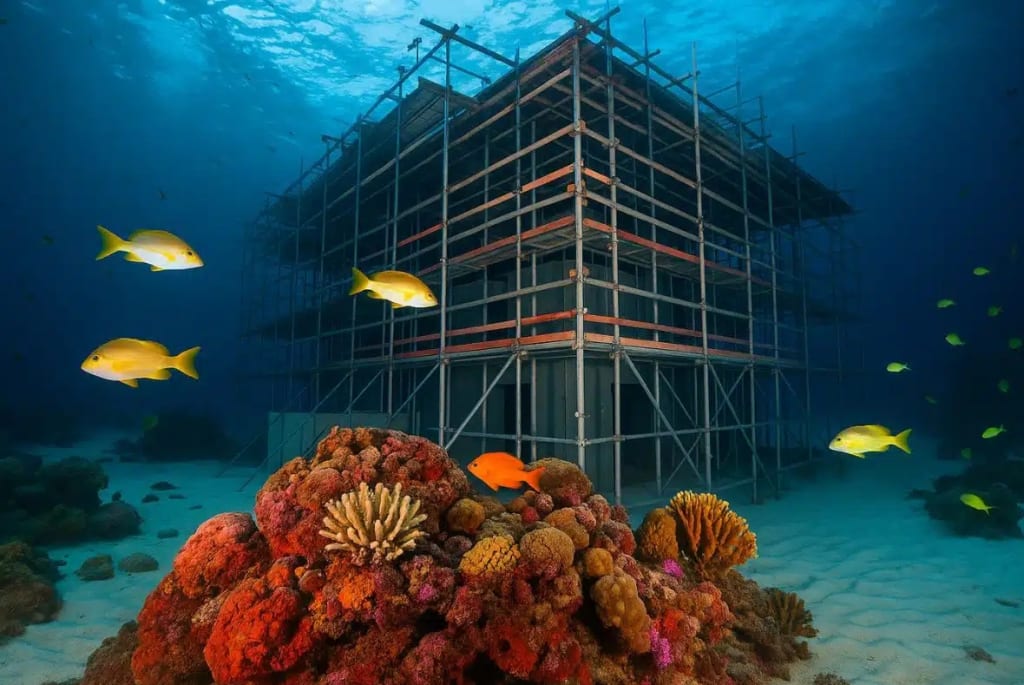
In a move that blends cutting-edge science with strategic ambition, China is building one of the world’s most advanced underwater research stations—positioned 6,500 feet beneath the surface of the South China Sea. Designed to operate like a “deep-sea space station,” this unprecedented facility will house scientists, explore alternative energy sources, and assert China’s growing influence in disputed maritime regions. Scheduled for completion by 2030, the project marks a monumental leap in deep-sea research and geopolitical positioning.
A Deep-Sea Station Rivaling the ISS
China’s upcoming underwater research facility has been described by engineers and scientists as being as complex as three modules of the International Space Station (ISS). But instead of orbiting above Earth, this structure will sit on the ocean floor in a harsh and mysterious environment. Capable of supporting up to six scientists for a month-long mission, the station will facilitate sustained human presence in one of the planet's most hostile ecosystems.
With pressure levels hundreds of times greater than those at sea level and complete darkness enveloping the ocean floor, building and maintaining such a station is no small feat. Yet China is leveraging advanced engineering, artificial intelligence, and automated systems to make this bold dream a reality.
Exploring Methane Hydrates—The Treasure Beneath the Sea
One of the key missions of the underwater station is the exploration of methane hydrates, often referred to as “flammable ice.” These unique ice-like substances trap methane within their crystalline structure and are considered a potential game-changer in the global search for clean energy alternatives.
The South China Sea is believed to harbor an estimated 70 billion tons of methane hydrate deposits—an amount equivalent to nearly half of China’s current known oil and gas reserves. If extracted safely and efficiently, methane hydrates could significantly reduce the nation’s dependence on imported fossil fuels while helping to meet its carbon reduction goals.
Researchers aboard the station will study how these methane hydrates form, how they behave under deep-sea conditions, and explore safe methods for potential commercial extraction. Success in this domain could place China at the forefront of a new energy frontier.
Cold Seeps and Untouched Ecosystems
Beyond energy, the underwater station will also enable groundbreaking research into cold seeps—deep-sea locations where hydrocarbon-rich fluids naturally leak from the ocean floor. These areas support thriving, unique ecosystems, despite the absence of sunlight. Cold seep communities often consist of species not found anywhere else on Earth and have adapted to thrive in toxic, high-pressure environments.
Understanding these ecosystems is vital for several reasons. First, it expands humanity’s knowledge of biology and evolution. Second, these environments may yield medical and biotechnological breakthroughs, as organisms living in such extreme conditions could harbor compounds useful for new drugs or industrial applications.
Monitoring Earth’s Tectonic Activity
Another important function of the underwater base will be to monitor seismic and tectonic activity in real-time. The South China Sea is not just rich in resources; it also sits on a complex system of tectonic plates, making it a prime location for earthquakes and tsunamis.
By installing sensors and seismographs on the ocean floor, the station will act as a vital node in a broader disaster prevention and early warning network. Improved monitoring can enhance preparedness not just for China, but for neighboring countries that share the risk of catastrophic natural events.
Equipped with Cutting-Edge Technology
The station will rely heavily on artificial intelligence, robotics, and unmanned submersibles to carry out operations and conduct research. AI systems will manage life support, energy usage, and data analysis, while drones and submersibles will collect samples, map terrain, and repair underwater infrastructure. Fiber-optic cables will connect the station to surface vessels and land-based control centers, enabling real-time communication and data transfer.
This integration of technology ensures that the station remains operational even when human occupants are absent, making it a semi-autonomous research outpost in the deep.
Strategic and Geopolitical Significance
While the scientific goals of the underwater station are impressive, the geopolitical implications are equally important. The South China Sea is a heavily contested area, with overlapping territorial claims from countries including the Philippines, Vietnam, Malaysia, Brunei, and Taiwan. By constructing a permanent underwater presence in this disputed region, China reinforces its territorial claims and enhances its ability to monitor maritime traffic and activity.
In essence, the station serves a dual purpose: scientific exploration and geopolitical assertion. It gives China an unmatched technological foothold in a region that is both strategically vital and resource-rich.
Overcoming Deep-Sea Engineering Challenges
Operating at a depth of 6,500 feet poses extreme challenges. The immense pressure can crush most traditional equipment, and temperatures are near freezing. To overcome these issues, China’s engineers are developing new pressure-resistant materials, specialized seals, and climate control systems that ensure the safety and comfort of human researchers.
Maintaining structural integrity and ensuring the well-being of crew members in this dark, high-pressure world will require rigorous testing, redundancy systems, and innovative design. If successful, the station could serve as a prototype for future deep-sea outposts or even bases on other planets.
Looking Ahead: A New Era of Ocean Exploration
China’s deep-sea research station represents a major milestone in the evolution of marine science and technology. As nations race to explore and harness the potential of the oceans, this facility will position China as a leader in underwater exploration, energy research, and marine biology.
The station is not just about finding buried treasures—it’s about understanding our planet’s final frontier. From unlocking new energy sources to discovering life in extreme environments, the research conducted at 6,500 feet below sea level could reshape our understanding of Earth and its hidden depths.
For now, all eyes are on the South China Sea, where science, ambition, and strategy converge beneath the waves.
China underwater station
deep-sea research
South China Sea
methane hydrate exploration
About the Creator
Tech Horizons
Exploring the future of technology, AI, gadgets, and innovations shaping tomorrow. Stay updated with Tech Horizons!
Keep reading
More stories from Tech Horizons and writers in Futurism and other communities.
Google Unveils Powerful AI Language Tools with Personalized Lessons: A Game-Changer for Language Learners
Discover how Google’s latest AI tools—Tiny Lesson, Slang Hang, and Word Cam—are revolutionizing language learning through personalized lessons, real-world context, and immersive technology.
By Tech Horizons11 months ago in Futurism
Cell Dissociation Market Outlook: Advancements in Cell-Based Research and Growth Opportunities
According to IMARC Group's latest research publication, The global cell dissociation market size reached USD 404.8 Million in 2024. Looking forward, IMARC Group expects the market to reach USD 1,186.4 Million by 2033, exhibiting a growth rate (CAGR) of 12.06% during 2025-2033.
By James Whitman6 days ago in Futurism
Plant-Based Food Market: How AI and Innovation Are Shaping the Future of Sustainable Nutrition
Introduction The global food industry is undergoing a significant transformation as consumers shift toward healthier and more sustainable dietary choices. One of the most prominent trends emerging from this shift is the growing popularity of plant-based foods. These products are derived entirely from plant sources such as soy, peas, almonds, oats, coconut, and other plant ingredients, offering alternatives to traditional animal-based products.
By James Smith7 days ago in Futurism




Comments
There are no comments for this story
Be the first to respond and start the conversation.