
Canada’s First Dinosaur-Era Dragonfly Fossil Discovered in Alberta
A 75-million-year-old wing fossil reveals a new species, fills a gap in dragonfly evolution, and sheds light on ancient ecosystems alongside dinosaurs.

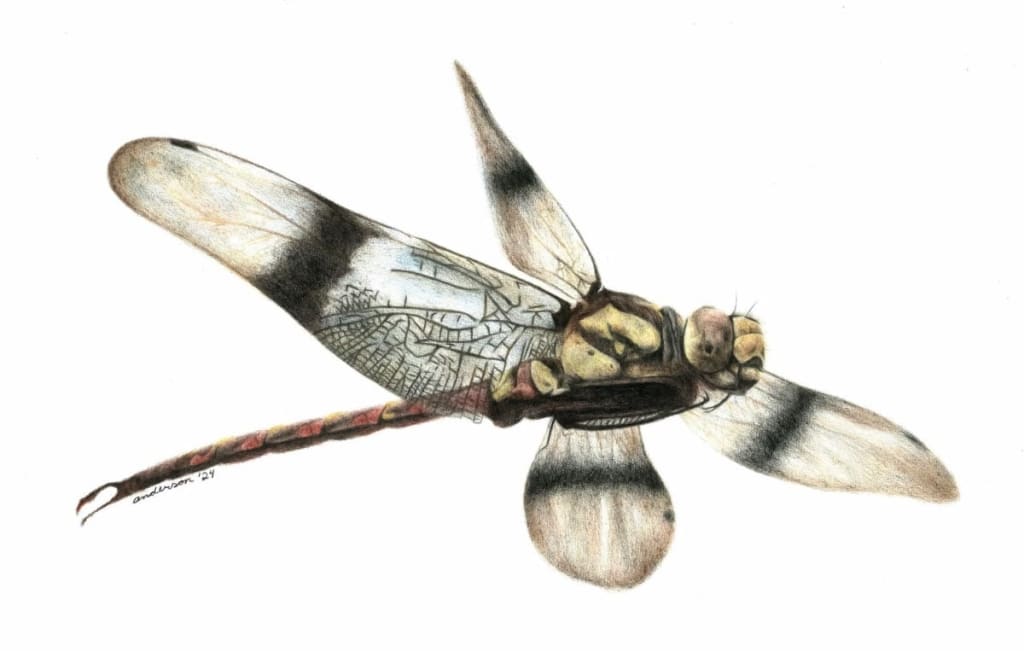
In the heart of Alberta’s Badlands, researchers have uncovered a fossil that brings a surprising twist to Canada’s prehistoric story. For the first time, scientists have found a dragonfly fossil from the age of dinosaurs. At 75 million years old, this discovery not only reveals a new species but also fills a major gap in the evolutionary history of dragonflies in North America.
The fossil, a partial wing as wide as a human hand, was unearthed in 2023 during a McGill University field expedition at Dinosaur Provincial Park. The park, a UNESCO World Heritage site about 220 kilometers east of Calgary, is world-famous for its dinosaur bones but has yielded very few insect remains. That changed when a sharp-eyed student cracked open a rock and saw something remarkable.
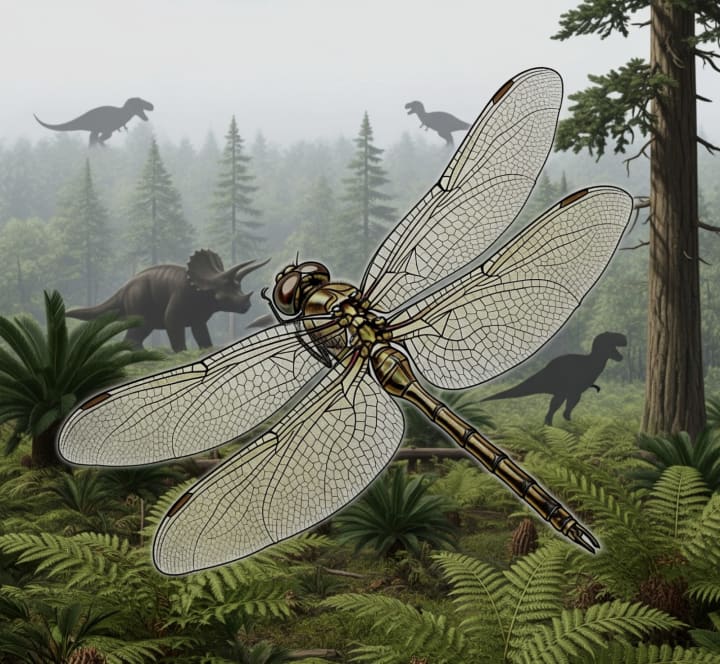
The find happened during a vertebrate paleontology field course led by Professor Hans Larsson. Among the team was Andre Mueller, then an undergraduate student at McGill. While the group was mainly looking for plant fossils, Mueller spotted the fine vein patterns of what looked like an insect wing. “I suddenly realized, oh my goodness, this is not a leaf,” he recalled. It turned out to be the first dinosaur-era dragonfly fossil ever found in Canada.
Before this, the insect record from the park consisted of just one tiny aphid preserved in amber. The new discovery not only doubles that record but also introduces a different type of preservation: impression fossils, where the insect’s shape is pressed into the rock rather than sealed in resin. This wing, from the late Cretaceous period, shows that dragonflies lived alongside the dinosaurs in what is now Alberta.

The fossil belongs to a brand-new species named Cordualadensa acorni. Its distinctive wing structure was unique enough that researchers created an entirely new family, Cordualadensidae, to classify it. The name “Cordualadensa” refers to the densely packed veins in the wing, which suggest the dragonfly was skilled at gliding similar to modern migratory dragonflies that travel long distances. That ability would have been useful in the shifting landscapes of the time, though it may not have protected the insect from predators. As Mueller joked, the dragonfly was probably “a tasty raptor snack.”
The species name “acorni” pays tribute to John Acorn, a University of Alberta lecturer and science communicator best known as the host of the TV show Acorn, the Nature Nut. Acorn has spent decades promoting Alberta’s natural history, making him a fitting namesake for this discovery.
An illustration by McGill student Alex Anderson reimagines what the ancient dragonfly might have looked like similar to modern dragonflies but with sturdier wing venation. This artwork provides a window into a world where creatures large and small shared the skies and rivers of prehistoric Canada.
Beyond its visual appeal, the find is scientifically groundbreaking. It is the first North American fossil linked to the Cavilabiata group, a major lineage of dragonflies, and it bridges a 30-million-year gap in their evolutionary history. Co-author Alexandre Demers-Potvin noted that the discovery reveals not just more about insects in the park but also a whole new way they can be preserved. Since then, the team has started finding additional insect fossils using similar methods.
Published on August 14, 2025, in the Canadian Journal of Earth Sciences, the research highlights the importance of careful fieldwork and interdisciplinary approaches. For Mueller, who grew up in Medicine Hat with a lifelong passion for dinosaurs, the discovery is personal as well as scientific. He plans to keep exploring the park in search of more hidden stories from the Cretaceous era.
This fossil reminds us that the age of dinosaurs was not only about towering giants like tyrannosaurs and triceratops. It was also a time when insects like dragonflies played vital roles in ecosystems. The discovery of Cordualadensa acorni shows how even small, delicate creatures helped shape the world of prehistory and how much we still have to learn from the rocks beneath our feet.
About the Creator
Muzamil khan
🔬✨ I simplify science & tech, turning complex ideas into engaging reads. 📚 Sometimes, I weave short stories that spark curiosity & imagination. 🚀💡 Facts meet creativity here!
Keep reading
More stories from Muzamil khan and writers in Futurism and other communities.
When Blocked Arteries Feed Cancer
In a major breakthrough, scientists have discovered that restricted blood flow, a common problem in diseases like peripheral artery disease (PAD), can speed up cancer growth by aging the immune system before its time. The research, published on August 19, 2025, in JACC: CardioOncology, connects two health concerns cardiovascular disease and cancer in ways that could change how patients with both conditions are treated.
By Muzamil khan6 months ago in Futurism
I Automated Too Much With AI
The surprising truth about what you lose when your “dream” side project runs on autopilot without you. I didn’t realize I’d automated myself out of my own life until my side project stopped asking for my attention—and I kind of hated it.
By abualyaanart7 days ago in Futurism
Stanislav Kondrashov on How Circumvention Shapes Technological Innovation
Technological progress is often described as a steady march forward, but in reality it rarely unfolds that way. Many of the most meaningful advancements appear when innovators step away from the obvious route and explore alternative paths. Stanislav Kondrashov describes this process as circumvention — the practice of approaching a challenge from a new direction when traditional methods reach their limits.
By Stanislav Kondrashov7 days ago in Futurism




Comments
There are no comments for this story
Be the first to respond and start the conversation.