

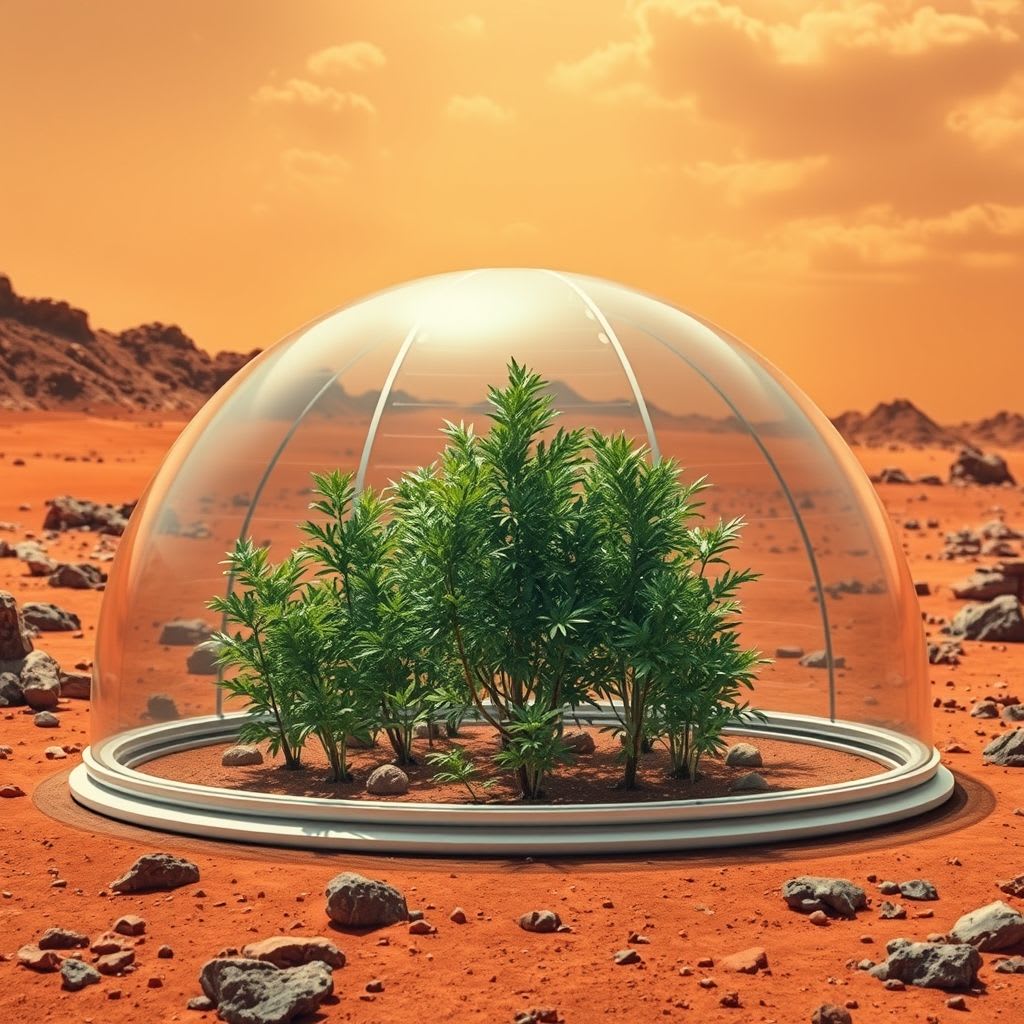
The idea of growing trees beyond Earth might sound like pure science fiction something straight out of a futuristic movie. Yet, more and more scientists are seriously exploring this possibility. In a world where climate change, resource depletion, and the search for new homes beyond our planet are urgent realities, planting trees on other planets is shifting from fantasy to a realistic goal. But is it actually possible? Let’s dive in and find out.
What Does a Tree Need to Live?
Before imagining forests on Mars or other worlds, it’s important to understand the basic requirements for a tree’s survival:
- Light: Trees need sunlight for photosynthesis, the process that turns light energy into food.
- Carbon dioxide (CO₂): Essential for photosynthesis, trees absorb CO₂ from the atmosphere.
- Water: Vital for nutrient transport and keeping the tree’s cells turgid and healthy.
- Nutrients: Elements like nitrogen, phosphorus, potassium, and others, usually absorbed from the soil.
- Suitable temperature: Most trees thrive within specific temperature ranges.
- Gravity: While it can vary, gravity plays a role in tree growth and water transport.
- Atmosphere: Ideally, an atmosphere somewhat similar to Earth’s to provide air pressure and protect from radiation.
At first glance, none of these conditions appear to be fully present on any planet besides Earth. But, intriguingly, some worlds come close or could be engineered to meet these needs.
Mars: The Leading Candidate
Mars has long been considered the prime candidate for Earth-based life outside our planet. Why?
- Day length: A Martian day lasts about 24.6 hours, close to Earth’s 24-hour cycle.
- Seasons and axial tilt: Mars has seasons due to its tilt, similar to Earth.
- Water ice: There are vast reservoirs of water ice beneath the surface and at the poles.
Sounds promising, right? But Mars also has some major hurdles:
- Its atmosphere is thin, mostly carbon dioxide, with surface pressure about 100 times less than Earth’s.
- Temperatures can plunge as low as -125°C (-193°F).
- Martian soil contains toxic chemicals called perchlorates.
- There’s no global magnetic field, so surface radiation levels are much higher than on Earth.
In other words, trees left to their own devices on Mars would likely perish quickly. So how can we overcome these challenges?
The Biosphere Dome: Creating an Artificial Forest on Mars
One promising solution is the biosphere dome a sealed, climate-controlled habitat that could mimic Earth-like conditions on Mars. Inside such a dome, temperature, humidity, air pressure, and atmospheric composition can be carefully managed.
Imagine a greenhouse but on a planetary scale, where trees can grow almost as if they were on Earth. Within this controlled environment, trees would:
- Absorb the abundant Martian carbon dioxide and convert it into oxygen,
- Help regulate the internal climate,
- Support water cycling and humidity control,
- Serve as a source of food, wood, and psychological comfort for human settlers.
In fact, some experiments have already been conducted on Earth under simulated Martian conditions. Scientists have tested the growth of birch, pine, and poplar trees in low-pressure chambers with soil and atmosphere designed to mimic Mars. Early results show that with adequate light and warmth, trees can germinate and begin to grow, at least in their early stages.
What About Other Planets and Moons?
- The Moon: Harsh temperature swings (from scorching heat to freezing cold) and a complete lack of atmosphere make the Moon inhospitable for plants. Still, it could serve as a low-gravity testbed for future experiments.
- Europa (a moon of Jupiter): Known for its subsurface ocean, Europa intrigues scientists, but the icy crust and intense radiation make growing Earth trees there currently impossible.
- Venus: With crushing atmospheric pressure and clouds of sulfuric acid, Venus is basically a death trap for Earth plants.
- Titan (Saturn’s moon): Although it has organic compounds, Titan’s surface temperature is around -180°C (-292°F), far too cold for Earth trees.
Currently, no known planet or moon outside Earth has natural conditions suitable for tree growth. But this has not stopped humanity from trying to create those conditions artificially.
Biotechnology and Genetic Engineering: The Next Frontier
To improve the chances of trees surviving off-world, scientists are exploring genetic modification. The goal? Develop trees that can:
- Grow in lower gravity environments,
- Withstand extreme cold or drought,
- Utilize unusual minerals found in alien soils.
Such genetically engineered trees could become vital components of future extraterrestrial ecosystems, helping to establish self-sustaining habitats rather than mere decorative plants.
Why Does This Matter for Humanity?
Growing trees on other planets isn’t just a scientific novelty it represents a fundamental step toward:
- Autonomous colonies where oxygen, food, and building materials can be produced locally rather than shipped from Earth,
- Terraforming: The gradual transformation of another planet’s environment to make it more Earth-like,
- Philosophical milestones: If trees can take root on Mars, it could symbolize the birth of life beyond Earth, redefining humanity’s place in the universe.
The Bottom Line
Today, planting a tree on the Martian surface and expecting it to thrive naturally isn’t possible. But with protective habitats, artificial climates, and advanced biotechnology, the dream is becoming more feasible.
Perhaps in a hundred years, children growing up in Martian colonies will stroll beneath towering pine trees planted by their ancestors trees that survived the harshest conditions, carried by human hope and ingenuity.
A tree on another planet is more than just a plant. It’s a symbol of life, resilience, and the dawn of a new era for humanity.
About the Creator
Keep reading
More stories from Holianyk Ihor and writers in Futurism and other communities.
What If Humans Had Evolved on Mars?
When we think of Mars, we usually picture a harsh, dusty landscape under a crimson sky, with frozen wastelands stretching endlessly. But what if it were different? What if life had actually begun not on Earth, but on the Red Planet? How would humans have evolved there, and how different would Martian civilization be from our own?
By Holianyk Ihor6 months ago in Futurism
About Binding Prometheus
I want to start actively advocating on behalf of my own work, and the most valuable part of my canon is, without a doubt, Binding Prometheus, the play I have been working on since 2019 and only finished in 2023 as part of my MA. The play itself is an amalgamation of a million different inspirations. On one end, it evokes the Ancient Greek myth-play, deriving its own title from the earliest extant work of Western drama we have, Aeschylus’s Prometheus Bound. On the other end, it borrows significantly from the sci-fi bulwarks from over the years, namely Mary Shelley’s Frankenstein and Karel Capek’s Rossum’s Universal Robots. The play could be an episode of Black Mirror, I fear. I don’t know. I’ve only ever seen one episode of Black Mirror.
By Steven Christopher McKnight15 days ago in Futurism
High Purity Alumina Market: Clean Energy Adoption & Material Innovation Trends
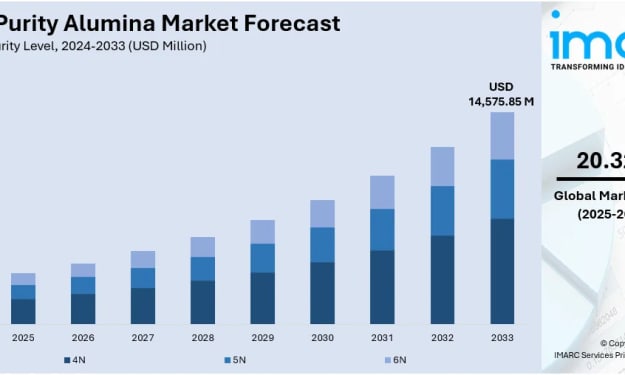
According to IMARC Group's latest research publication, global high purity alumina market size reached USD 2,547.04 Million in 2024. Looking forward, IMARC Group expects the market to reach USD 14,575.85 Million by 2033, exhibiting a growth rate (CAGR) of 20.32% during 2025-2033.
By Andrew Sullivan3 days ago in Futurism


Comments
There are no comments for this story
Be the first to respond and start the conversation.