
Can human Ever Leave the milky way Galaxy The wormholes Explained By Shah saab
The Science and Challenges of Leaving Our Galaxy: Can Wormholes Pave the Way

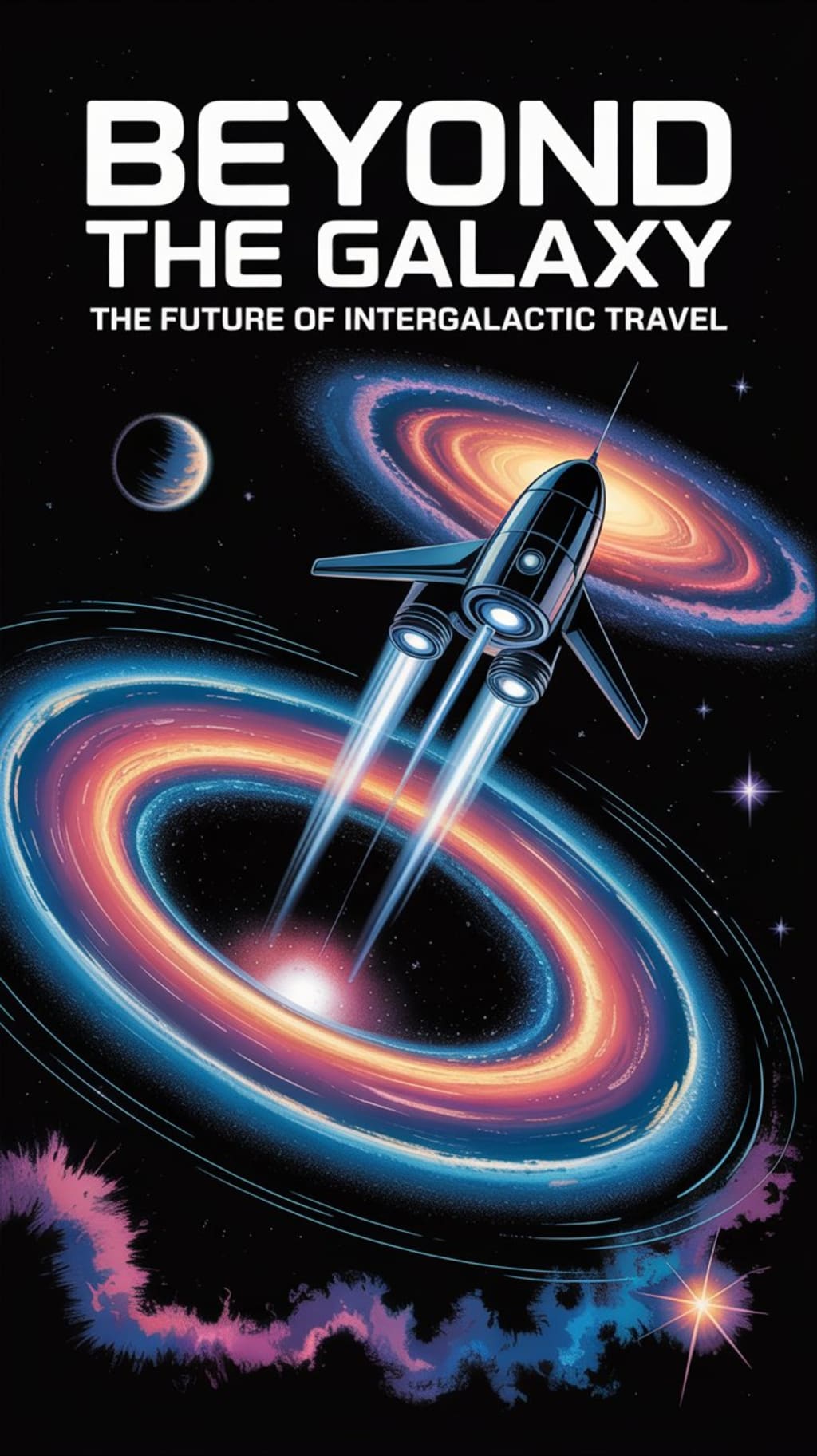
Can Humans Ever Leave the Milky Way? Wormholes Explained
Humanity has always gazed at the stars with curiosity, dreaming of traveling across the universe. As our understanding of space has grown, so has our ambition. But while we’ve sent probes to the edges of our solar system, the idea of leaving our galaxy—the Milky Way—raises profound scientific, technological, and philosophical questions. Can humans ever truly leave the Milky Way? Could wormholes be the key to this escape?
---
The Vastness of the Milky Way
The Milky Way galaxy is a sprawling disk of stars, gas, and dark matter, approximately 100,000–200,000 light-years across. Our solar system orbits about 25,000 light-years from the galactic center. To escape the galaxy, humans would have to travel not just between stars, but across a gravitationally bound system of over 100 billion stars.
To put that in perspective: the fastest spacecraft ever built, NASA’s Parker Solar Probe, travels at about 700,000 km/h. At that speed, it would take more than 2 billion years to reach the edge of the Milky Way. Clearly, with current propulsion technology, intergalactic travel is far beyond our reach.
---
Galactic Escape Velocity
Just as a spacecraft must reach escape velocity to break free from Earth’s gravity, it must do the same to leave the Milky Way. The galactic escape velocity near our solar system is estimated at roughly 525 km/s—more than 1,800,000 km/h. No human-made object has come close to this speed. Voyager 1, launched in 1977, is traveling at about 17 km/s and will never escape the galaxy.
The enormous speeds required mean we need radical breakthroughs in propulsion—technologies that don’t yet exist or are purely theoretical.
---
The Concept of Wormholes
One of the most intriguing ideas in theoretical physics is the wormhole, a speculative tunnel through space-time that could connect distant points in the universe instantly. First proposed in 1935 by Albert Einstein and Nathan Rosen (thus also called Einstein-Rosen bridges), wormholes arise naturally from the equations of general relativity.
If wormholes exist—and if they can be stabilized—they might allow instantaneous travel between galaxies or even across the universe. This would solve the problem of immense travel times and distances. However, there’s a catch: stabilizing a wormhole likely requires “exotic matter” with negative energy density, a substance we have never observed in nature.
Some theories, such as those involving quantum entanglement and spacetime foam, suggest that wormholes could exist on quantum scales. But even if they do, scaling them up to a size usable by humans—or keeping them open long enough for travel—remains a massive scientific and engineering challenge.
---
Scientific Research into Wormholes
Physicists have explored several potential ways wormholes might exist or be detected. Some theories suggest that a wormhole might produce gravitational lensing—warping light from background stars in a unique way. Others suggest tiny wormholes could be remnants of the early universe, though we’ve never observed one directly.
Recent work in quantum gravity and string theory suggests possible links between entangled particles and microscopic wormholes, but these connections are still speculative.
In 2022, researchers at Caltech claimed to simulate a wormhole using quantum processors, although this was more of a mathematical analogy than an actual wormhole. Still, it shows growing interest in bringing this science-fiction idea closer to science fact.
---
Alternative Propulsion Ideas
Aside from wormholes, several advanced propulsion concepts have been proposed to one day enable galactic or intergalactic travel:
Alcubierre Drive: A theoretical warp drive that contracts space in front of a spacecraft and expands it behind. It doesn’t move the ship faster than light locally, but space itself could move faster than light. Like wormholes, it requires exotic matter.
Antimatter Engines: Antimatter reactions release enormous energy, much more efficient than chemical rockets. But creating and storing antimatter safely is a challenge.
Laser Sailcraft: Tiny spacecraft pushed by high-powered lasers could potentially reach nearby stars in decades. Projects like Breakthrough Starshot aim to use this concept.
Even the most optimistic timelines place these technologies far in the future. Human travel beyond the Milky Way would likely require generations of development—or entirely new physics.
---
Could Nature Do It for Us?
In rare events, stars can be ejected from galaxies at incredible speeds. These "hypervelocity stars" are flung out by interactions with supermassive black holes or galactic collisions. In theory, a spacecraft hitching a ride with such momentum could escape the galaxy, but directing and surviving such a journey is beyond our current capability.
---
Conclusion
Leaving the Milky Way is an awe-inspiring but extremely distant goal. The vast scale of space, the limitations of our current technology, and the speculative nature of wormholes and exotic physics mean that, for now, humanity is firmly rooted in our galaxy.
However, as with so many once-impossible dreams—flight, the Moon landing, exploring Mars—our imagination often precedes our capabilities. Whether through wormholes, warp drives, or unknown breakthroughs, the dream of intergalactic travel continues to inspire science and science fiction alike.
About the Creator
Shah saab IT
I'm. Shah saab IT. From Pakistan I'm provide to people smart Digital Education my main focus on which people they loved Technology and smart Digital Education 😉
Keep reading
More stories from Shah saab IT and writers in Futurism and other communities.
Echoes of the Digital Realm
In a world not too far from our own, humanity had learned to transcend the boundaries of the physical universe. The digital realm, once a mere tool for communication and entertainment, had evolved into a vast, sprawling universe—one where people could live, work, and explore beyond the confines of their bodies. This new world, known as the Echo Net, was created from the collective imagination of billions, a network of shared experiences, dreams, and memories.
By Shah saab IT9 months ago in Futurism
About Binding Prometheus
I want to start actively advocating on behalf of my own work, and the most valuable part of my canon is, without a doubt, Binding Prometheus, the play I have been working on since 2019 and only finished in 2023 as part of my MA. The play itself is an amalgamation of a million different inspirations. On one end, it evokes the Ancient Greek myth-play, deriving its own title from the earliest extant work of Western drama we have, Aeschylus’s Prometheus Bound. On the other end, it borrows significantly from the sci-fi bulwarks from over the years, namely Mary Shelley’s Frankenstein and Karel Capek’s Rossum’s Universal Robots. The play could be an episode of Black Mirror, I fear. I don’t know. I’ve only ever seen one episode of Black Mirror.
By Steven Christopher McKnight18 days ago in Futurism
Waterless Cosmetics Market Set to Soar to USD 23.17 Billion Driven by Digital Shift and Diverse Content
Waterless Cosmetics Market – Overview The waterless cosmetics market refers to beauty and personal care products formulated without water as a primary ingredient. Instead of water, these products use alternatives like botanical extracts, oils, powders, and butters to deliver concentrated active ingredients that offer potent performance and sustainability benefits. Compared to traditional liquid formulations, waterless cosmetics reduce reliance on freshwater, minimize preservative needs, and often use more eco-friendly packaging.
By James Smith7 days ago in Futurism



Comments
There are no comments for this story
Be the first to respond and start the conversation.