
Attribution Modeling 101: How to Measure What Actually Drove the Conversion
Understanding models, modern approaches, and what to do when the data is a mess


One of the most important—but most misunderstood—skills in marketing analytics is attribution modeling.
If you’ve ever asked:
“Which channel should get credit for this conversion?”
“Did that email or Instagram ad actually drive the sale?”
“How do I decide where to spend more budget?”
…then you’re already asking attribution questions.
But attribution isn’t about perfection. It’s about building the best available version of the truth—given the data you have.
This post breaks down:
- What attribution modeling really is
- The main types of attribution models (old and new)
- When each type is useful
- How to work with messy or incomplete data
- Tools that help (and where they fall short)
🤔 What Is Attribution Modeling?
Attribution modeling is the practice of assigning credit to marketing touchpoints (ads, emails, SEO, etc.) that led to a desired outcome—like a sign-up, purchase, or demo request.
Think of it like this:
A user clicked a Google ad, then signed up after seeing your Instagram reel, then later bought after receiving a retargeting email.
Who gets the credit?
That’s the attribution question.
You want to know:
- What’s actually driving conversions?
- Where should you invest more?
- Where are you overspending?
🧭 Common Attribution Models (And How They Think)
1. Last Touch Attribution
Credit goes to the last interaction before conversion.
- Pros: Simple, easy to track
- Cons: Ignores all earlier influence
🧠 Good for: fast decision cycles, simple funnels, or MVP tracking
2. First Touch Attribution
Credit goes to the first interaction that introduced the user to your brand.
- Pros: Measures top-of-funnel effectiveness
- Cons: Ignores nurturing or closing channels
🧠 Good for: awareness campaign measurement, brand introductions
3. Linear Attribution
Equal credit is given to every touchpoint in the journey.
- Pros: Acknowledges the full journey
- Cons: Assumes all touchpoints are equally important (which they’re not)
🧠 Good for: teams that want to acknowledge all efforts, especially early on
4. Time Decay Attribution
More credit goes to recent touchpoints, less to older ones.
- Pros: Recognizes recency and momentum
- Cons: Arbitrary decay curve, may undervalue initial discovery
🧠 Good for: products with short consideration windows (e.g. e-commerce, flash sales)
5. Position-Based Attribution (U-shaped or W-shaped)
U-shaped gives:
- 40% to first touch
- 40% to lead conversion touch
- 20% split among the rest
W-shaped includes opportunity creation touchpoints.
- Pros: Prioritizes meaningful steps
- Cons: Assumes predefined importance
🧠 Good for: B2B or multi-step sales cycles where “lead” and “opportunity” are trackable events
6. Data-Driven or Algorithmic Attribution
Machine learning assigns credit based on which channels statistically contribute most to conversions—based on real user behavior.
- Pros: Adapts to your actual data
- Cons: Requires scale, tech, and trust in the black box
🧠 Good for: advanced teams using tools like Google Ads, GA4, Adobe, or custom models
🧰 Where Are Attribution Models Used?
- Google Ads
→ Attribution Models: Data-driven (default), Last-click
→ Notes: Paid ads only (Google ecosystem)
- GA4 (Google Analytics 4)
→ Attribution Models: First-click, Last-click, Data-driven (cross-channel)
→ Notes: Tracks user behavior across channels and sessions
- HubSpot
→ Attribution Models: First-touch, Last-touch, Linear, U-shaped, W-shaped
→ Notes: Great for CRM and B2B funnel attribution
- Tableau / Looker / Power BI
→ Attribution Models: Custom modeling via SQL, calculated fields, or scripts
→ Notes: Full flexibility but requires DIY logic and definitions
- Adobe Analytics
→ Attribution Models: Full suite including time-decay, linear, custom rules
→ Notes: Powerful but enterprise-level complexity and pricing
🧼 What To Do When Your Data Is Messy (Which It Always Is)
Attribution sounds great until you actually look at the data:
- UTMs are missing or inconsistent
- Users convert on a different device or browser
- Leads sit in the funnel for weeks before buying
- Events are tracked differently across tools
Here’s how to handle that:
1. Start with Clean UTM Hygiene
- Ensure every campaign, channel, and link has consistent naming conventions
- Use UTM builder templates to reduce errors
- Educate your team on naming standards
2. Map Key Events Across the Funnel
- Define the major funnel stages (e.g. “first visit” → “sign-up” → “purchase”)
- Ensure you’re tracking those stages consistently across all tools
3. Don’t Chase Perfection—Focus on Decisions
You’re not building a courtroom case—you’re trying to make smarter decisions.
Sometimes, it’s better to say:
“80% of high-LTV users came through paid social first, but 70% completed via email. Let’s invest in both and refine messaging across the journey.”
4. Use Directional Insight When Data Is Incomplete
If you can't track every touchpoint perfectly, build directional stories:
- "Email shows higher CVR, but search drives more traffic"
- "Retention is higher for users acquired via organic social"
Don’t let imperfect data stop you from recommending better bets.
🧠 Final Thoughts: Attribution Is a Model, Not the Truth
Every attribution model is a lens—not a law.
- Use multiple models to triangulate insight
- Always pair attribution with channel context (what kind of user, what kind of journey?)
- Focus less on exact percentages, more on understanding momentum and patterns
TL;DR — How to Think About Attribution Modeling
- Attribution = assigning credit to touchpoints
- Models vary: last click is simple, data-driven is complex
- No model is perfect—each has trade-offs
- Focus on using models to inform decisions, not chase truth
- When in doubt, start simple and evolve as your data maturity grows
Liked what you read?
About the Creator
Experimentation Career
Helping students & early career pros land $100K+ roles in analytics, marketing, and experimentation. Hiring manager at NRG (Fortune 500, $28B+ revenue).
Keep reading
More stories from Experimentation Career and writers in Futurism and other communities.
The Silicon Mirror
The blue light of your smartphone isn’t just illuminating your face in the dark; it is performing a digital excavation of your psyche. Every midnight scroll, every paused frame, and every "like" is a breadcrumb leading a cold, mathematical ghost back to your deepest insecurities. We have reached a critical point in human history where we no longer simply use the internet—the internet uses us to learn how to feel. We are the fuel in the engine of a consciousness we don't yet understand.
By Alex Sterling 5 days ago in Futurism
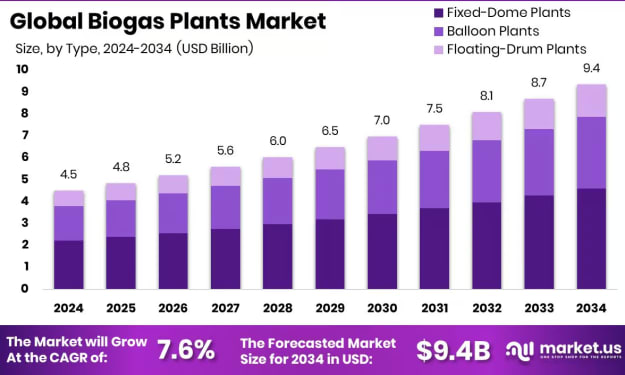
Biogas Plants Market To Reach USD 9.4 Billion by 2034 at 7.6% CAGR
Overview The Biogas Plants Market is projected to experience steady growth over the coming decade, driven by increasing demand for renewable energy and sustainable waste management solutions. The market is expected to be worth around USD 9.4 billion by 2034, up from USD 4.5 billion in 2024, growing at a compound annual growth rate (CAGR) of 7.6% from 2025 to 2034. Biogas plants convert organic waste such as agricultural residues, food waste, and animal manure into renewable energy in the form of biogas, which can be used for electricity generation, heating, and transportation fuel.
By Hayden Kulas2 days ago in Futurism



Comments
There are no comments for this story
Be the first to respond and start the conversation.