
Astronomers Detect a Strange Object That “Blinks” Every 20 Minutes — and No One Knows What It Is
Space

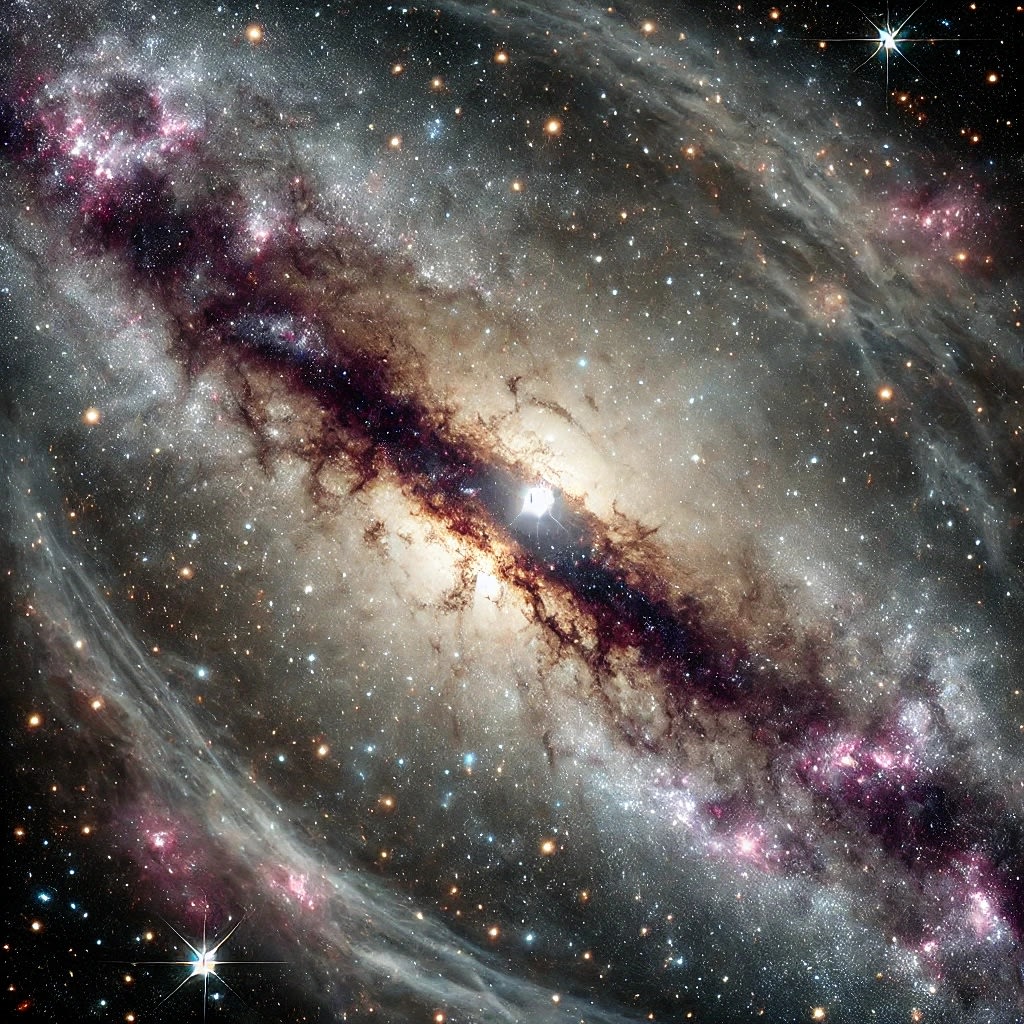
Astronomy has a way of humbling everyone who dares to believe we finally understand the Universe. Just when scientists start to think the cosmic inventory is complete, something unexpected appears and shatters the sense of certainty. This time, the surprise comes in the form of a mysterious radio object that behaves unlike anything seen before: it blinks with perfect regularity once every 20 minutes.
These flashes last only for a short window of time before the object disappears again, fading into absolute silence — until the next precisely timed pulse arrives. Many astrophysical bodies vary in brightness, but this one stands out. Its behavior does not fit into any known category, and that is precisely why astronomers are so intrigued.
A Flashing Rhythm That Shouldn’t Exist
Most objects in the cosmos that “pulse” do so rapidly. Pulsars — spinning neutron stars with powerful magnetic fields — can emit hundreds of flashes per second. Even slower variables typically operate on scales of seconds to a few minutes. But a 20-minute period is something else entirely.
It is far too slow for a neutron star acting as a pulsar, yet far too stable and repetitive to match the behavior of ordinary variable stars or white dwarfs. In theory, such an object shouldn’t be able to produce these radio bursts at all.
And yet it does.
A Signal Confirmed, Not an Instrument Glitch
The object lies near the Galactic plane, an area packed with star-forming regions, remnants of supernova explosions, dense molecular clouds, and compact stellar corpses of all kinds. Initially, the detection team suspected interference — perhaps from Earth, satellites, or a technical issue with the radio array.
But after repeated observations with different instruments, the pulses proved to be genuine. The timing was identical: one burst every 1,200 seconds, with near-mathematical precision.
That reliability made the discovery even more puzzling. Nature rarely operates like a clock unless something extraordinarily compact and energetic is involved.
What Could Possibly Be Flashing?
At the moment, no single theory fully explains the object’s properties. Several hypotheses exist, each with its own strengths and contradictions.
1. A Super-Slow Magnetar
Magnetars are neutron stars with magnetic fields so intense they can twist their crusts and generate enormous bursts of energy. They often produce radio flares and X-ray flashes. However, all known magnetars rotate relatively quickly — typically every few seconds.
For a magnetar to flash every 20 minutes, it would need to be rotating shockingly slowly. Theoretically, such an object could exist at the end of its life cycle, but no observations have ever confirmed one. If this is indeed a super-slow magnetar, it could represent the first of an entirely new category.
2. A Peculiar Magnetic White Dwarf
White dwarfs — the dense remnants of Sun-like stars — can also generate electromagnetic emissions, especially if they interact with a companion star. But their activity tends to be irregular, often tied to accretion events or surface instabilities.
A white dwarf flashing like a lighthouse every 20 minutes would require a highly unusual configuration of magnetic fields or rotation. It is not impossible, but it would challenge current models.
3. A Completely New Class of Object
This is the most exciting scenario for astronomers. Over the last decade, several exotic transient phenomena have been discovered — including Fast Radio Bursts (FRBs), ultra-long-period pulsars, and unusual repeating radio transients. Some of them were theoretical impossibilities until observational data forced the scientific community to revise its assumptions.
The new source may be part of this trend: a hidden population of objects in the Milky Way emitting only occasional, difficult-to-detect bursts.
Why This Discovery Matters
At first glance, a dim radio object blinking on and off may not sound like a breakthrough. But its importance is profound. If it is truly an ultra-slow magnetar, it challenges existing models of how neutron stars lose energy and evolve over time. If it is a white dwarf, it forces a reevaluation of how magnetic phenomena operate in these dense stellar remnants.
And if it is something entirely new, the scientific implications could be immense.
Furthermore, the detection suggests that similar objects might be scattered throughout the Milky Way, unnoticed simply because they spend most of their time dormant. We only saw this one because it periodically “wakes up” and screams across the radio spectrum long enough for telescopes to catch its signal.
What Comes Next?
Astronomers are now coordinating multi-wavelength observations — optical, infrared, X-ray, and even gamma-ray — to understand what powers these peculiar flashes. Each portion of the spectrum might reveal different clues: heat signatures, energetic outbursts, or environmental interactions.
Yet there is a chance that the object remains visible only in radio wavelengths, making it a kind of cosmic ghost: detectable only during brief moments when its beam sweeps across Earth.
A Quiet Challenge from the Universe
This strange blinking object is not the most dramatic sight in the sky. It is not a supernova or a black hole devouring a star. But it may represent something even more valuable — a gap in our knowledge.
Every 20 minutes, with perfect regularity, it sends out a brief whisper across the Galaxy. A reminder that the cosmos is still filled with puzzles, and that many of its secrets remain hidden in the darkness.
About the Creator
Keep reading
More stories from Holianyk Ihor and writers in Futurism and other communities.
Titan’s Strange “Wandering Dunes”: A Discovery That Redraws the Map of This Alien World
When the Cassini spacecraft first mapped the surface of Titan with radar, researchers realized they were looking at one of the most Earth-like worlds in the Solar System—but in a dark, chemically exotic form. Titan, Saturn’s largest moon, is a place of methane rains, hydrocarbon lakes, seasonal storms, and dense orange haze. Its valleys, channels, and sedimentary plains resemble terrestrial landscapes carved by water and wind, only here the fluids are liquid hydrocarbons and the “sediment” is organic dust.
By Holianyk Ihor3 months ago in Futurism
Content Creator Economy Market towards a USD 1,143 Billion By 2034
The Content Creator Economy Market is projected to reach approximately USD 1,143 Billion by 2034, increasing from USD 117 Billion in 2024, growing at a robust CAGR of 25.6% during the forecast period from 2025 to 2034. This significant growth can be attributed to the expanding role of content creators across various platforms, such as YouTube, Instagram, TikTok, and Twitch, where individuals and brands are leveraging digital media to build audiences, monetize content, and influence consumer behavior.
By Roberto Crum6 days ago in Futurism
The Tofu Market: Reinventing a Timeless Food in a Modern World
Walk into any major grocery store today and you’ll find tofu in a dozen varieties — silken, extra‑firm, pre‑marinated, even smoked or ready‑to‑cook. Once considered an obscure ingredient outside East Asian cuisines, tofu now inhabits the mainstream shelves of supermarkets from New York to Nairobi. This evolution reflects not just a shift in taste preferences, but a broader cultural, economic, and environmental wave that’s reshaping how the world eats.
By James Smith4 days ago in Futurism
The Forsyth House Fire
Since 1851, Forsyth House has stood on the corner of Union Street and Gordon Street in the heart of Glasgow. Its iconic, or was... because on Sunday 8th of March, 2026, a fire broke out in a small, seemingly un-named shop in the building and tore all that history down. As I write, the rubble is still unsettled and the street is still blocked off. Central Station is quiet on the upper level, and around 30 small businesses have quite literally gone up in smoke.
By S. A. Crawford3 days ago in The Swamp




Comments
There are no comments for this story
Be the first to respond and start the conversation.