
Asteroids That Threaten Earth: A Hidden Danger from the Depths of Space
Space

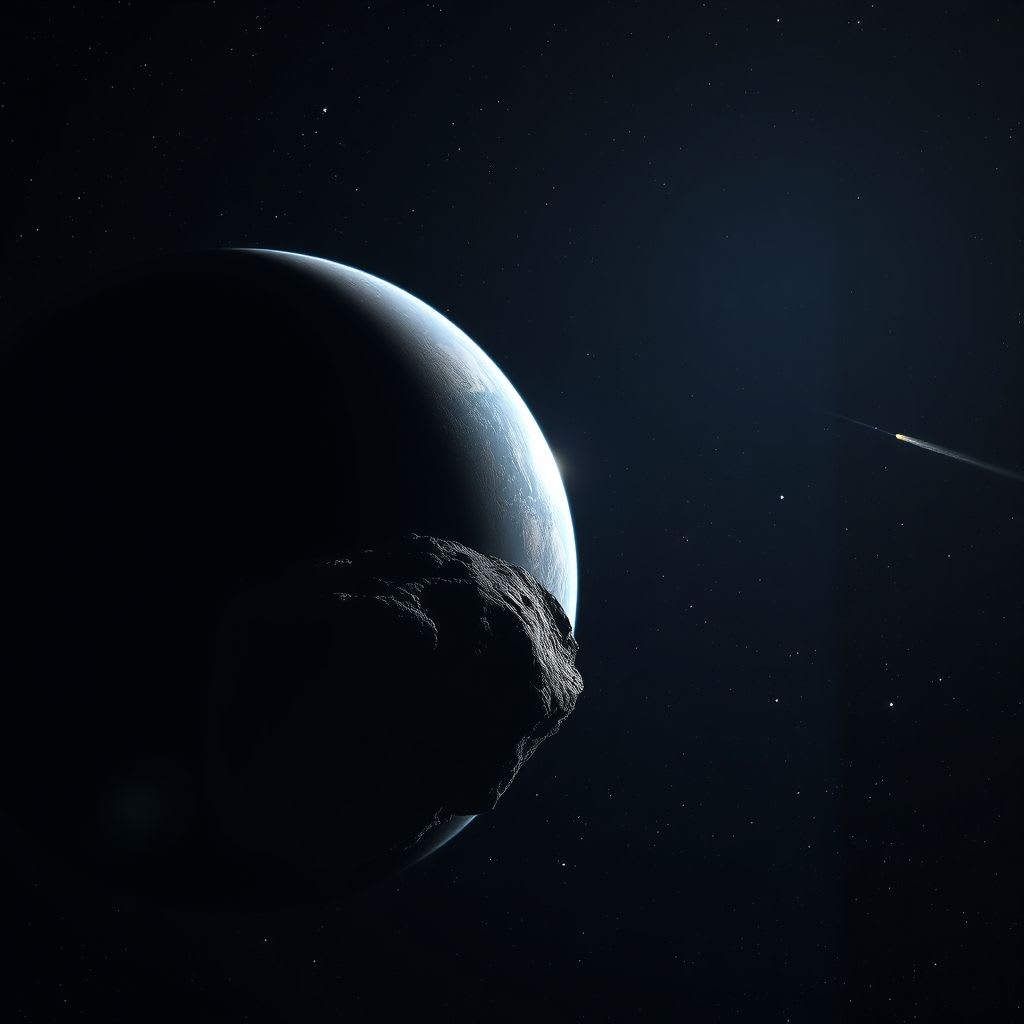
Every day, Earth is bombarded by millions of tiny specks of cosmic dust and small meteoroids that burn up harmlessly in our atmosphere. But lurking among this harmless debris are much larger cosmic travelers asteroids with the potential to cross paths with our planet. Some are massive enough to cause devastation on a global scale. As we continue to explore the universe, a critical question emerges: how real is the threat of an asteroid impact, and can we protect ourselves?
Cosmic Wanderers: What Are Asteroids?
Asteroids are the leftover building blocks of the solar system rocky fragments that never coalesced into planets. Most reside in the asteroid belt between Mars and Jupiter, but some are knocked from their stable orbits and become near-Earth objects (NEOs), moving into paths that bring them closer to our planet.
Among these, scientists have identified a special category: Potentially Hazardous Objects (PHOs). These are asteroids over 140 meters in diameter that come within 7.5 million kilometers of Earth. While that might sound far away, in astronomical terms, it's alarmingly close enough to raise concern.
When Space Rocks Rewrite History
The danger asteroids pose isn’t theoretical. Earth bears the scars of past collisions and some of them reshaped life itself.
The most dramatic example is the Chicxulub impactor, a 10-kilometer-wide asteroid that struck Earth around 66 million years ago. The result? A mass extinction event that wiped out about 75% of all life on the planet, including the dinosaurs. The collision caused global wildfires, tsunamis, and a "nuclear winter" effect, as dust and debris filled the atmosphere and blocked sunlight for months.
More recently, in 2013, the Chelyabinsk meteor exploded in the sky over Russia. Though it was only about 20 meters in diameter, the blast wave shattered windows across a wide area, injuring more than 1,500 people. It was a loud wake-up call: even small objects can have big consequences.
Watching the Sky: Tracking the Threat
Fortunately, Earth is not defenseless. Space agencies like NASA and ESA have invested heavily in planetary defense. Programs like NEO Observations are dedicated to spotting and cataloging any object that might pose a risk to our planet.
Sophisticated telescopes such as Pan-STARRS and NEOWISE scan the skies nightly, tracking thousands of NEOs. But observation is just the first step. Scientists are also working on intervention technologies to alter an asteroid's path before it can become a threat.
DART: Humanity’s First Planetary Defense Test
In 2022, NASA launched a bold mission: DART (Double Asteroid Redirection Test). Its goal was to slam a spacecraft into Dimorphos, a small moonlet orbiting a larger asteroid called Didymos. The mission was a success DART changed Dimorphos’s orbit, proving that kinetic impact could be a viable method to deflect dangerous space rocks.
Although Dimorphos was never a threat to Earth, the test was a historic milestone. For the first time, humanity demonstrated the ability to proactively defend the planet from a cosmic threat.
The Future of Asteroid Defense
The odds of a civilization-ending asteroid hitting Earth are very low but not zero. As of 2025, scientists have identified more than 30,000 near-Earth objects, and that number grows every year. Worryingly, some asteroids are detected only days before their closest approach.
In the coming decades, experts envision a more robust planetary defense system. Ideas include orbital interceptor platforms, nuclear deflection strategies (reserved for worst-case scenarios), and gravity tractors spacecraft that slowly tug an asteroid off course using their own gravitational pull. These concepts, once the stuff of science fiction, are now serious topics of research.
A Fragile World Under a Vast Sky
We live on a beautiful planet, tucked beneath the shimmering canopy of stars. But beyond that starry veil lies a dynamic and sometimes dangerous universe. Asteroids remind us that our world is not isolated it’s part of a vast and unpredictable cosmic neighborhood.
The more we understand the skies above, the better prepared we are to preserve life below. Awareness, science, and international cooperation are our best tools in ensuring that Earth remains a safe haven even in the face of threats that come from millions of kilometers away.
In the end, looking up at the stars isn’t just about wonder it’s about vigilance.
About the Creator
Keep reading
More stories from Holianyk Ihor and writers in Futurism and other communities.
The Most Massive and Luminous Stars in the Universe: Cosmic Giants
When we gaze at the night sky, the stars appear as delicate points of light, shimmering in the dark canvas above us. Yet, behind this beauty lie true titans stars so massive and brilliant that they defy ordinary comprehension. These cosmic giants form in the most extreme conditions, live fast, and die in spectacular explosions, shaping the very fabric of galaxies. Let’s journey into the fascinating world of the most massive and luminous stars in the universe.
By Holianyk Ihor7 months ago in Futurism
About Binding Prometheus
I want to start actively advocating on behalf of my own work, and the most valuable part of my canon is, without a doubt, Binding Prometheus, the play I have been working on since 2019 and only finished in 2023 as part of my MA. The play itself is an amalgamation of a million different inspirations. On one end, it evokes the Ancient Greek myth-play, deriving its own title from the earliest extant work of Western drama we have, Aeschylus’s Prometheus Bound. On the other end, it borrows significantly from the sci-fi bulwarks from over the years, namely Mary Shelley’s Frankenstein and Karel Capek’s Rossum’s Universal Robots. The play could be an episode of Black Mirror, I fear. I don’t know. I’ve only ever seen one episode of Black Mirror.
By Steven Christopher McKnight17 days ago in Futurism
UAE Mental Health Market: Rising Awareness, Service Expansion & Growth Outlook
According to IMARC Group's latest research publication, UAE Mental Health Market size reached USD 13.10 Billion in 2024. Looking forward, IMARC Group expects the market to reach USD 28.26 Billion by 2033, exhibiting a growth rate (CAGR) of 8.92% during 2025-2033.
By Abhay Rajput5 days ago in Futurism


Comments
There are no comments for this story
Be the first to respond and start the conversation.