
Artificial Intelligence in Diagnostics Market Size and Forecast 2025–2033
How AI Is Transforming Global Disease Detection and Clinical Decision-Making


Introduction: A New Era of Intelligent Diagnostics
Artificial Intelligence (AI) is rapidly redefining the global diagnostics landscape. From detecting cancer earlier to reducing diagnostic errors and accelerating clinical decisions, AI-powered systems are reshaping how healthcare professionals interpret medical data. According to Renub Research, the Artificial Intelligence in Diagnostics Market is expected to grow from US$ 1.41 billion in 2024 to US$ 6.52 billion by 2033, registering a strong CAGR of 18.55% during 2025–2033.
This growth is fueled by advances in machine learning, big data analytics, medical imaging, and cloud computing, combined with rising healthcare demand and supportive regulatory frameworks. AI is no longer experimental—it is becoming an essential clinical tool across radiology, pathology, cardiology, oncology, neurology, and beyond.
As healthcare systems worldwide struggle with increasing patient loads, physician shortages, and the need for precision medicine, AI-driven diagnostics are emerging as a practical and scalable solution.
Global Artificial Intelligence in Diagnostics Industry Overview
The global AI in diagnostics industry is evolving at an unprecedented pace. With healthcare data expanding exponentially through electronic health records (EHRs), wearable devices, genomics, and imaging platforms, AI systems are uniquely positioned to analyze complex datasets with speed and accuracy that surpass human capabilities.
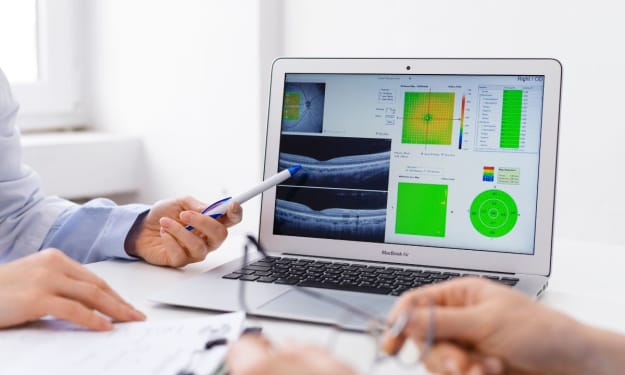
In radiology, AI algorithms can detect subtle abnormalities in X-rays, CT scans, and MRIs that may escape the human eye. In pathology, digital slides analyzed by deep learning models help identify cancerous cells with high precision. In genomics, AI accelerates variant analysis and disease prediction, reducing diagnosis timelines from weeks to hours.
North America currently dominates the market, supported by advanced healthcare infrastructure, strong R&D investment, and early adoption of digital health technologies. However, Asia-Pacific is the fastest-growing region, driven by large populations, government AI initiatives, and rapid digitization of healthcare services.
Key players such as Siemens Healthineers, GE Healthcare, IBM Watson Health, Google Health, Aidoc, and AliveCor are investing heavily in AI-powered diagnostic platforms. Despite concerns about data privacy, algorithm transparency, and regulatory validation, AI adoption continues to accelerate as clinical evidence of its benefits grows stronger.
Investment Momentum and Innovation Surge
The rapid growth of healthcare startups has further accelerated innovation in AI diagnostics. Venture capital funding and government support have enabled young companies to bring AI-driven tools to market faster than ever before.
Arterys raised US$ 28 million in Series C funding to expand its AI-based medical imaging portfolio.
Aidoc secured US$ 20 million in Series B funding to strengthen its AI-powered radiology solutions.
GE Healthcare launched its AI-driven Thoracic Care Suite to detect chest abnormalities more efficiently.
AliveCor’s Kardia AI V2 received FDA approval, enabling enhanced ECG interpretation using AI.
These developments demonstrate how AI is moving from research labs into everyday clinical workflows, transforming diagnostics into a faster, more reliable process.
AI in Chronic Disease Detection: A Growing Application Area
AI is playing a critical role in identifying chronic diseases earlier, including kidney disease, cardiovascular conditions, diabetes, and neurological disorders.
In May 2024, Premier, Inc. and AstraZeneca launched the Uncover CKD – Care Collective campaign, leveraging AI tools to detect undiagnosed chronic kidney disease (CKD). Using Premier’s PINC AI platform, the initiative aims to improve diagnostic accuracy, physician awareness, and treatment planning across U.S. health systems.
Such programs highlight how AI is not only improving diagnostics but also reducing long-term healthcare costs and improving patient outcomes through early intervention.
Key Growth Drivers of the AI in Diagnostics Market
1. Rising Demand for Early and Accurate Diagnosis
The global rise in cancer, cardiovascular disease, respiratory illnesses, and neurological disorders has created urgent demand for faster and more precise diagnosis. AI enables clinicians to analyze complex imaging, pathology, and lab data with unmatched consistency and speed.
By reducing human error and enabling earlier detection, AI improves survival rates and lowers treatment costs. As healthcare systems shift toward preventive and precision medicine, AI-powered diagnostics are becoming indispensable tools.
2. Advancements in AI and Machine Learning Technologies
Continuous breakthroughs in deep learning, neural networks, and natural language processing are enhancing the diagnostic capabilities of AI systems. These technologies enable models to learn from millions of clinical cases and improve accuracy over time.
Deep learning has especially revolutionized diagnostic imaging, allowing AI to detect minute patterns in scans and pathology slides that would be nearly impossible to identify manually. This automation reduces physician workload while improving diagnostic confidence.
3. Explosion of Healthcare Data
Healthcare data is growing faster than any other sector. EHRs, medical imaging, genomics, wearable sensors, and remote monitoring devices generate massive datasets daily. Traditional analytics tools struggle with this complexity, but AI thrives on it.
AI systems can integrate structured and unstructured data from multiple sources to identify trends, correlations, and predictive insights—making them essential for modern diagnostics. As digitization accelerates, AI adoption will continue to rise.
Challenges Facing the AI in Diagnostics Market
High Development and Implementation Costs
Developing AI-based diagnostic tools requires significant investment in data collection, algorithm training, clinical validation, and infrastructure. High-performance computing, cloud integration, and cybersecurity add further costs.
For small and mid-sized healthcare providers, especially in developing countries, these financial barriers can delay adoption. Additionally, ongoing maintenance, regulatory compliance, and system updates add to long-term expenses.
Resistance to Change Among Healthcare Professionals
Despite proven benefits, AI adoption often faces resistance from clinicians who are cautious about relying on algorithms for clinical decisions. Concerns include lack of transparency (“black-box” models), fear of deskilling, and workflow disruption.
To overcome this, developers must focus on explainable AI, physician training, and clinical evidence demonstrating improved outcomes. Building trust remains essential for widespread adoption.
Country-Level Market Insights
United States Artificial Intelligence in Diagnostics Market
The U.S. remains the world’s largest market for AI in diagnostics due to its advanced healthcare infrastructure, high R&D spending, and strong regulatory support.
AI is widely used in radiology, cardiology, oncology, and genomics, driven by the need for early detection of cancer and heart disease. FDA approvals are accelerating, further legitimizing AI-driven diagnostics.
In October 2024, Invenio Imaging’s NIO Lung Cancer Reveal module received FDA Breakthrough Device Designation, enabling faster and more accurate evaluation of lung biopsies using AI-powered imaging.
Despite data privacy concerns, the U.S. market continues to expand rapidly, positioning AI as a cornerstone of future healthcare delivery.
United Kingdom Artificial Intelligence in Diagnostics Market
The UK is aggressively adopting AI to address radiologist shortages and long diagnostic wait times. The National Health Service (NHS) is integrating AI into screening programs to improve efficiency and early detection.
Private sector innovations, such as AI-powered body scans, are complementing public healthcare initiatives, though ethical and privacy concerns remain.
In October 2024, Optellum secured funding under a US$ 159.95 million cancer program to support research on AI-based early lung cancer detection, reinforcing the UK’s commitment to AI-driven healthcare transformation.
China Artificial Intelligence in Diagnostics Market
China is emerging as a global leader in AI diagnostics, supported by strong government backing and a rapidly modernizing healthcare system. Companies like Tencent and Infervision are developing advanced AI tools for radiology, pathology, and genomics.
Government initiatives such as “Internet + Healthcare” aim to integrate AI across hospitals and clinics, improving access and efficiency nationwide. Despite regulatory and privacy challenges, China’s scale and innovation momentum make it a key growth engine for the global market.
In July 2023, a US$ 5 million AI-genomics project in Hong Kong demonstrated how AI can improve mental health diagnosis by moving beyond symptom-based methods toward data-driven approaches.
United Arab Emirates Artificial Intelligence in Diagnostics Market
The UAE is positioning itself as a regional hub for AI-powered healthcare innovation. Under the UAE Strategy for Artificial Intelligence 2031, the country is integrating AI across healthcare services to improve outcomes and efficiency.
The Dubai Health Authority has established regulatory frameworks to ensure safe AI deployment, while strong digital infrastructure supports AI-enabled telemedicine and diagnostics.
Public-private partnerships and increased R&D investment are driving adoption, with AI expected to significantly enhance personalized treatment and diagnostic accuracy across the UAE.
Recent Developments in the AI in Diagnostics Industry
September 2024: Roche expanded its digital pathology platform with 20+ new AI algorithms from eight partners, enhancing cancer diagnostics and research efficiency.
July 2024: AWS and GE HealthCare partnered to develop industry-specific AI foundation models to unlock healthcare data and improve clinical outcomes.
These collaborations highlight the growing convergence of cloud computing, AI, and medical diagnostics.
Artificial Intelligence in Diagnostics Market Segmentation
By Component
Software
Services
Hardware
By Application
Neurology
Radiology
Chest & Lung
Oncology
Cardiology
Pathology
Others
By End Use
Hospitals & Clinics
Diagnostic Laboratories
Imaging Centers
Other End Users
Regional Coverage
North America: United States, Canada
Europe: UK, Germany, France, Italy, Spain, Belgium, Netherlands, Turkey
Asia-Pacific: China, Japan, India, Australia, South Korea, Southeast Asia
Latin America: Brazil, Mexico, Argentina
Middle East & Africa: UAE, Saudi Arabia, South Africa
Competitive Landscape
Key players analyzed from four strategic viewpoints—overview, leadership, recent developments, and revenue analysis—include:
Siemens Healthineers
GE Healthcare
Aidoc
Riverain Technologies
Vuno, Inc.
Neural Analytics
Imagen Technologies
AliveCor Inc.
Final Thoughts: The Future of Diagnostics Is Intelligent
The Artificial Intelligence in Diagnostics market is at the forefront of healthcare transformation. With rapid technological innovation, increasing disease burden, and global demand for precision medicine, AI is becoming essential rather than optional.
Despite challenges around cost, adoption, and regulation, the long-term outlook remains exceptionally strong. By 2033, AI will not only assist clinicians—it will redefine how diseases are detected, diagnosed, and treated worldwide.
About the Creator
Sushant. Renub Research
I’m Sushanta Halder, Digital Marketing Manager at Renub Research with 15+ years in SEO, content, PPC & lead generation. Passionate about data-driven growth strategies.
Keep reading
More stories from Sushant. Renub Research and writers in Futurism and other communities.
United States Semaglutide Market Size & Forecast 2025–2033
The United States Semaglutide Market is projected to grow dramatically in the coming years, rising from US$ 8.17 Billion in 2024 to US$ 17.29 Billion in 2033, according to Renub Research. This reflects a robust CAGR of 8.68% during 2025–2033, marking semaglutide as one of the fastest-expanding therapeutic categories in modern U.S. healthcare.
By Sushant. Renub Research2 months ago in Futurism
About Binding Prometheus
I want to start actively advocating on behalf of my own work, and the most valuable part of my canon is, without a doubt, Binding Prometheus, the play I have been working on since 2019 and only finished in 2023 as part of my MA. The play itself is an amalgamation of a million different inspirations. On one end, it evokes the Ancient Greek myth-play, deriving its own title from the earliest extant work of Western drama we have, Aeschylus’s Prometheus Bound. On the other end, it borrows significantly from the sci-fi bulwarks from over the years, namely Mary Shelley’s Frankenstein and Karel Capek’s Rossum’s Universal Robots. The play could be an episode of Black Mirror, I fear. I don’t know. I’ve only ever seen one episode of Black Mirror.
By Steven Christopher McKnight20 days ago in Futurism
AI's Approach to Medical Device Software Design
The healthcare industry is undergoing a rapid digital transformation, driven by the increasing adoption of connected medical devices, smart diagnostics, and software-powered patient care systems. At the heart of this evolution lies medical device software design, a specialized discipline that blends healthcare expertise, regulatory compliance, and advanced engineering to create reliable, life-critical digital solutions.
By Steve Waugh5 days ago in Futurism



Comments
There are no comments for this story
Be the first to respond and start the conversation.