
Artificial Intelligence and Social Inequality: A Threat to Diversity and Equality
Explore how AI amplifies social inequality, posing a real threat to diversity and equality.

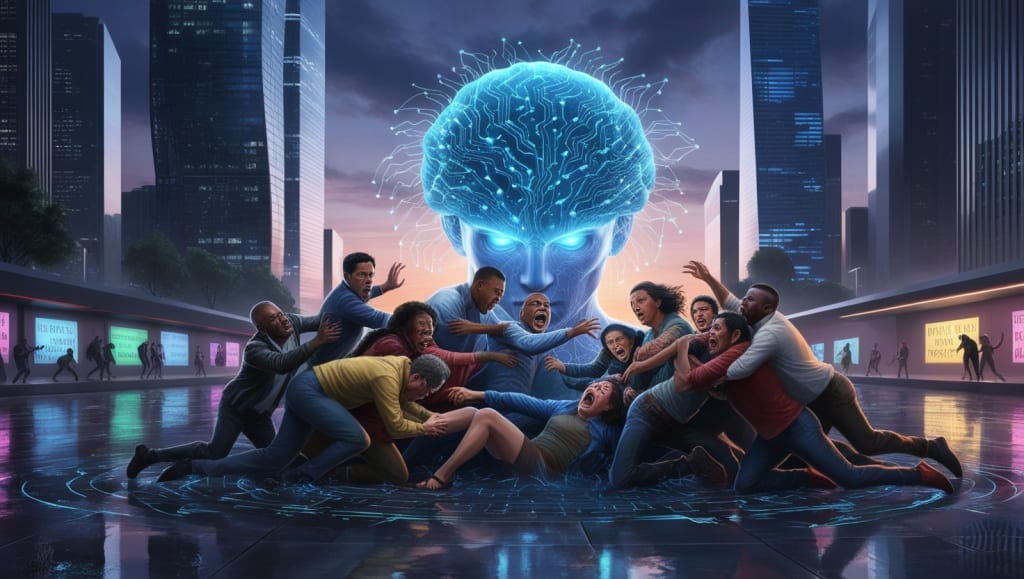
Artificial intelligence (AI) has been touted as a game-changer, revolutionizing industries, enhancing convenience, and even promising to solve global issues. From healthcare to entertainment, AI has proven its potential. However, while the technology offers remarkable advantages, it also brings with it a pressing concern that often flies under the radar: the exacerbation of social inequality and the threat it poses to diversity and equality.
The Double-Edged Sword of AI
At first glance, AI seems like the perfect tool to level the playing field. Machine learning algorithms can analyze massive data sets to identify patterns, which could help identify and tackle societal issues like discrimination, poverty, and injustice. AI could, in theory, provide solutions that are more objective and free from human bias. Yet, reality paints a different picture. Instead of narrowing gaps, AI is at risk of widening them.
The problem lies in how AI systems are designed and trained. Most AI technologies rely on large datasets to "learn." These datasets, however, are often built by humans and, as such, inherit the biases of their creators. For example, AI systems used in hiring processes or lending decisions can unintentionally favor one demographic group over others, perpetuating long-standing inequalities. If the data used to train an AI system is biased, the decisions it makes will be too. This leads to a troubling paradox: technology designed to improve efficiency and fairness might, in fact, reinforce discriminatory practices.
Bias in the Data: A Silent Culprit
Imagine a hiring algorithm that was trained on a dataset of resumes from a company that has historically employed mostly white, male workers. The AI would likely learn to favor candidates who share similar attributes—such as gender, race, or education—over others. While the system might be "colorblind" in its decision-making process, it doesn’t account for the fact that the data itself is not neutral. This creates a cycle where the same groups continue to benefit, and marginalized groups remain excluded.
AI’s reliance on data means that existing social inequalities get encoded into the technology itself. Rather than offering a fresh, unbiased perspective, AI simply replicates and amplifies the structural inequalities already present in society. For example, facial recognition software has been shown to misidentify people of color at a higher rate than white individuals. Similarly, predictive policing algorithms often target minority communities, reinforcing cycles of over-policing and racial profiling.
Access to Technology: Who Gets to Benefit?
Another critical issue lies in who has access to AI and who benefits from its advancements. The digital divide remains a significant challenge in many parts of the world, with certain communities having limited access to technology and the internet. If AI-driven solutions and opportunities are only available to a select few, we risk exacerbating existing social and economic divides.
For instance, in education, AI-based tutoring systems or personalized learning platforms could be a powerful tool for students in underfunded schools. However, without equal access to these technologies, many students will continue to face barriers to success. In wealthier areas, where access to technology is more abundant, students are better positioned to benefit from AI-powered education, further widening the gap between the haves and the have-nots.
This lack of access is not only a challenge for developing nations but also for marginalized communities within more developed countries. In the United States, for example, rural areas or inner-city neighborhoods often lack the infrastructure needed to access and fully participate in the digital economy. Without proper access to the technology that drives AI innovation, these communities risk being left behind, unable to compete in a rapidly changing world.
The Role of Policy and Regulation
To address these issues, the role of government policy and regulation becomes crucial. Governments need to step in to ensure that AI development and implementation are done ethically and equitably. This involves ensuring that AI algorithms are not only accurate and efficient but also fair and inclusive. Regulations should require companies to audit their algorithms for bias and hold them accountable for discriminatory outcomes.
Moreover, there needs to be a broader push for digital literacy and access to technology. Providing education and training to people from all walks of life ensures that they are not excluded from the opportunities AI presents. It’s not enough to simply create cutting-edge AI systems; we must also create systems that are accessible to all and that actively work to reduce inequality.
The Path Forward
While AI presents real challenges in terms of social inequality, it also holds the potential to be part of the solution. The key is to design and implement AI systems with diversity and equality at the forefront. This means not only improving the representation of different demographics in AI training data but also fostering a more inclusive tech industry that reflects the world’s diversity.
We must move beyond the notion that AI is a neutral, objective tool. Instead, we need to recognize that it is shaped by the people who create it, the data it learns from, and the way it is deployed. By addressing these issues head-on, we can create a future where AI not only drives innovation but also fosters a more just and equitable society.
In the end, the true power of AI lies not in its ability to automate tasks or solve complex problems, but in its potential to contribute to a world where all people—regardless of race, gender, or socioeconomic status—have the opportunity to thrive. Only then will AI truly live up to its promise.
About the Creator
Indira Fania
As a writer, I’ve always been fascinated by the power of words to transform ideas into reality and inspire action.
Keep reading
More stories from Indira Fania and writers in Futurism and other communities.
Ethics in AI Development: Can This Technology Understand Morality?
As artificial intelligence (AI) continues to evolve and integrate into various aspects of our lives, one question consistently arises: Can AI truly understand ethics and morality? We’re witnessing a world where AI systems are making decisions that affect everything from our healthcare choices to the way we interact with each other online. But, as these technologies grow more powerful, the ethical dilemmas they present seem to be growing as well.
By Indira Faniaabout a year ago in Futurism
Australia Cement Market: Infrastructure Projects, Urban Construction & Green Building Materials
According to IMARC Group, the Australia cement market reached a value of USD 2.0 Billion in 2025 and is projected to reach USD 2.7 Billion by 2034, growing at a compound annual growth rate (CAGR) of 3.36% during 2026–2034. The market is expanding as construction activity continues to increase across infrastructure, residential and commercial development sectors. Urbanization and population growth are driving the need for new housing, transportation networks and public infrastructure projects. Government investments in roadways, bridges, rail systems and urban development programs are further strengthening cement demand. At the same time, the construction industry is increasingly focusing on sustainable building practices and environmentally responsible materials. Technological advancements in cement production, including energy-efficient manufacturing processes and low-carbon cement formulations, are also contributing to market growth while addressing environmental concerns associated with traditional cement production.
By Shrestha Roy2 days ago in Futurism



Comments
There are no comments for this story
Be the first to respond and start the conversation.