
Artificial Intelligence and Its Impact on Employment: Opportunities, Challenges, and Future of Work
Exploring the Benefits and Challenges of the Technological Revolution: How Is It Shaping the Future of Work?

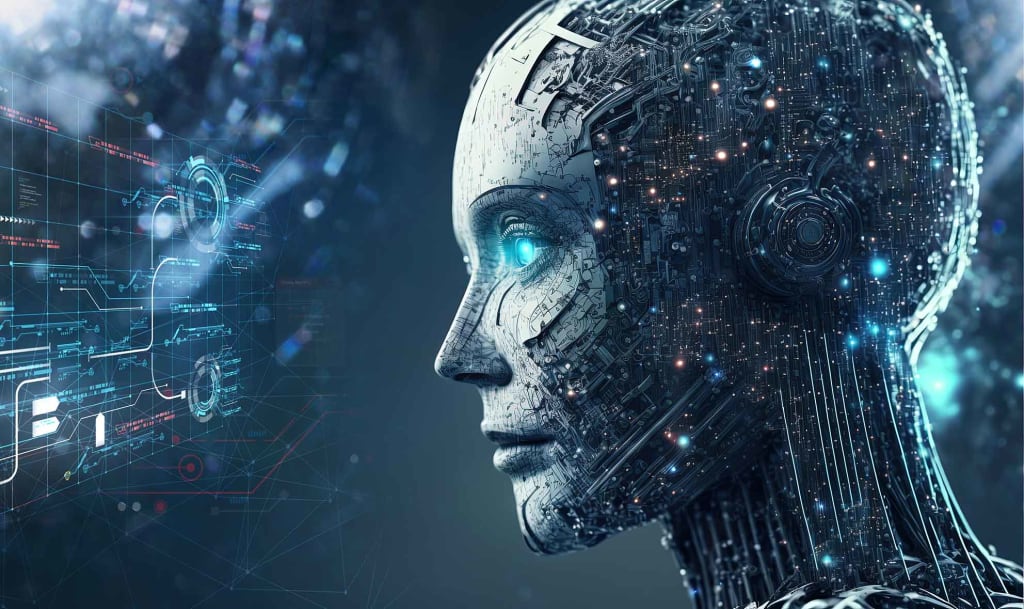
In the past decade, artificial intelligence (also called IA) has evolved from a futuristic concept to an omnipresent reality in everyday life. From virtual assistants to recommendation systems on streaming platforms, AI is transforming how we live and work. However, one of the most controversial topics in this technological revolution is its impact on employment. Are we on the verge of a golden age of job opportunities or facing a massive unemployment crisis?
The Advancement of Artificial Intelligence
AI refers to the ability of machines to perform tasks that typically require human intelligence, such as natural language processing, machine learning, and decision-making. These technologies are advancing rapidly, with applications ranging from medical diagnostics to financial data analysis.
Historically, automation driven by AI has been a force of change in employment. Throughout history, the mechanization of processes and technological innovation have replaced certain jobs but have also created new roles and economic sectors. The current question is whether AI will follow this pattern or represent a more drastic change.
Positive Effects on Employment
Not all aspects of AI’s impact are negative. AI has the potential to create new job opportunities and improve efficiency across various sectors. Here are some areas where AI could have a positive impact:
Creation of New Sectors and Roles: As AI integrates into different industries, new roles requiring specialized technology skills emerge. For example, the field of AI needs data scientists, machine learning engineers, and AI ethics experts.
Increased Productivity: AI can perform repetitive and monotonous tasks, freeing employees to focus on jobs requiring creativity and critical thinking. This can lead to greater job satisfaction and increased overall productivity.
Innovation and New Businesses: Emerging AI-driven technologies can lead to new products and services, creating opportunities for entrepreneurs and startups. Sectors such as healthcare, education, and energy are experiencing expansion due to AI-driven innovations.
Challenges and Risks in the Job Market
Despite the opportunities, AI-driven automation also presents several significant challenges:
Job Displacement: Automation can replace certain jobs, especially those involving repetitive and predictable tasks. Workers in sectors such as manufacturing, customer service, and logistics might face the risk of unemployment or a decrease in the quality of available jobs.
Economic Inequality: The gap between highly skilled technology workers and those without digital skills could widen. This may exacerbate economic and social inequalities, creating a divide between those who can benefit from new job opportunities and those who fall behind.
Changes in the Nature of Work: AI could alter the nature of many jobs, requiring new skills and competencies. This implies that education and job training will need to adapt quickly to prepare the workforce for these changes.
Preparing for the Future
To address these challenges and maximize the benefits of AI, it is crucial for both governments and businesses to take proactive measures:
Education and Training: Investing in education and training is essential to prepare the workforce for the future. Reskilling programs and continuous education can help workers acquire new skills and adapt to technological changes.
Social Protection Policies: Governments should consider social protection policies that mitigate the effects of technological unemployment, such as unemployment benefits, job search assistance, and support programs for job transitions.
Ethics and Regulation: Developing ethical and regulatory frameworks to guide the use of AI and ensure its implementation is fair and equitable is fundamental. This includes considering the social and labor impacts of emerging technologies.
The artificial intelligence is a rapidly evolving technology that is transforming various aspects of our lives and industries. As AI systems become more advanced, their influence on the employment landscape becomes increasingly significant. This article explores new dimensions of AI's impact on employment, including emerging trends, industry-specific effects, and strategies for adaptation.
AI's integration into the workforce is not just about automating tasks but also about creating entirely new job roles and industries. One notable trend is the rise of AI-enhanced human augmentation. This involves using AI to enhance human capabilities rather than replace them. For instance, AI-powered exoskeletons can assist workers in physically demanding jobs by reducing strain and increasing endurance. Similarly, augmented reality (AR) systems powered by AI can provide real-time information and guidance to workers, improving their efficiency and accuracy.
In addition to human augmentation, AI is playing a crucial role in advancing personalized customer experiences. Companies are leveraging AI to analyze consumer data and predict preferences, enabling them to tailor products and services more precisely. For example, in the fashion industry, AI algorithms analyze trends and consumer preferences to design personalized clothing recommendations. This trend extends to various sectors, including entertainment, where AI curates content recommendations based on individual viewing habits, enhancing user engagement.
The financial sector is also experiencing significant changes due to AI. Beyond fintech innovations, AI is transforming investment strategies through advanced predictive analytics. AI-driven tools can analyze market trends and financial data to provide more accurate investment forecasts, helping investors make informed decisions. Additionally, AI is being used to enhance fraud detection and prevention by identifying unusual patterns and behaviors that may indicate fraudulent activities.
In the realm of autonomous systems, AI is driving advancements in logistics and supply chain management. Self-driving trucks and drones are being tested for their potential to revolutionize transportation and delivery services. These technologies promise to reduce delivery times and operational costs, but they also raise questions about the future of driving-related jobs and the regulatory frameworks needed to ensure their safe deployment.
The educational sector is witnessing innovative applications of AI beyond personalized learning. AI-powered platforms are being used to create immersive learning experiences through virtual simulations and interactive content. These tools enable students to engage in practical scenarios and gain hands-on experience in various fields, from medicine to engineering. The integration of AI in education aims to enhance learning outcomes and prepare students for future careers in a technology-driven world.
AI's impact on employment also extends to the gig economy. Platforms that use AI to match freelancers with job opportunities are becoming increasingly popular. These platforms leverage algorithms to assess skills, availability, and preferences, facilitating more efficient connections between freelancers and clients. However, this also raises concerns about job security and the need for fair compensation and benefits for gig workers.
Another emerging trend is the use of AI in environmental sustainability. AI technologies are being employed to monitor and analyze environmental data, such as air and water quality, and predict the impact of climate change. For instance, AI-powered models can forecast extreme weather events and help organizations plan for disaster response. These applications highlight AI's potential to address global challenges and promote sustainable practices.
As AI continues to evolve, it is crucial to address the ethical and societal implications associated with its deployment. This includes ensuring that AI systems are transparent, accountable, and free from biases. The development of ethical guidelines and regulatory frameworks is essential to address issues such as algorithmic fairness, data privacy, and the responsible use of AI in decision-making processes.
To adapt to the changing employment landscape shaped by AI, individuals, businesses, and policymakers must collaborate to create a future that balances technological advancements with human needs. This involves investing in continuous learning and skill development, supporting innovation and entrepreneurship, and fostering an inclusive environment where the benefits of AI are accessible to all.
Conclusion
The artificial intelligence is significantly transforming the employment landscape, offering opportunities to enhance efficiency, foster innovation, and create new roles, while also presenting challenges such as job displacement and the need for new skills. Although AI integration brings risks like economic inequality and ethical concerns, a proactive strategy involving continuous education, ethical policy development, and support for affected workers can help maximize its benefits. With a balanced and collaborative approach, we can harness AI’s potential to build a more inclusive and prosperous future of work.
About the Creator
Keep reading
More stories from writers in Futurism and other communities.
Industrial Motors Market: Industrial Energy Management, Automation & Technology Shifts
Driven by industrial automation expansion, stricter energy efficiency regulations, rising electricity costs, smart motor adoption, and manufacturing modernization initiatives accelerating demand across process and discrete industries. According to IMARC Group's latest research publication, global industrial motors market size reached USD 24.6 Billion in 2024. Looking forward, IMARC Group expects the market to reach USD 33.3 Billion by 2033, exhibiting a growth rate (CAGR) of 3.28% during 2025-2033.
By Andrew Sullivan6 days ago in Futurism
Materials That Only Work in Space: When the Universe Becomes the Laboratory
For most of human history, materials science has been constrained by Earth itself. Gravity shapes how crystals grow, air corrodes exposed surfaces, moisture seeps into polymers, and temperature changes happen gradually. But beyond Earth’s atmosphere lies an environment so extreme—and so different—that entirely new classes of materials can exist. Some of them do not merely perform better in space; they only function in space.
By Holianyk Ihor2 days ago in Futurism


Comments
There are no comments for this story
Be the first to respond and start the conversation.