
Industrial Motors Market: Industrial Energy Management, Automation & Technology Shifts
How energy efficiency mandates, automation adoption, and manufacturing upgrades are reshaping industrial motor demand

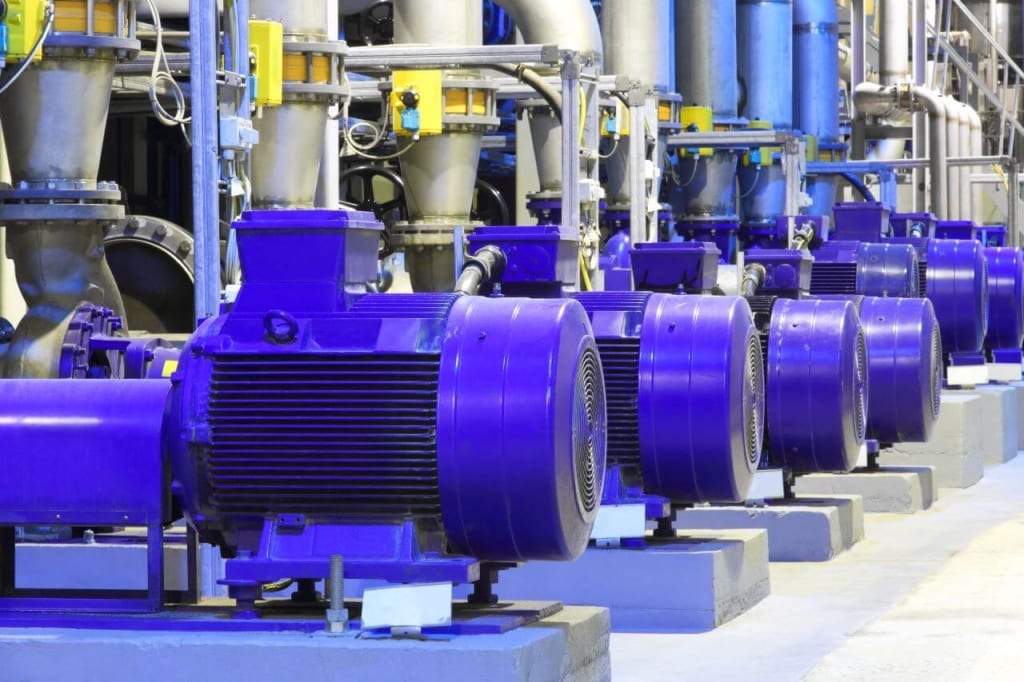
Driven by industrial automation expansion, stricter energy efficiency regulations, rising electricity costs, smart motor adoption, and manufacturing modernization initiatives accelerating demand across process and discrete industries. According to IMARC Group's latest research publication, global industrial motors market size reached USD 24.6 Billion in 2024. Looking forward, IMARC Group expects the market to reach USD 33.3 Billion by 2033, exhibiting a growth rate (CAGR) of 3.28% during 2025-2033.
How AI is Reshaping the Future of Industrial Motors Market
- Predictive Maintenance and Downtime Prevention: AI analyzes sensor data from motors—tracking vibration, temperature, and current draw—to predict failures before breakdowns occur, reducing unplanned downtime.
- Real-Time Performance Optimization: Machine learning algorithms continuously optimize motor parameters including speed, torque, and power consumption, adapting to changing production demands and maximizing operational efficiency.
- Energy Efficiency Management: AI-powered systems monitor energy consumption patterns in real-time, identify inefficiencies, and automatically adjust motor operations to reduce waste and operational costs.
- Edge Computing Integration: Edge AI enables motors to process data locally, delivering instant decision-making for adjustments like load balancing and temperature control without cloud latency delays.
- Digital Twin Simulation and Testing: AI-driven digital twins create virtual replicas of motors and systems, allowing engineers to simulate performance scenarios, test configurations, and optimize designs before physical deployment.

Industrial Motors Industry Overview:
Industrial motors power critical equipment across manufacturing, energy, and infrastructure sectors worldwide. Major automation initiatives are driving upgrades to smarter, more efficient motor systems. ITT Inc. launched VIDAR compact smart motors in March 2025, reducing energy use and emissions through integrated variable frequency technology that's 60% smaller than conventional alternatives. ABB India introduced flameproof motors in February 2025 for hazardous environments, targeting oil and gas, pharmaceuticals, and chemicals with enhanced safety and energy efficiency.
Industrial Motors Market Trends & Drivers:
Infrastructure development and renewable energy expansion are creating massive demand for industrial motors across construction, transportation, and power generation. India's Prime Minister announced INR 48,520 Crore in infrastructure projects in May 2025, including the Nabinagar Super Thermal Power Project and major highway upgrades. Power plants, water treatment facilities, and smart city initiatives require robust motor systems for pumps, conveyors, and material handling. Railway modernization and airport expansion further accelerate motor adoption. These large-scale projects need durable, energy-efficient motors that deliver consistent performance in demanding applications.
Electric vehicle production is surging, directly boosting demand for high-performance industrial motors. India's EV market is projected to reach USD 113.99 Billion by 2029 with a compound annual growth rate of 66.52%. Motors power EV propulsion systems, regenerative braking, and thermal management while also driving factory automation in production facilities. Assembly line robotics, conveyor systems, and automated tools all rely on industrial motors. The expansion of EV charging infrastructure creates additional demand for motor-driven cooling and operational systems. This multi-faceted growth spans vehicle manufacturing and supporting infrastructure.
IoT integration transforms motor operations through real-time monitoring and predictive capabilities. Connected motors equipped with sensors track temperature, vibration, and energy consumption, enabling data-driven maintenance decisions. Manufacturers implementing IoT-powered systems report significant improvements in equipment reliability and operational cost reductions. Remote diagnostics allow engineers to troubleshoot issues without site visits, while automated alerts prevent failures before they occur. This connectivity aligns with Industry 4.0 goals and sustainability targets, making IoT-enabled motors essential for modern manufacturing, utilities, and automated facilities seeking competitive advantages through digital transformation.
Leading Companies Operating in the Global Industrial Motors Industry:
- ABB Ltd.
- Brook Crompton
- Hitachi Ltd.
- Johnson Electric Holdings Limited
- Menzel Elektromotoren GmbH
- Nidec Corporation
- Regal Rexnord Corporation
- Rockwell Automation Inc.
- Siemens AG
- Toshiba Corporation
Industrial Motors Market Report Segmentation:
By Type of Motor:
- Alternating Current (AC) Motor
- Direct Current (DC) Motor
- Others
Alternating current (AC) motor represented the largest segment due to its widespread use in industrial applications, offering versatility, efficiency, and compatibility.
By Voltage:
- Low Voltage
- Medium Voltage
- High Voltage
Low voltage accounted for the largest market share as it is commonly used for most industrial applications, providing a balance between safety, cost-effectiveness, and efficient performance.
Regional Insights:
- North America (United States, Canada)
- Asia Pacific (China, Japan, India, South Korea, Australia, Indonesia, Others)
- Europe (Germany, France, United Kingdom, Italy, Spain, Russia, Others)
- Latin America (Brazil, Mexico, Others)
- Middle East and Africa
Asia Pacific enjoys the leading position in the industrial motors market, which can be attributed to its robust industrialization, rapid economic growth, and extensive manufacturing activities.
Recent News and Developments in Industrial Motors Market
- March 2025: ITT Inc. unveiled VIDAR, an innovative compact smart motor featuring integrated variable speed intelligence that could decrease energy usage and CO2 emissions, cut expenses, and extend the lifespan of industrial pumps and fans used in demanding conditions. The industrial motor utilized advanced variable frequency technology in a form that was 60% more compact than existing market products.
- February 2025: ABB India launched its newest collection of flameproof motors as the most secure option in potentially explosive settings. Built for speed, these engines were tailored for industries like oil and gas, pharma, and chemicals, where hazardous gases necessitated a strong focus on safety and reliability. Produced at ABB's advanced facility in Bengaluru, these motors aimed to provide safety, reliability, longevity, and energy efficiency.
- December 2025: At SPS 2025, ABB showcased LV Titanium Variable Speed Motors as an innovative plug-and-play platform combining an advanced drive module with a highly efficient motor to significantly reduce energy consumption and emissions. The company also introduced AI-powered 3D visualization solutions to simplify motor selection, commissioning, and troubleshooting for original equipment manufacturers.
- August 2025: Siemens introduced edge AI-driven predictive maintenance systems that continuously monitor vibration patterns, temperature fluctuations, and energy draw in motors, conveyors, and actuators. When anomalies are detected, the system automatically adjusts machine parameters in real-time, applying generative AI models directly at the edge to anticipate component defects before they occur.
Note: If you require specific details, data, or insights that are not currently included in the scope of this report, we are happy to accommodate your request. As part of our customization service, we will gather and provide the additional information you need, tailored to your specific requirements. Please let us know your exact needs, and we will ensure the report is updated accordingly to meet your expectations.
About the Creator
Andrew Sullivan
Hello, I’m Andrew Sullivan. I have over 9+ years of experience as a market research specialist.
Keep reading
More stories from Andrew Sullivan and writers in Futurism and other communities.
Tooling Market: Rapid Prototyping, Additive Manufacturing & Design Flexibility
Driven by industrial automation, rising precision manufacturing demand, expanding automotive and aerospace production, and increased adoption of smart factories, advanced materials, and efficiency-focused manufacturing practices. According to IMARC Group's latest research publication, global tooling market size was valued at USD 290.6 Billion in 2025. Looking forward, IMARC Group estimates the market to reach USD 501.4 Billion by 2034, exhibiting a growth rate of 6.20% during 2026-2034.
By Andrew Sullivana day ago in Futurism
About Binding Prometheus
I want to start actively advocating on behalf of my own work, and the most valuable part of my canon is, without a doubt, Binding Prometheus, the play I have been working on since 2019 and only finished in 2023 as part of my MA. The play itself is an amalgamation of a million different inspirations. On one end, it evokes the Ancient Greek myth-play, deriving its own title from the earliest extant work of Western drama we have, Aeschylus’s Prometheus Bound. On the other end, it borrows significantly from the sci-fi bulwarks from over the years, namely Mary Shelley’s Frankenstein and Karel Capek’s Rossum’s Universal Robots. The play could be an episode of Black Mirror, I fear. I don’t know. I’ve only ever seen one episode of Black Mirror.
By Steven Christopher McKnight29 days ago in Futurism
Commercial Printing Market: Print Service Provider Modernization, Equipment Upgrades & Market Forecast
According to IMARC Group's latest research publication, global commercial printing market size was valued at USD 774.46 Billion in 2024. Looking forward, IMARC Group expects the market to reach USD 848.1 Billion by 2033, exhibiting a growth rate of 1.07% during 2025-2033.
By sujeet. imarcgroupabout 4 hours ago in Futurism


Comments
There are no comments for this story
Be the first to respond and start the conversation.