
Artificial Intelligence
The Impact and Potential of Artificial Intelligence

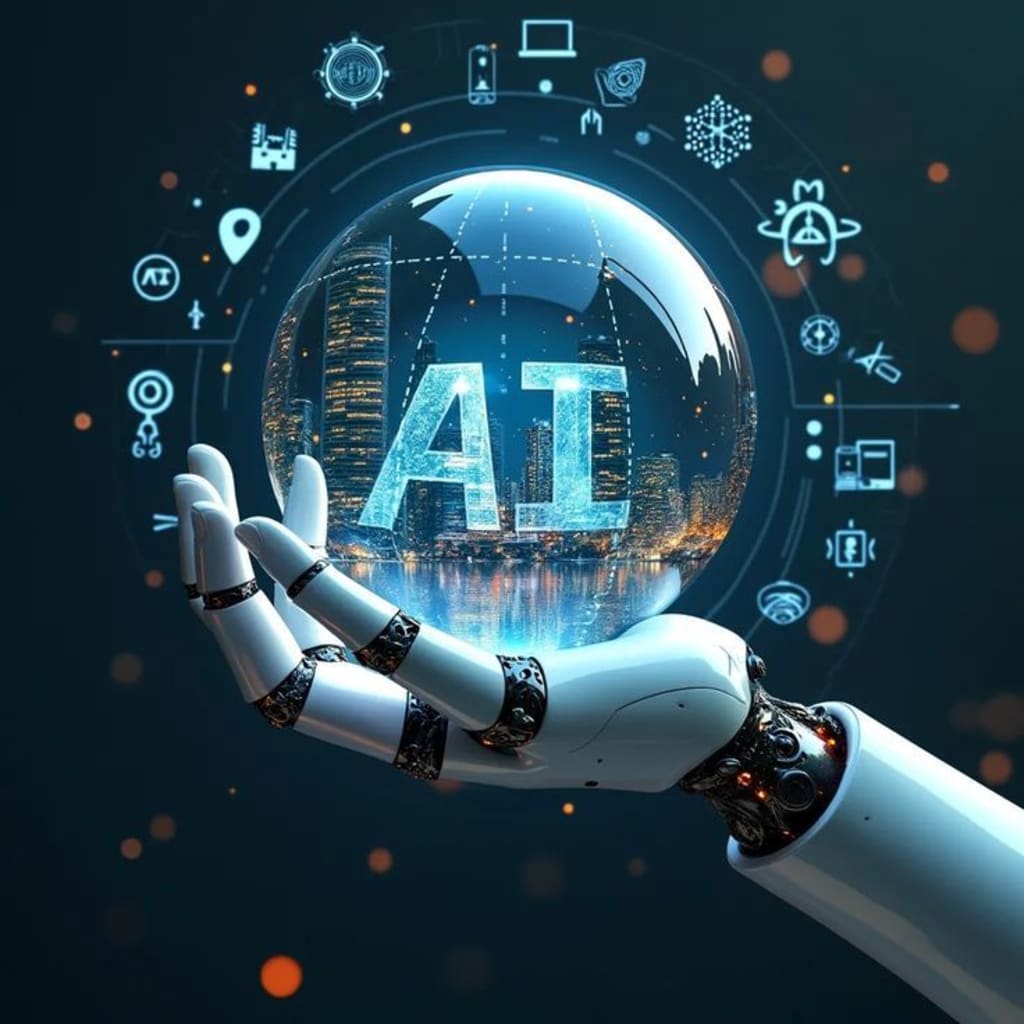
Artificial Intelligence (AI) has rapidly evolved from a futuristic concept to a transformative force reshaping our world today. From automating mundane tasks to driving advanced decision-making, AI's impact spans industries, economies, and our daily lives. This article explores the rise of AI, its current applications, and the potential it holds for the future.
**The Rise of Artificial Intelligence**
AI, at its core, refers to the ability of machines to mimic human intelligence. This includes learning from experience, recognizing patterns, solving problems, and making decisions with minimal human intervention. The concept of AI dates back to the 1950s, but it is the recent breakthroughs in machine learning, natural language processing, and neural networks that have propelled its growth. Companies like Google, OpenAI, and DeepMind have pushed the boundaries, creating systems that can beat human champions at complex games, write coherent essays, and even diagnose diseases with remarkable accuracy.
AI has also made significant strides in natural language understanding and generation. For instance, AI models like GPT (Generative Pre-trained Transformer) are capable of generating human-like text, translating languages, and even creating poetry. These advancements have revolutionized the way we interact with technology, making it more intuitive and accessible.
**Current Applications of AI**
Today, AI is deeply integrated into our daily lives, often in ways we might not even notice. Voice assistants like Siri and Alexa use natural language processing to understand and respond to human speech. Recommendation algorithms on platforms like Netflix, YouTube, and Spotify analyze user preferences to suggest personalized content, enhancing user experience and increasing platform engagement.
In finance, AI-driven systems detect fraudulent transactions, optimize investment strategies, and even assess credit risks. For example, companies like PayPal and MasterCard utilize AI to prevent fraud and improve financial security. In healthcare, AI assists in medical imaging, predictive diagnostics, and drug discovery, potentially saving lives through early disease detection. AI is also being used to predict patient outcomes and personalize treatment plans based on patient data, improving overall healthcare efficiency.
In the business world, AI is revolutionizing customer service through chatbots and automating routine tasks like data entry, invoice processing, and customer support. This allows human employees to focus on more complex, creative, and strategic work. Additionally, self-driving cars, powered by sophisticated AI systems, are gradually moving from experimental stages to mainstream use, promising to reduce traffic accidents, increase transportation efficiency, and cut down carbon emissions.
AI is also transforming industries like agriculture, manufacturing, and retail. In agriculture, AI-powered drones and robots monitor crop health, optimize irrigation, and automate harvesting, boosting productivity and reducing labor costs. In manufacturing, predictive maintenance systems powered by AI help reduce downtime and improve efficiency by predicting equipment failures before they occur. Retail giants like Amazon use AI to optimize inventory management, personalize shopping experiences, and streamline supply chains.
**Challenges and Ethical Considerations**
Despite its advantages, AI presents significant challenges and ethical concerns. Privacy is a major issue, as AI systems often rely on vast amounts of personal data to function effectively. This data can be misused if not properly protected. There are also concerns about job displacement, as automation could render certain roles obsolete. For instance, routine administrative and manufacturing jobs are at high risk of being automated, potentially leading to widespread unemployment and economic disruption.
Moreover, biased AI systems, if trained on unbalanced or prejudiced data, can reinforce harmful stereotypes and lead to unfair outcomes in hiring, law enforcement, and lending. This has sparked debates about the fairness and transparency of AI algorithms, pushing for more diverse and inclusive data sets in AI training.
Another critical concern is the potential misuse of AI in areas like autonomous weapons, mass surveillance, and deepfake technology, which can have severe societal impacts. For example, deepfakes can be used to spread misinformation or damage reputations, while AI-powered surveillance systems can threaten personal privacy and freedom. Therefore, robust regulations and ethical guidelines are essential to ensure that AI development aligns with human values and safety.
**The Future of AI**
Looking ahead, the potential of AI seems limitless. Researchers are exploring the possibilities of artificial general intelligence (AGI), systems that can understand and learn any intellectual task a human can. This could revolutionize fields like medicine, energy, and environmental science, tackling global challenges like climate change, resource management, and disease outbreaks.
Moreover, AI has the potential to personalize education, enhance cybersecurity, and even address social issues by providing more equitable access to information and opportunities. For example, AI-driven educational platforms can tailor learning experiences to individual student needs, improving learning outcomes and reducing educational disparities.
However, realizing this potential requires ongoing collaboration between governments, businesses, and researchers to establish frameworks that promote innovation while protecting human rights. This includes investing in AI research, creating transparent AI systems, and developing regulations that prevent misuse.
**Conclusion**
Artificial Intelligence is undoubtedly one of the most significant technological advancements of our time. While its benefits are immense, the challenges it presents must not be overlooked. As we move toward a more AI-driven future, it is crucial to balance innovation with responsibility, ensuring that the technology serves humanity in a fair and beneficial way. Embracing this balance will determine whether AI becomes a tool for global progress or a source of societal disruption.
About the Creator
ADNAN OLI
Experienced content writer specializing in tech, lifestyle, travel & health. I deliver well-researched, engaging, and SEO-friendly articles on time. Let’s create impactful content together!
About Binding Prometheus
I want to start actively advocating on behalf of my own work, and the most valuable part of my canon is, without a doubt, Binding Prometheus, the play I have been working on since 2019 and only finished in 2023 as part of my MA. The play itself is an amalgamation of a million different inspirations. On one end, it evokes the Ancient Greek myth-play, deriving its own title from the earliest extant work of Western drama we have, Aeschylus’s Prometheus Bound. On the other end, it borrows significantly from the sci-fi bulwarks from over the years, namely Mary Shelley’s Frankenstein and Karel Capek’s Rossum’s Universal Robots. The play could be an episode of Black Mirror, I fear. I don’t know. I’ve only ever seen one episode of Black Mirror.
By Steven Christopher McKnight16 days ago in Futurism
Luxury Goods Market: Millennials, Gen Z Influence & Future Demand Patterns
According to IMARC Group's latest research publication, global luxury goods market size reached USD 296.9 Billion in 2025. Looking forward, IMARC Group expects the market to reach USD 407.2 Billion by 2034, exhibiting a growth rate (CAGR) of 3.57% during 2026-2034.
By Andrew Sullivan5 days ago in Futurism




Comments
There are no comments for this story
Be the first to respond and start the conversation.