
Supreme Court Blocks Trump’s Attempt to Restart Deportations Under Alien Enemies Act
High Court Halts Expedited Deportations of Venezuelan Migrants Using an 18th-Century Wartime Law

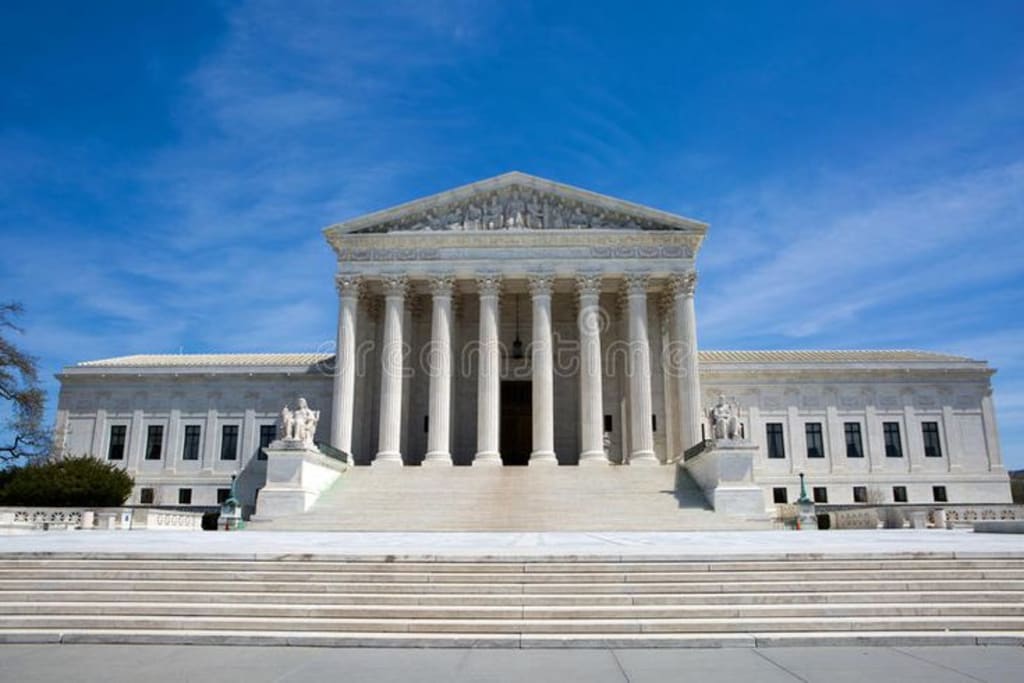
In a significant legal development on May 16, 2025, the U.S. Supreme Court issued a 7-2 ruling temporarily blocking the Trump administration from expelling Venezuelan migrants under the Alien Enemies Act of 1798. The ongoing conflict between constitutional rights and national security is reflected in this decision, which marks the second time the Court has intervened to stop deportations under this rarely used wartime law.
Background:
The Alien Enemies Act, one of the four laws collectively known as the Alien and Sedition Acts, was signed into law by President John Adams in 1798. It was made with the intention of giving the government of the United States the authority to detain and expel citizens of hostile nations during times of war or a declared national emergency. This law, over two centuries old, has seldom been used in modern times due to its controversial nature and potential for abuse. However, the Trump administration has attempted to revive it, arguing that certain Venezuelan migrants pose a significant threat to national security. According to administration officials, many of these migrants are alleged members of the Tren de Aragua, a notorious Venezuelan criminal organization involved in drug trafficking, extortion, and violent crime across Latin America. These claims, however, have been strongly disputed by human rights groups.
Civil rights organizations, including the American Civil Liberties Union (ACLU), have strongly opposed this move, asserting that using the Alien Enemies Act in this context is a severe overreach. They argue that this 18th-century law, crafted in the early days of the republic, was never intended to address modern migration issues. The application of this out-of-date law to non-citizens without clear evidence of direct hostility toward the United States is criticized by critics as a violation of constitutional due process rights and international human rights standards. Moreover, they argue that the law lacks the safeguards necessary to ensure fair treatment of those it targets, creating a significant risk of wrongful deportations and potential human rights violations.
Decision of the Supreme Court:
In its ruling, the Supreme Court emphasized that even in times of perceived national security threats, the government must respect the constitutional rights of individuals. The majority opinion, led by Chief Justice John Roberts, noted that detainees are entitled to proper due process, including adequate notice and the opportunity to contest their removal in court. The Court sharply criticized the administration for providing as little as 24 hours' notice before deportation, without sufficient information on how to challenge the removal. The Court argued that the principles established in the United States are fundamentally at odds with this lack of transparency and legal recourse. Constitution.
The decision applies specifically to Venezuelan detainees currently held in Texas, directing the Fifth Circuit Court of Appeals to determine the appropriate amount of time these detainees should be given to contest their deportation. This part of the ruling underscores the importance of procedural fairness, even when national security concerns are cited. Legal experts have noted that this directive from the Supreme Court sends a clear message that the government cannot bypass established legal protections, even under the pretext of national security.
Opinions of the Opposition: In their disagreement with the 7-2 decision, Justices Samuel Alito and Clarence Thomas argued that the Court's intervention was premature. They maintained that the lower courts should have been given more time to address these complex issues, emphasizing that the government must have the flexibility to act swiftly in matters of national security. They warned that this decision could become a precedent that makes it impossible for the executive branch to respond to new security threats, putting the nation in danger. Implications:
The ruling has significant implications for U.S. immigration policy and the broader legal landscape. It highlights the ongoing struggle to balance national security with constitutional protections and sets a precedent for future cases involving the Alien Enemies Act. Legal experts suggest that this decision could influence other immigration-related cases and potentially limit the executive branch's power to use outdated wartime laws for modern immigration enforcement. Some also warn that this ruling could open the door to more legal challenges against the use of archaic laws in contemporary contexts.
Moreover, this case raises critical questions about the limits of presidential authority during times of crisis. It underscores the importance of judicial oversight in preventing potential government overreach and affirms the role of the courts in upholding the rule of law, even in the face of national security concerns. The decision also highlights the importance of maintaining a clear separation of powers, ensuring that no single branch of government can unilaterally undermine fundamental rights.
As the case returns to the Fifth Circuit, further legal proceedings will determine the extent to which the Alien Enemies Act can be applied in the deportation of individuals without violating due process rights. Regardless of the outcome, this case is likely to shape the future of U.S. immigration policy and the rights of non-citizens for years to come.
Conclusion:
Ultimately, the Supreme Court's decision serves as a powerful reminder that even in times of national security concerns, the fundamental principles of fairness and due process cannot be ignored. The idea that the rights that the United States has guaranteed are Constitution extend to all individuals within its borders, regardless of their immigration status, and underscores the ongoing need to balance national security with fundamental human rights in a rapidly changing world.
About the Creator
ADNAN OLI
Experienced content writer specializing in tech, lifestyle, travel & health. I deliver well-researched, engaging, and SEO-friendly articles on time. Let’s create impactful content together!



Comments
There are no comments for this story
Be the first to respond and start the conversation.