
Apple iPhone Manufacturing in Pakistan – A New Era for Local Technology Industry
Refurbishment, Local Production, and Export Growth Under Pakistan’s New Electronics Manufacturing Framework

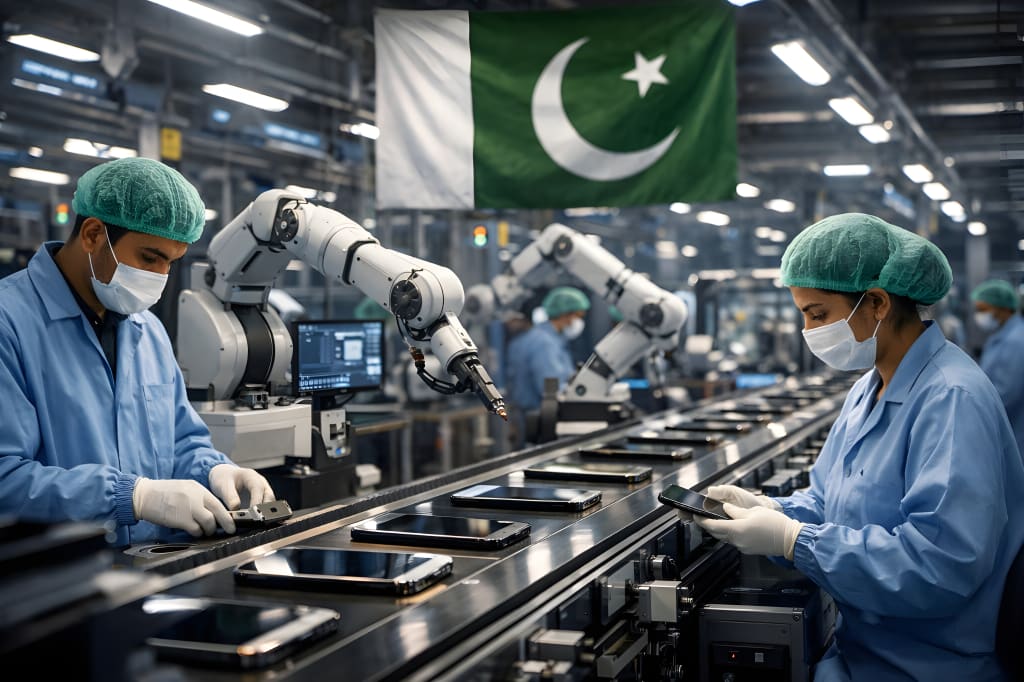
Apple iPhone Manufacturing in Pakistan – A New Era for Local Technology Industry
Introduction
Pakistan’s technology and manufacturing sector is on the verge of a historic transformation. With global smartphone giant Apple planning to begin iPhone refurbishment and manufacturing operations in the country, the development signals a powerful shift in Pakistan’s role within the international electronics supply chain.
For years, Pakistan has been a consumption‑driven smartphone market, heavily reliant on imports. However, under the government’s proposed Mobile and Electronics Manufacturing Framework, the country is now positioning itself as a production and export hub. Apple’s entry even if phased carries enormous implications for investment, employment, technology transfer, and industrial growth.
This blog explores the policy framework, Apple’s phased manufacturing strategy, expected economic impact, localisation targets, export potential, and what this move means for Pakistan’s digital future.
Background: Pakistan’s Growing Electronics Manufacturing Vision
Over the last decade, Pakistan’s smartphone demand has grown exponentially. With a population exceeding 240 million and rising internet penetration, the country has become an attractive market for mobile manufacturers.
Recognising this opportunity, the government introduced incentives to encourage local assembly plants. Several international and Chinese brands established assembly operations, reducing reliance on fully built imports.
However, high‑end smartphone manufacturing — particularly premium brands like Apple remained absent.
The new Mobile and Electronics Manufacturing Framework aims to change that by:
Offering performance‑based incentives
Encouraging export‑oriented production
Promoting local component manufacturing
Attracting global tech leaders
Building electronics industrial zones
Apple’s planned entry is the most high‑profile outcome of this policy direction so far.
Apple’s Phased Entry Strategy
Rather than launching full‑scale iPhone manufacturing immediately, Apple is expected to follow a phased operational model. This approach reduces risk while building infrastructure, technical expertise, and supply chains.
Phase 1: Refurbishment Operations
The initial stage will focus on refurbishing used iPhones, particularly devices that are two to three years old.
Activities will include:
Hardware repairs
Component replacement
Battery upgrades
Cosmetic restoration
Software optimisation
Quality testing
Refurbished devices will then be exported to international markets where demand for certified pre‑owned iPhones is strong.
Government estimates suggest refurbished exports could generate approximately $100 million in the first year alone
This phase helps Apple:
Test Pakistan’s operational environment
Train local technicians
Build repair ecosystems
Establish export logistics
Phase 2: Local Assembly
Following successful refurbishment operations, Apple is expected to expand into local assembly of selected iPhone models.
Assembly operations may include:
Screen installation
Camera module fitting
Logic board integration
Battery installation
Final device testing
At this stage, most high‑value components would still be imported, but local labour and assembly lines would add value domestically.
Phase 3: Partial Manufacturing & Localisation
Long‑term plans could include partial manufacturing of components within Pakistan, depending on policy success and supplier ecosystem development.
Potential localisation areas:
Packaging materials
Chargers and cables
Casings and frames
Battery assembly
Printed materials
This transition mirrors Apple’s expansion path in India and Southeast Asia.
Government Incentives Driving Investment
To attract Apple and similar global manufacturers, Pakistan is offering a competitive incentive structure.
Key Incentives
1. Discounted Industrial Land
Apple has requested subsidised land rates for establishing refurbishment and manufacturing facilities.
2. Performance Incentives
The government currently offers a 6% incentive to mobile manufacturers, with plans to increase it to 8%.
3. Export Facilitation
Policy support will streamline refurbishment exports and reduce bureaucratic barriers.
4. Infrastructure Support
Dedicated electronics manufacturing zones may be developed to support operations.
These incentives are designed to make Pakistan regionally competitive against India, Vietnam, and Indonesia.
Foreign Investment Momentum
Apple’s entry is part of a broader wave of electronics investment.
Pakistan is expecting approximately $557 million in investment from Chinese mobile manufacturers. Memorandums of Understanding have already been signed covering:
Smartphone assembly plants
Component manufacturing
Supply chain partnerships
Technology transfer initiatives
This influx of capital could rapidly expand Pakistan’s electronics ecosystem.
Localisation Targets: Building Domestic Capacity
A core objective of the framework is reducing reliance on imported components.
Current Situation
Local component usage: ~12%
Year 1 Target
Increase to 35%
Future Target
Reach 50% localisation
Achieving these targets would stimulate multiple domestic industries:
Plastics and polymers
Metals and machining
Electronics circuitry
Packaging and printing
Logistics and warehousing
Localisation not only reduces import bills but also strengthens industrial resilience.
Export Levy Framework
To fund localisation and industrial incentives, the government plans to introduce an export levy on high‑end smartphones.
Key Details
Levy rate: Up to 6%
Expected revenue: Rs62 billion
Applicability: Phones above Rs100,000
Exemption: Mid‑range phones (Rs50,000–Rs60,000)
Revenue generated will be reinvested into:
Manufacturing subsidies
Industrial infrastructure
Skill development programs
Component production facilities
Employment & Skill Development Impact
Apple’s operations could generate thousands of direct and indirect jobs.
Direct Employment
Technicians
Engineers
Assembly workers
Quality control staff
Logistics managers
Indirect Employment
Component suppliers
Transport companies
Packaging firms
Facility maintenance
Security services
Additionally, Apple’s strict quality standards would drive workforce upskilling through technical training programs.
Technology Transfer & Industrial Upgrading
One of the most valuable benefits of Apple’s presence is technology transfer.
workforce would gain exposure to:
Advanced repair diagnostics
Precision assembly systems
Supply chain digitisation
Quality assurance frameworks
Environmental compliance standards
This knowledge spillover could elevate the entire electronics sector.
Regional Competitiveness
Pakistan’s strategic location offers export advantages:
Proximity to Middle East markets
Trade access to Central Asia
Shipping routes via Gwadar & Karachi ports
Lower labour costs than many Asian peers
If infrastructure and policy consistency are maintained, Pakistan could emerge as a competitive alternative manufacturing base.
Challenges & Risks
Despite the optimism, several challenges must be addressed:
Policy Continuity
Investors require long‑term policy stability beyond political cycles.
Currency Volatility
Exchange rate fluctuations affect import costs and profitability.
Infrastructure Gaps
Reliable electricity, logistics, and industrial utilities remain critical.
Skilled Labour Shortage
High‑precision manufacturing demands specialised training.
Addressing these risks will determine the project’s long‑term success.
Environmental & Sustainability Considerations
Refurbishment operations contribute positively to sustainability by:
Extending device lifecycles
Reducing e‑waste
Lowering carbon footprints
Promoting circular economy practices
Apple’s global environmental standards could also introduce greener manufacturing processes locally.
Impact on Local Smartphone Prices
Local assembly and refurbishment may influence pricing dynamics.
Possible outcomes:
Reduced import duties
Lower logistics costs
Competitive refurbished pricing
Wider availability of certified pre‑owned iPhones
However, flagship pricing will still depend on global component costs.
Opportunities for Pakistani Businesses
Apple’s supply chain presence could unlock opportunities for:
Local vendors
Component manufacturers
Software service providers
Repair tool suppliers
Packaging companies
SMEs could integrate into global value chains through vendor partnerships.
Future Outlook
If refurbishment operations succeed and policy incentives remain strong, Pakistan could witness:
Full iPhone assembly plants
Component manufacturing clusters
Export processing zones
Electronics R&D facilities
Regional distribution hubs
This would mark a structural shift from import dependence to export capability.
Conclusion
Apple’s planned refurbishment and manufacturing operations represent a milestone in Pakistan’s industrial evolution.
Beyond headline investment figures, the initiative promises deeper economic transformation through job creation, technology transfer, localisation, and export growth.
While challenges remain, effective policy execution and infrastructure development could position Pakistan as a rising player in global electronics manufacturing.
The coming years will determine whether this opportunity evolves into a sustainable industrial revolution — or remains an early‑stage experiment.
Either way, Apple’s entry has already signalled that Pakistan is now on the radar of the world’s most valuable technology companies.
About the Creator
Muhammad Abbas khan
Writer....
Keep reading
More stories from Muhammad Abbas khan and writers in Futurism and other communities.
They called it liquid Glass
🧊 Introduction: A Redesign Worth Talking About Every year, Apple unveils its latest iOS update with polished videos, dramatic keynotes, and the promise of innovation. But not all updates land well with users. Take iOS 18, for example — an update that left many frustrated with unintuitive layouts, especially in the Photos app, and a Lock Screen that felt restrictive and bland despite its visual polish.
By Muhammad Abbas khan6 months ago in Futurism
GCC Commercial Telematics Market Analysis: Industry Trends, Key Players & Growth Forecast
According to IMARC Group's latest research publication, the GCC commercial telematics market size reached USD 2.21 Million in 2024. The market is projected to reach USD 9.46 Million by 2033, exhibiting a growth rate (CAGR) of 16.14% during 2025–2033.
By Abhay Rajput7 days ago in Futurism
Stanislav Kondrashov Oligarch Series: Oligarchy and the Human Drive to Expand Into Space
Have you noticed how space has quietly shifted from science fiction to serious long-term strategy? Not long ago, journeys beyond Earth felt distant and symbolic. They belonged to history books and carefully staged missions. Today, private fortunes are actively shaping what happens next. In the Stanislav Kondrashov Oligarch Series, this shift is examined through one central idea: when immense wealth meets humanity’s oldest instinct to explore, something transformative happens.
By Stanislav Kondrashov 3 days ago in Futurism
Unofficial Challenge: What would you do if you were rich?
I love the kind of work I get to do in my career, but as I job search and browse apartments again due to another understaffed and unsustainable work environment that I did not intend to get into, my daydreams of better days consistently lean into the same question: What would I do if I didn't have to worry about my basic needs being met?
By Kay Husnick2 days ago in Writers




Comments
There are no comments for this story
Be the first to respond and start the conversation.