
AI vs Cancer: A Global Tech Revolution or Just Another Luxury?
How new AI-powered treatments could slash cancer deaths—if only global healthcare can catch up.

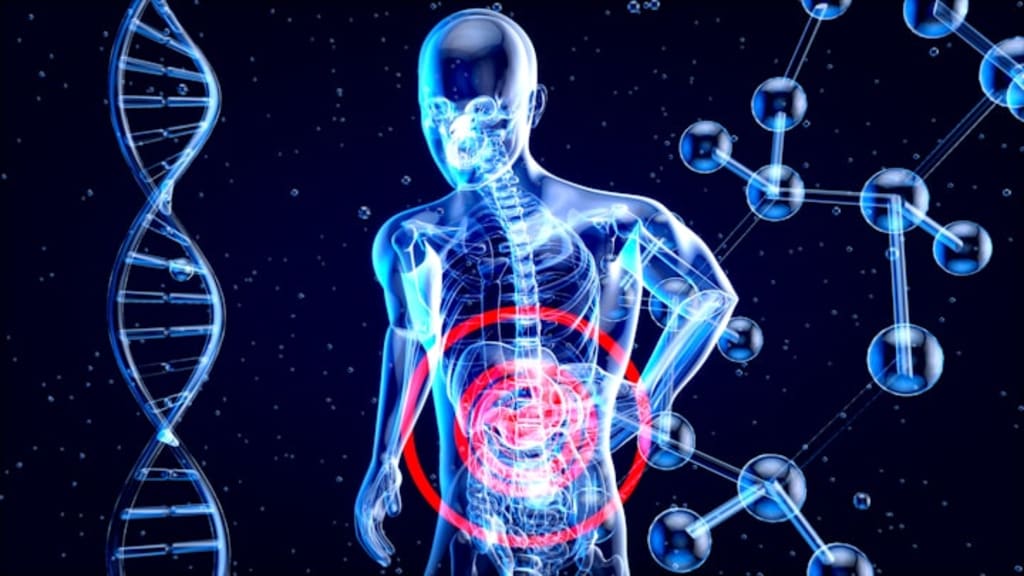
Cancer remains one of the most formidable challenges of modern medicine. According to the World Health Organization, cancer claimed nearly 10 million lives in 2022, making it the leading cause of death worldwide. This grim statistic touches nearly every family across continents, cultures, and income brackets.
But as the world pushes into the second half of the 2020s, an unexpected ally is taking center stage in this fight: artificial intelligence (AI). From early diagnosis to personalized treatment plans, AI is rapidly altering how doctors detect and battle cancer. The promise is enormous — but so are the ethical and economic questions trailing close behind.
AI’s Rising Role in Beating Cancer
Across major research centers in the United States, Europe, Japan, China, and India, AI tools are already reshaping oncology. Machine learning algorithms now help radiologists spot tumors on mammograms or CT scans years before traditional techniques might catch them. A landmark study published by Nature in late 2024 reported that an AI system trained on over 200,000 scans could identify early-stage lung cancer with 94% accuracy, dramatically reducing false negatives.
But detection is only the start. AI is also moving into the realm of predictive oncology, where algorithms use genetic data to forecast how a specific tumor will respond to various drugs. In Boston, researchers at MIT paired AI with CRISPR gene-editing models to design highly targeted therapies for ovarian cancer. Early clinical trials showed a 35% higher remission rate compared to standard treatment protocols.
Meanwhile, in India, Tata Memorial Centre in Mumbai is piloting an AI platform that scans thousands of patient records to tailor radiotherapy doses, hoping to cut treatment side effects by nearly half.
A Stark Global Imbalance
Yet for all these dazzling advances, a sobering pattern emerges: most AI-driven cancer innovations are concentrated in wealthier nations. Patients in the U.S., Western Europe, Japan, and select urban centers in China have access to cutting-edge diagnostic tools and experimental treatments. In contrast, many low-income countries still struggle to maintain even basic oncology wards.
For instance, while a hospital in California might deploy AI software that delivers near-instant biopsy analysis, a clinic in rural Uganda could wait weeks just to ship tissue samples to a distant lab. The Global Cancer Observatory estimates that over 60% of the world’s cancer deaths now occur in Africa, Asia, and Central and South America, regions that receive only 5% of global cancer care resources.
Dr. Helena Ruiz, a global health specialist working in Latin America, put it bluntly:
“We’re on the brink of a two-speed world in cancer care. One where AI saves lives, and another where patients don’t even know what’s possible until it’s too late.”
The Economic Catch
AI doesn’t come cheap. Developing and training advanced algorithms requires vast datasets, high-end computing power, and teams of specialists. Integrating these systems into hospitals demands substantial infrastructure — from digitized patient records to secure cloud storage that can handle sensitive genomic data.
A 2025 report by the International Agency for Research on Cancer warned that introducing AI-driven screening programs could cost up to $12 billion annually worldwide, mostly shouldered by richer countries. Meanwhile, many low-income nations depend heavily on international aid just to stock chemotherapy drugs.
Signs of Hope: Democratizing AI Tools
Still, there are promising efforts to spread AI benefits more broadly. In Kenya, a partnership between Oxford University and local hospitals is testing low-cost AI apps that run on standard smartphones. These apps can analyze images of suspicious skin lesions or cervical screenings, helping local nurses detect possible cancers without expensive lab work.
Likewise, Brazil’s Ministry of Health is rolling out open-source AI software across state hospitals to improve pathology diagnostics. Early results suggest a 25% faster turnaround on test results, potentially catching aggressive cancers sooner.
The World Health Organization has also launched an initiative to provide “AI kits” — pre-trained models that can be adapted to local data — to public health systems in Southeast Asia and Sub-Saharan Africa.
The Moral Imperative
The question facing the global community isn’t simply whether AI can revolutionize cancer care — that’s already happening. The real issue is whether this revolution will be equitable. If left unchecked, AI might widen existing healthcare divides, where survival hinges less on the biology of one’s cancer and more on the economic or geographic lottery of one’s birth.
Advocacy groups like the Union for International Cancer Control argue for international frameworks that subsidize AI deployments in low-income regions, alongside training programs that empower local healthcare workers to use these tools effectively.
Where Do We Go From Here?
In the coming years, the intersection of AI and oncology will likely produce even more dramatic breakthroughs. Personalized vaccines that instruct the immune system to hunt down a patient’s specific cancer mutations, or AI-designed molecules that attack tumors with pinpoint precision, are already moving through early-phase trials.
Yet for these marvels to truly mark a global turning point, the world must tackle the thorny issues of cost, infrastructure, and knowledge transfer head-on. Because cancer, in all its devastating forms, is a universal challenge. Our response should be just as universal.
In the end, the promise of AI is not merely technological; it’s profoundly human. It offers a chance to rewrite millions of cancer stories. The only question is: will we ensure that story includes everyone?
About the Creator
Mwesigwa Caleb
Passionate about exploring how health, tech, and innovation shape our world. I break down global breakthroughs into stories that inspire, inform, and spark new ideas.
Keep reading
More stories from writers in Futurism and other communities.
About Binding Prometheus
I want to start actively advocating on behalf of my own work, and the most valuable part of my canon is, without a doubt, Binding Prometheus, the play I have been working on since 2019 and only finished in 2023 as part of my MA. The play itself is an amalgamation of a million different inspirations. On one end, it evokes the Ancient Greek myth-play, deriving its own title from the earliest extant work of Western drama we have, Aeschylus’s Prometheus Bound. On the other end, it borrows significantly from the sci-fi bulwarks from over the years, namely Mary Shelley’s Frankenstein and Karel Capek’s Rossum’s Universal Robots. The play could be an episode of Black Mirror, I fear. I don’t know. I’ve only ever seen one episode of Black Mirror.
By Steven Christopher McKnight20 days ago in Futurism



Comments
There are no comments for this story
Be the first to respond and start the conversation.