
AI Self-Driving Cars: The Future of Roads or Accident Waiting to Happen?
Why I Trust the Tech (But Still Won’t Buy One… Yet)

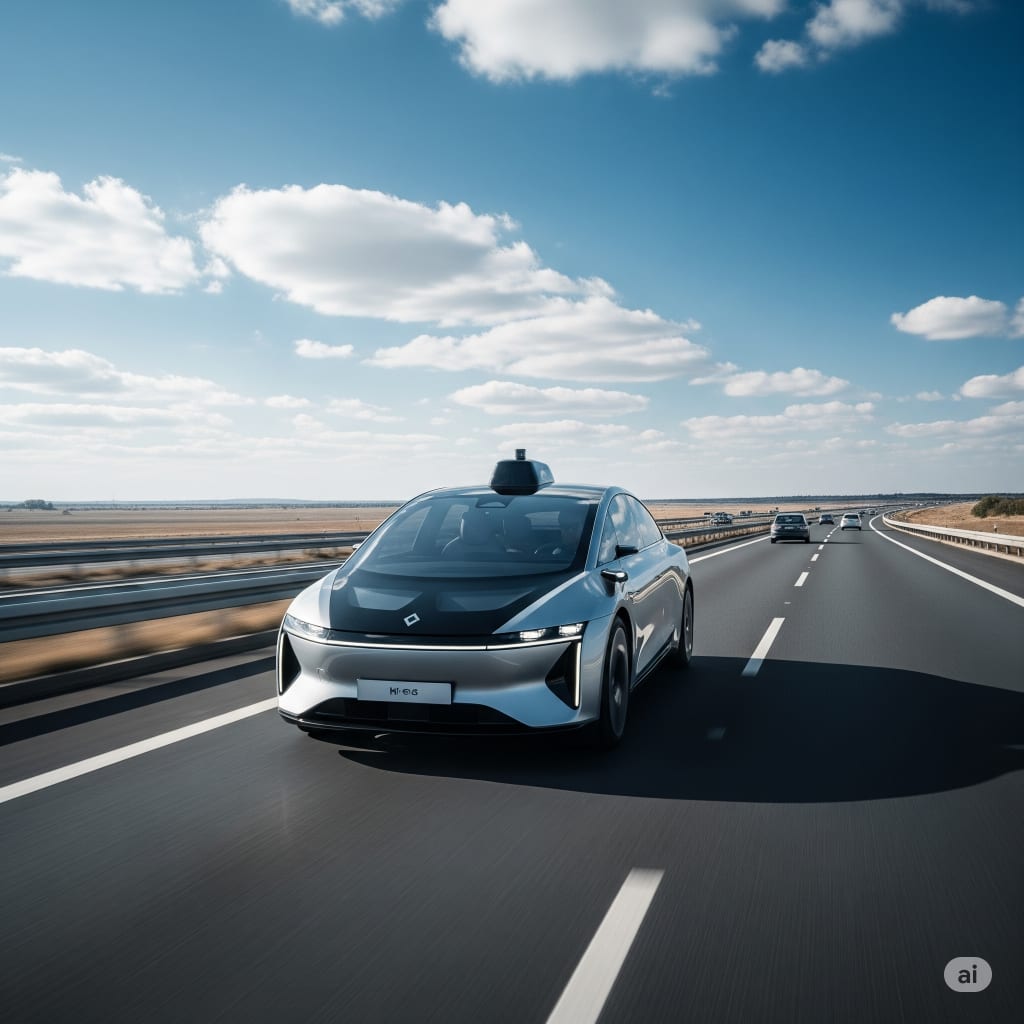
Let me start with a confession: I don't own a self-driving car. Not yet, anyway. But I've become absolutely fascinated (and slightly terrified) by this technology that promises to completely transform how we get from point A to point B. We're talking about vehicles that can navigate complex urban environments, make split-second decisions, and theoretically reduce the 1.35 million annual global road deaths caused by human error. That's the dream. The reality? Well... it's complicated.
The Promise of Perfection: Why AI Drivers Should Rule the Road
Human drivers are objectively terrible at driving. We get distracted, we get tired, we get emotional. According to NHTSA data, 94% of serious crashes come down to human error. Meanwhile, AI doesn't:
Check Instagram at stoplights
Drive aggressively because it's running late
Forget to shoulder check before changing lanes
Have blind spots (thanks to 360° sensors)
Get impaired after three margaritas
The numbers back this up. Tesla's 2022 safety report showed their Autopilot-equipped vehicles were involved in just one accident for every 4.85 million miles driven, compared to the US average of one crash every 652,000 miles. That's nearly 7.5 times safer already - and the technology is still in its relative infancy.
The Cold Sweat Reality: Why I'm Not Ready to Hand Over the Keys
For all the impressive statistics, I still find myself holding my breath every time I see a Cruise or Waymo vehicle navigating city streets. Because while AI may never get drowsy or drunk, it faces challenges no human driver ever has to consider:
The Edge Case Conundrum - How does the AI handle:
A traffic cop waving contradictory signals?
A ball bouncing into the street (with a child potentially following)?
Roads with faded or missing lane markings?
Emergency vehicles approaching from unusual directions?
The Hacking Horror Show - We've all seen how vulnerable connected devices can be. Now imagine someone remotely hijacking thousands of vehicles simultaneously. The cybersecurity standards need to be military-grade.
The Liability Labyrinth - When an accident does occur (and it will), who's responsible? The "driver"? The manufacturer? The software developer? The sensor manufacturer?
The Mixed Traffic Problem - The transition period where AI vehicles share roads with human drivers might actually be more dangerous than either scenario alone. Human drivers are unpredictable, and AI can struggle with anticipating irrational behavior.
The Testing Imperative: Why We Need Millions More Miles of Data
The companies developing this technology are essentially teaching cars to drive using machine learning. Like any student, they need experience - lots of it. Current testing is impressive (Waymo's fleet has logged over 20 million autonomous miles), but we need orders of magnitude more.
We need testing in:
Monsoon-level rain and blizzard conditions
Developing nations with chaotic traffic patterns
Rural areas with poor infrastructure
Every conceivable "edge case" scenario we can imagine
The Psychological Hurdle: Why We Don't Trust What We Don't Understand
There's an inherent discomfort in surrendering control to algorithms we can't interrogate. When a human driver makes a mistake, we can usually understand why ("they were texting"). When AI makes a mistake, it's often inscrutable - the result of millions of data points in a neural network we can't easily interpret.
This "black box" problem needs solving before widespread adoption. We need explainable AI that can articulate its decision-making process in emergencies.
The Regulatory Minefield: Who Gets to Decide When It's Safe Enough?
Currently, regulations lag far behind technological capabilities. We need:
Standardized safety benchmarks
Universal certification processes
Clear cybersecurity requirements
Federal rather than piecemeal state regulations
The Future I Want to See (But Am Not Quite Ready to Live In)
Here's where I land:
Short-term (next 5 years): Limited commercial applications (taxi fleets, trucking routes) with strict operational constraints
Medium-term (5-15 years): Gradual consumer adoption as the technology matures and regulations solidify
Long-term (15+ years): Potential majority adoption once infrastructure adapts and public trust builds
Final Thoughts: My Love-Fear Relationship With Autonomous Vehicles
I believe in this technology. I've seen the data. I understand the potential to save countless lives. But I also understand that revolutionary change takes time, and the consequences of rushing could be catastrophic.
So while I'm not ready to buy that Tesla with Full Self-Driving just yet, I'm watching closely. Maybe in a few more years, when the technology has a few hundred million more miles under its belt, when the regulations have caught up, when I've seen enough successful navigation of bizarre edge cases... maybe then I'll take the plunge.
Until that day comes? I'll keep both hands on the wheel, both eyes on the road, and a healthy dose of skepticism mixed with optimism about our autonomous future.
About the Creator
Victor B
From the thrill of mystery to the expanse of other genres, my writing offers a diverse journey. Explore suspenseful narratives and a wide range of engaging stories with me.
About Binding Prometheus
I want to start actively advocating on behalf of my own work, and the most valuable part of my canon is, without a doubt, Binding Prometheus, the play I have been working on since 2019 and only finished in 2023 as part of my MA. The play itself is an amalgamation of a million different inspirations. On one end, it evokes the Ancient Greek myth-play, deriving its own title from the earliest extant work of Western drama we have, Aeschylus’s Prometheus Bound. On the other end, it borrows significantly from the sci-fi bulwarks from over the years, namely Mary Shelley’s Frankenstein and Karel Capek’s Rossum’s Universal Robots. The play could be an episode of Black Mirror, I fear. I don’t know. I’ve only ever seen one episode of Black Mirror.
By Steven Christopher McKnight19 days ago in Futurism



Comments
There are no comments for this story
Be the first to respond and start the conversation.