
A Planet Where a Year Lasts 10 Hours: Life on the Universe’s Fastest Worlds
Space

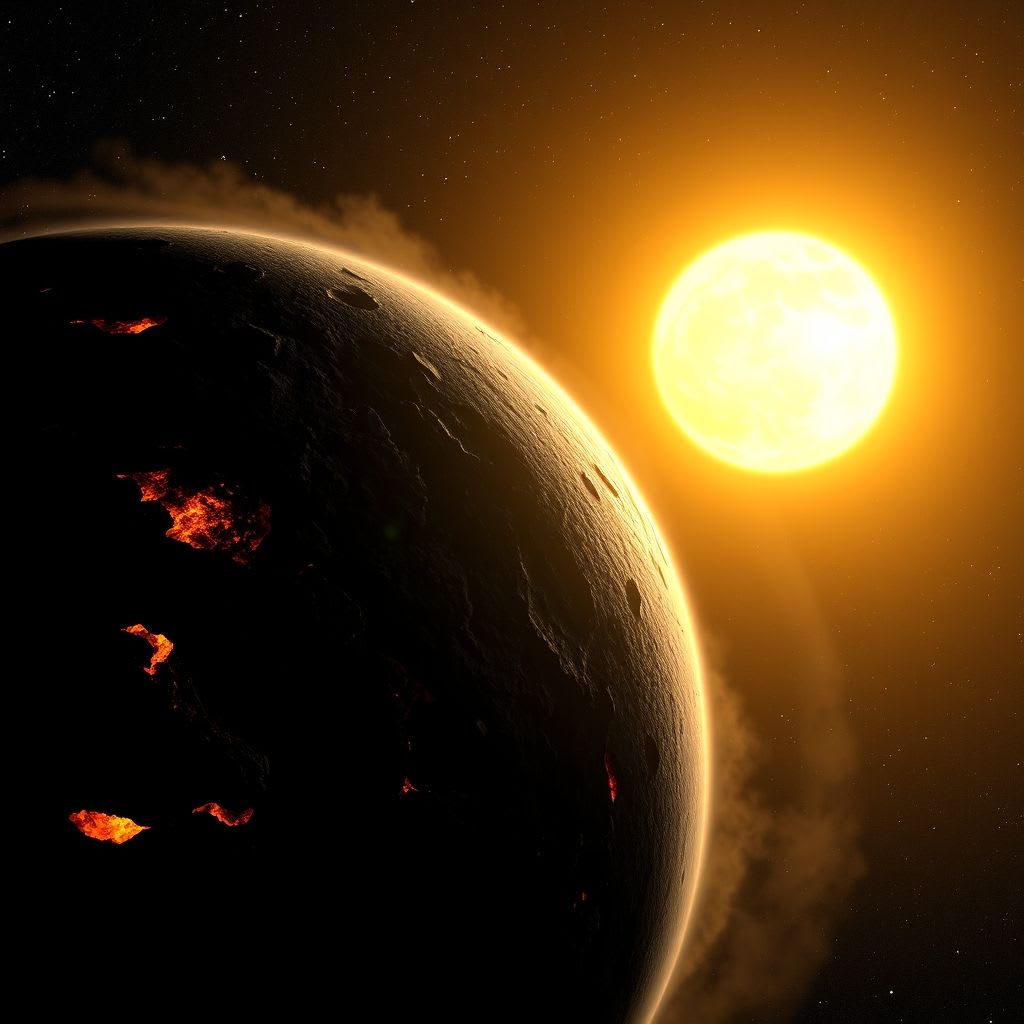
When we think of a year, we imagine a familiar cycle: spring blossoms, summer heat, autumn leaves, and winter snow. It’s a slow, predictable rhythm days turning into weeks, months into seasons. But elsewhere in the universe, time moves at a different speed entirely. Imagine a planet where a full orbit around its star a year lasts just 10 hours. That’s right, half a day from one New Year to the next. Welcome to the realm of ultra-short-period planets, where time and temperature both go to extremes.
Cosmic Speed Demons: The Ultra-Short-Orbit Planets
Astronomers call them USP planets (ultra-short-period planets). These are exoplanets so close to their host stars that they complete a full orbit in less time than it takes you to get through a shift at work.
Take Kepler-78b, for example. This hellish world orbits its star every 8.5 hours, hugging it so closely that its rocky surface is constantly scorched. Or consider K2-141b, where the “year” lasts just 6.7 hours. On this planet, heat from the star is so intense that rocks vaporize into the atmosphere, rain back down as molten droplets, and cycle again in a never-ending storm of stone and fire. Scientists describe it as a “lava loop” between the planet’s blistering day side and its frozen night.
Could Anything Survive in Such a Place?
The short answer? Not likely—at least, not life as we know it.
Daytime temperatures on USP planets can exceed 3000°C (5400°F) hot enough to melt not just metal but solid rock. Any Earth-like lifeform wouldn’t stand a chance. The environment is brutally hostile: radiation from the star, intense gravity, and temperature extremes that would instantly destroy biological molecules.
But even if these worlds aren’t home to life, they’re treasure troves for scientists. Studying them offers clues about how solar systems form and evolve. Did these planets always exist so close to their stars? Probably not.
The Journey Inward: Death by Starfire
Many scientists believe that these planets started their lives farther out, perhaps as gas giants similar to Neptune or even Jupiter. Over time, gravitational forces and tidal drag pulled them inward, stripping away their thick atmospheres and leaving behind only a dense, rocky core.
What we’re seeing now are the naked remnants of former giants exposed planetary cores, like the stone hearts of fallen titans. These relics are living records of cosmic migration, reshaped by the unforgiving heat of their stars.
When Planets Pull Back: The Tidal Tug-of-War
Interestingly, these ultra-close planets don’t just suffer from their stars they also affect them.
Their strong gravitational pull creates tidal interactions that can slow a star’s rotation, distort its shape, and potentially change its magnetic behavior. Some planets even drag material from their own surface into space, forming comet-like tails made of vaporized rock and metal.
Yes, you read that right: a planet with a tail. It’s a mesmerizing image this stone world whizzing around its star, trailing a shimmering arc of dust and vapor in its wake.
Life in Fast-Forward: A Hypothetical Existence
Let’s take a moment to imagine what life would be like on such a planet.
A year is 10 hours. That means new seasons every few hours, a century in just a few Earth days. Your birthday would come before breakfast. You could finish school in a weekend.
Of course, with surface temperatures hotter than a welding torch, you wouldn’t survive long enough to celebrate anything. But if life existed perhaps in a sheltered region on the planet’s cooler night side it would have to be completely alien. Adapted to constant darkness, massive gravitational stresses, and possibly even dependent on energy from tidal heating rather than sunlight.
Why These Worlds Matter
Ultra-short-period planets may seem like cosmic curiosities, but they serve a vital purpose in astronomy. They show us that the universe plays by no single set of rules. What seems impossible on Earth is normal somewhere else.
They push the limits of what we consider a “planet,” what kinds of orbits are stable, and how stars and worlds interact over time. And as our telescopes like Kepler, TESS, and soon PLATO and JWST grow more powerful, we’re likely to discover even more of these extreme environments.
Final Thoughts
A planet with a 10-hour year is no science fiction it’s science fact. These cosmic speedsters are a reminder of how diverse, violent, and utterly fascinating our universe can be. They might not host life as we know it, but they could teach us how life begins, how worlds die, and what kinds of planetary systems might exist far beyond the boundaries of our own.
And who knows maybe, just maybe, hidden in the darkness of some ultra-short-orbit planet’s night side, something unimaginable is waiting.
About the Creator
Keep reading
More stories from Holianyk Ihor and writers in Futurism and other communities.
What Happens If an Astronaut Sneezes in a Spacesuit?
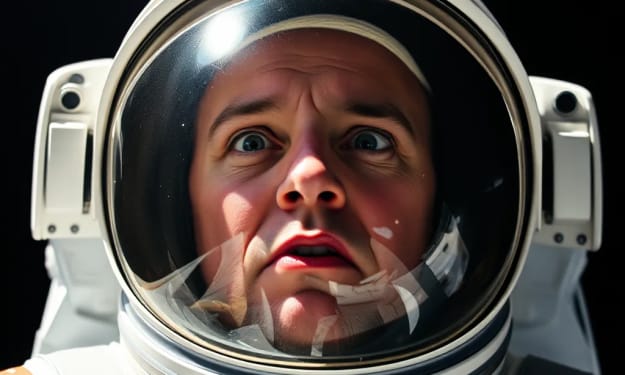
When we imagine astronauts, we tend to picture serious, highly trained professionals in white suits floating gracefully through the void, conducting vital experiments. But even in the vacuum of space, human biology doesn’t take a break. Astronauts, like anyone else, sneeze. And that brings us to an oddly amusing and surprisingly insightful question: what happens if an astronaut sneezes inside their helmet?
By Holianyk Ihor6 months ago in Futurism
About Binding Prometheus
I want to start actively advocating on behalf of my own work, and the most valuable part of my canon is, without a doubt, Binding Prometheus, the play I have been working on since 2019 and only finished in 2023 as part of my MA. The play itself is an amalgamation of a million different inspirations. On one end, it evokes the Ancient Greek myth-play, deriving its own title from the earliest extant work of Western drama we have, Aeschylus’s Prometheus Bound. On the other end, it borrows significantly from the sci-fi bulwarks from over the years, namely Mary Shelley’s Frankenstein and Karel Capek’s Rossum’s Universal Robots. The play could be an episode of Black Mirror, I fear. I don’t know. I’ve only ever seen one episode of Black Mirror.
By Steven Christopher McKnight18 days ago in Futurism
The Era of Agentic AI
For the past three years, we’ve been smitten with "prompt engineering." We’ve interacted with AI as we would an oracle in an "answer cave": we came before its text box, articulated a question thoughtfully, and then waited for an answer. However, as we find ourselves in 2026, so is the passing of the era of "static prompts." We are now in the "Age of Agentic AI."
By Artical Media7 days ago in Futurism
Rachel Reviews: The Spiral Archive by Pieter Hendrik
It's difficult for me to know where to start with a review of this book as it was, for me, an entirely unique experience and one that I'll probably never have again. I don't want that to be interpreted as unenjoyable but it has left me scratching my head a little and ruminating on its content, its themes and its characters.
By Rachel Deemingabout 17 hours ago in BookClub


Comments
There are no comments for this story
Be the first to respond and start the conversation.