
A Planet Larger Than Jupiter with the Density of Cotton Candy
Incredible Discovery


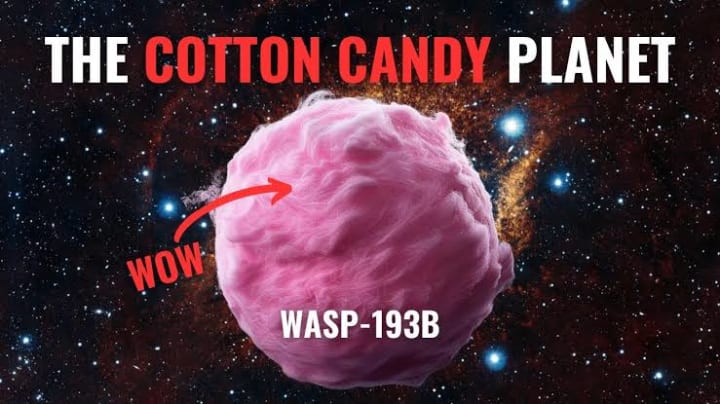
Incredible Discovery: A Planet Larger Than Jupiter with the Density of Cotton Candy
The discovery of exoplanet WASP-193b has challenged existing theories of planetary formation. This gas giant, approximately 50% larger than Jupiter yet possessing a density 25 times lower, exhibits characteristics akin to the lightness of cotton candy. Located about 1,200 light-years from Earth, WASP-193b's unique properties provide insights into the diversity of planetary systems and the complexities of planet formation. This article explores its discovery, physical and orbital characteristics, theoretical challenges, and future research directions.
The search for exoplanets—planets orbiting stars beyond our Solar System—has revolutionized our understanding of the universe. Thousands of these worlds have been discovered, revealing a stunning variety of planetary sizes, compositions, and atmospheric conditions.
Among these, some planets stand out due to their extreme properties. WASP-193b, a gas giant with an exceptionally low density, is one of the most unusual exoplanets ever observed. With a size 1.5 times that of Jupiter but a density similar to cotton candy, it challenges traditional planetary formation theories.
This article delves into the characteristics of WASP-193b, the methods used in its discovery, and its implications for planetary science and astrobiology.

Discovery and Observation
WASP-193b was identified by the Wide Angle Search for Planets (WASP) project, an international collaboration dedicated to detecting exoplanets using the transit method. This method involves observing periodic dimming in a star’s brightness caused by a planet passing in front of it.
The planet orbits a Sun-like star in the constellation Serpens, located approximately 1,200 light-years from Earth. Its discovery required detailed analysis using telescopes in Chile and other locations to confirm its existence and gather data on its size, mass, and orbital parameters.
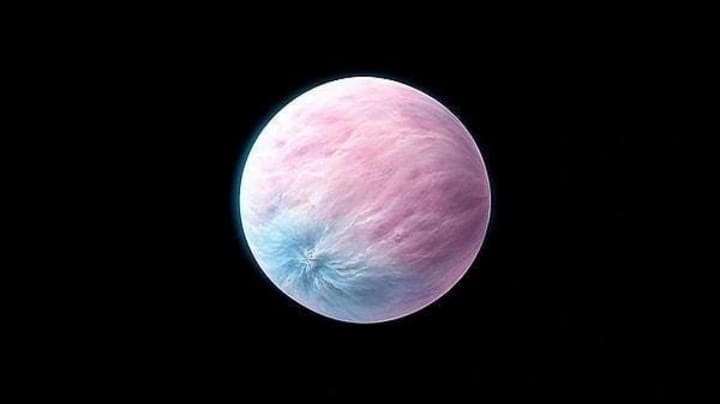
The Transit Method and Radial Velocity Measurements
Astronomers primarily use two methods to study exoplanets:
Transit Method: WASP-193b was discovered when scientists noticed its host star dimming periodically, indicating the presence of a planet passing in front of it. The amount of light blocked allowed astronomers to estimate its size.
Radial Velocity Measurements: After the transit detection, follow-up observations measured the gravitational influence of WASP-193b on its star, determining its mass. Surprisingly, the planet’s mass was far lower than expected for its size.

Physical Characteristics
Size and Density
WASP-193b’s most striking feature is its extremely low density. With a radius about 1.5 times that of Jupiter but only 0.14 times its mass, its density is approximately 0.059 g/cm³—comparable to cotton candy, which has a density of about 0.05 g/cm³.
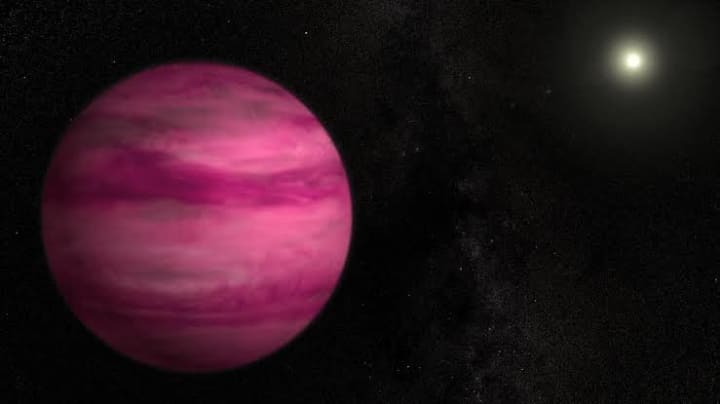
For comparison:
Earth’s density: 5.51 g/cm³
Jupiter’s density: 1.33 g/cm³
Saturn’s density: 0.69 g/cm³ (the least dense planet in our Solar System)
WASP-193b’s density: 0.059 g/cm³ (one of the lowest known)
This makes WASP-193b one of the "puffiest" planets ever discovered.
Atmospheric Composition and Structure
Given its low density, WASP-193b is classified as a "super-puff" or "cotton candy" planet. Such planets are thought to have:
Extremely extended atmospheres, composed mainly of hydrogen and helium.
A large fraction of their volume occupied by a puffy, low-mass atmosphere rather than a dense planetary core.
Potential cloud layers made of water vapor, methane, and other light molecules.
Astronomers speculate that stellar radiation might be causing atmospheric inflation, preventing the planet from contracting into a denser form.
Orbital Characteristics
WASP-193b orbits its star at a relatively close distance, completing one full orbit in just a few days. This short orbital period suggests that:
The planet is tidally locked, meaning one side always faces the star while the other remains in perpetual darkness.
Its atmosphere is superheated by stellar radiation, leading to potential atmospheric escape.
The planet’s close proximity to its star makes it an excellent candidate for further studies of atmospheric loss mechanisms.

Challenges to Planetary Formation Theories
WASP-193b’s unusually low density challenges existing models of planetary formation. Typically, gas giants form beyond the snow line—the region of a star system where temperatures are cold enough for water ice to condense. In these regions, a planetary core can accumulate mass rapidly and attract a thick atmosphere.
However, WASP-193b's properties suggest alternative scenarios:
Extreme atmospheric inflation: The planet’s atmosphere could have expanded due to intense stellar irradiation.
Lack of a heavy core: Unlike Jupiter, which has a rocky core, WASP-193b might have formed without a dense center, making it more vulnerable to expansion.
Loss of heavier elements: The planet might have formed with a normal density but lost heavy elements due to interactions with its star.
These hypotheses require further investigation, and WASP-193b could lead to new models of planet formation.
Comparisons with Other Super-Puff Planets
WASP-193b is not the only known super-puff planet. Other examples include:
Kepler-51d: One of three super-puff planets in the Kepler-51 system, with a density similar to Styrofoam.
HAT-P-67b: A hot gas giant with an extremely low density.
K2-33b: A young super-puff planet still forming its atmosphere.
Comparing WASP-193b to these planets can help astronomers understand why such worlds exist.
Implications for Exoplanetary Science
WASP-193b is significant because it:
Expands the range of known planet types.
Challenges planetary formation models.
Offers a unique target for atmospheric studies.
May provide insights into exoplanetary habitability.
Although WASP-193b itself is unlikely to support life, studying its atmosphere can improve techniques used to analyze more Earth-like planets.
Future Observations and Research
James Webb Space Telescope (JWST)
The James Webb Space Telescope (JWST) is expected to:
Analyze WASP-193b’s atmospheric composition using spectroscopy.
Search for molecules like water vapor, methane, and hydrogen.
Study atmospheric escape mechanisms.
Ground-Based Observations
Additional data from ground-based telescopes will help refine estimates of its mass, radius, and temperature, improving our understanding of how such planets evolve.
Long-Term Studies
If WASP-193b is losing atmosphere over time, long-term studies could reveal whether it will eventually shrink into a denser planet.
WASP-193b is one of the most fascinating exoplanets discovered to date. With a size greater than Jupiter but a density 25 times lower, it challenges our understanding of planetary physics and formation.
Its cotton candy-like density suggests that planetary diversity is even greater than previously thought. Future observations with advanced telescopes will provide deeper insights into its composition and evolution, helping us refine planetary formation models.
The study of planets like WASP-193b is crucial for understanding the vast diversity of worlds beyond our Solar System and the forces shaping them.
References
(vanguardia.com)
(cnnchile.com)
(huffingtonpost.es)
(muyinteresante.com)
About the Creator
JONATAN DAVID VEGA
Hello Welcome! I am Jonatan Vega
Iam self-published mexican author living Sacramento,California
My Instagram: @JonatanVega_writesbooks
My published books in lulu.com
www.lulu.com/spotlight/JonatanVega
Amazon: Jonatan Vega
Keep reading
More stories from JONATAN DAVID VEGA and writers in Futurism and other communities.
Did the Feline Aliens build the Pyramids of Egypt?
egypt feline Did Feline Aliens (Urmah) Build the Pyramids of Egypt? For centuries, Egypt's pyramids have been a source of admiration and mystery. These monumental structures, especially the Great Pyramid of Giza, continue to challenge conventional explanations of their construction. With massive stone blocks weighing tens of tons, precise astronomical alignment, and a lack of detailed records on their construction, one inevitable question arises: Was humanity truly the only force behind their creation?
By JONATAN DAVID VEGAabout a year ago in Futurism
Air Defense Systems Market Outlook: Advanced Military Protection and Strategic Defense Growth Opportunities
According to IMARC Group's latest research publication, The global air defense systems market size reached USD 51.4 Billion in 2025. Looking forward, IMARC Group expects the market to reach USD 73.7 Billion by 2034, exhibiting a growth rate (CAGR) of 4.08% during 2026-2034.
By James Whitman4 days ago in Futurism
Kids Digital Advertising Market to hit USD 25.9 Billion By 2033
The Global Kids Digital Advertising Market is projected to reach approximately USD 25.9 Billion by 2033, rising from USD 3.4 Billion in 2023, and is expected to expand at a CAGR of 22.5% during the forecast period from 2024 to 2033. This growth is driven by the increasing digital consumption among children, the growing influence of social media, and the rising importance of targeted, interactive advertising methods. With the increasing use of smartphones, tablets, and other digital devices among kids, advertisers are increasingly focusing on creating engaging, child-friendly content that can capture the attention of younger audiences.
By Roberto Crum6 days ago in Futurism
A Transparent Look at Vocal Challenges and Top Stories
Almost three years ago, we shared a resource article that served as a place for people to suggest new challenge prompts. We thought it would be a good idea to refresh that thread, and take the opportunity to answer a few common questions about top stories, how challenges are judged and how submissions are reviewed.
By Vocal Curation Team4 days ago in Resources




Comments
There are no comments for this story
Be the first to respond and start the conversation.