
2026: The Year of War Between Israel and Turkey
A Clash of Titans in Syria – Will This Be Israel’s First Real Military Challenge?


The Middle East has long been a powder keg of geopolitical tensions, but 2026 could mark the eruption of a full-scale war between two regional heavyweights—Israel and Turkey. At the heart of this conflict lies Syria, a fractured nation that both countries seek to control for vastly different reasons. Israel, pursuing its expansionist policies, aims to weaken Iranian influence and secure its northern borders, while Turkey envisions a "free Syria" under its sphere of influence, free from Kurdish autonomy and Assad’s regime.
But what makes this potential war different from Israel’s past conflicts? Unlike Hamas or Hezbollah, Turkey is a NATO member with a formidable military, including advanced drone technology, electronic warfare capabilities, and a well-equipped army. For the first time, Israel may face an adversary that can truly challenge its military dominance.
Meanwhile, the global power struggle will intensify as the U.S. and Europe back Israel, while Pakistan, China, Russia, and North Korea could throw their weight behind Turkey. If the Pakistani Air Force enters the fray, the balance of power could shift dramatically, making this a war unlike any other in the region’s history.
Why Syria? The Battle for Control
Syria’s strategic importance cannot be overstated. For Israel, a destabilized Syria means:
Countering Iranian proxies like Hezbollah.
Preventing a strong Kurdish state that could inspire separatism.
Expanding its security buffer beyond the Golan Heights.
Turkey, on the other hand, sees Syria as:
A gateway to reclaiming Ottoman-era influence.
A barrier against Kurdish independence (the PKK/YPG).
A Sunni-majority region that aligns with its ideological goals.
With both nations unwilling to back down, a direct confrontation seems inevitable.
Turkey’s Military Edge: A Real Threat to Israel
Israel has dominated its conflicts with non-state actors (Hamas, Hezbollah) and weaker Arab armies. But Turkey is different. Here’s why:
1. Drone Warfare – The Game Changer
Turkey’s Bayraktar TB2 drones have proven devastating in Libya, Nagorno-Karabakh, and Syria. Israel’s Iron Dome is designed for missiles, not swarms of precision drones.
2. Electronic Warfare & Cyber Capabilities
Turkey’s KORAL electronic warfare systems can disrupt Israeli radar and communication networks, potentially blinding their air defenses.
3. A Modern, Battle-Hardened Army
Unlike the poorly armed militants Israel usually faces, Turkey’s military has advanced tanks, F-16s, and special forces trained in urban and asymmetric warfare.
4. The Naval Factor
Turkey’s control over the Eastern Mediterranean and its growing fleet (including indigenous warships) could challenge Israel’s maritime dominance.
Global Alliances: A Multi-Polar War
This won’t be just Israel vs. Turkey—it will be a proxy war between global powers.
Israel’s Backers: U.S. & Europe
America will supply intelligence, weapons, and diplomatic cover.
European nations (Germany, France) may impose sanctions on Turkey.
Turkey’s Allies: The Anti-West Coalition
Russia – Already entrenched in Syria, may supply advanced S-400 systems to Turkey.
China – Economic and military support to counter U.S. influence.
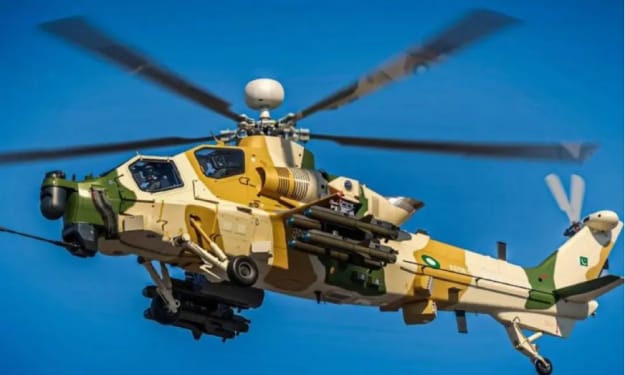
Pakistan – The wildcard. If the Pakistani Air Force deploys (with JF-17s and F-16s), Israel will face a skilled, battle-tested air force for the first time.
North Korea – Unlikely but possible arms deals (missile tech, artillery).
If Pakistan enters, the war could escalate beyond the Middle East, drawing in Central Asian and South Asian powers.
The Human Cost: Will the World Watch Another Gaza?
Israel has faced accusations of war crimes in Gaza and Lebanon, bombing civilians with impunity. But against Turkey, the rules change:
Turkey can strike back—hard.
International media will not be one-sided, as Turkey has strong global influence.
The Muslim world’s reaction—protests, oil embargoes, jihadist recruitment—could destabilize the region further.
Conclusion: 2026 – The Year the Middle East Changes Forever
If Israel and Turkey go to war in 2026, it will be the first time Israel faces a near-peer adversary with advanced tech, strong allies, and global backing. The conflict could:
Redraw Middle Eastern alliances (Saudi Arabia, UAE may stay neutral or side with Israel).
Force the U.S. into a difficult position (supporting Israel vs. risking war with Russia/China).
Prove whether Israel’s military dominance is absolute—or if Turkey can break the myth of Israeli invincibility.
One thing is certain: this won’t be another one-sided war. If Pakistan’s Air Force joins, if Russian tech floods in, if Turkish drones overwhelm Iron Dome—2026 could be the year Israel faces its greatest military challenge yet.
About the Creator
INAM ULLAH
Inam Ullah, BS in Computer Science and MS in Wireless Sensor Networks. Passionate about blogging, history, wars, and science. A lifelong learner with a curious mind and diverse interests.
Keep reading
More stories from INAM ULLAH and writers in Futurism and other communities.
Z-10ME Attack Helicopter: Pakistan Air Force's New Aerial Predator
In a notable upgrade to its aerial combat capabilities, the Pakistan Air Force (PAF) has inducted the Chinese-made Z-10ME attack helicopter into its fleet. This development marks a pivotal moment in Pakistan’s efforts to modernize its rotary-wing aviation assets, particularly for ground support and anti-tank warfare roles. The Z-10ME is an upgraded export version of China’s CAIC Z-10, designed to meet the specific operational demands of foreign customers, especially in regions with extreme climates and rugged terrains like South Asia. With the arrival of this helicopter, the PAF’s ability to provide close air support (CAS) and engage armored threats has received a potent boost.
By INAM ULLAH8 months ago in Futurism
Rivian R2: A New Chapter in Electric Adventure Vehicles
Electric vehicles are no longer rare sights on the road, yet some announcements still capture public imagination in a powerful way. The Rivian R2 is one of those moments. When people first heard about this upcoming SUV, curiosity spread quickly. Drivers who love outdoor travel, quiet roads, and modern technology started wondering what Rivian might create next. The company already built a reputation for electric trucks and SUVs designed for exploration. Now the Rivian R2 promises something different: a vehicle that could bring that spirit to a wider audience. It represents more than a new model. For many people watching the electric vehicle market, the Rivian R2 signals a shift toward practical adventure, everyday usability, and a future where electric driving feels natural.
By Muqadas khan4 days ago in Futurism
AI in Recruitment Market to hit USD 2.6 Billion By 2033
The global AI in Recruitment Market is expanding steadily as organizations adopt intelligent technologies to improve hiring efficiency and workforce planning. The market is projected to reach approximately USD 2.6 billion by 2033, increasing from USD 0.8 billion in 2023, reflecting a 12.4% CAGR during the forecast period from 2024 to 2033.
By Roberto Crumabout 6 hours ago in Futurism


Comments
There are no comments for this story
Be the first to respond and start the conversation.