
2025: The Year of the Humanoid Robot Factory Worker
How AI-Powered Humanoid Robots Are Transforming the Global Manufacturing Workforce in 2025

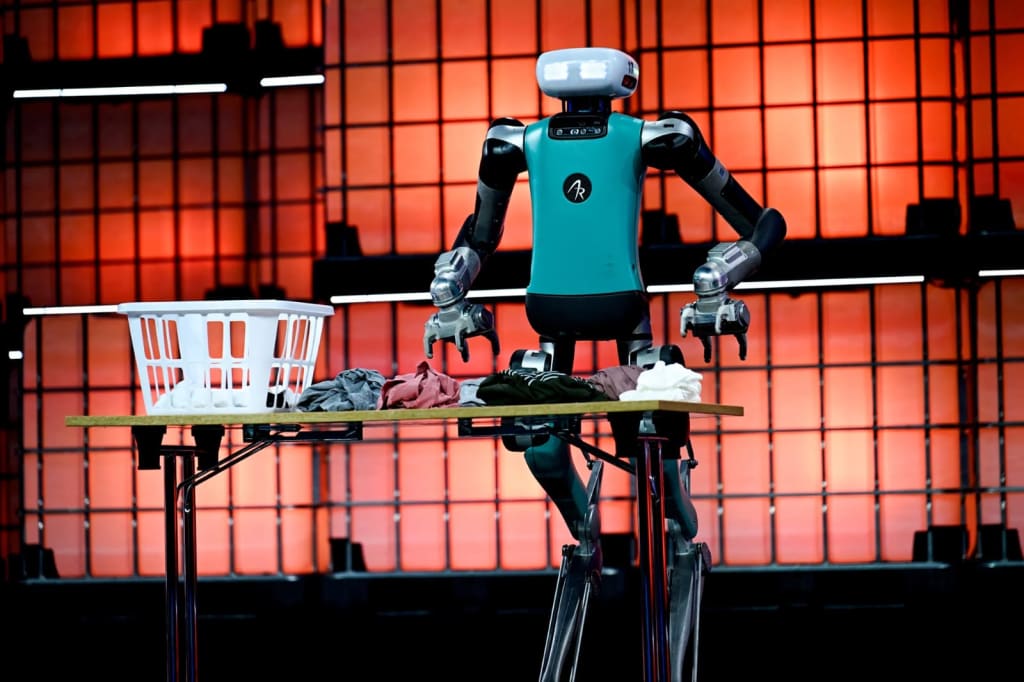
2025: The Year of the Humanoid Robot Factory Worker
The industrial landscape is undergoing a seismic shift, and 2025 is proving to be the pivotal year in which humanoid robots officially become mainstream factory workers. What once existed only in the realm of science fiction is now a tangible reality, reshaping manufacturing as we know it. With breakthroughs in artificial intelligence, robotics, and human-machine collaboration, humanoid robots are no longer experimental novelties — they are productive, cost-effective, and increasingly indispensable components of modern production lines.
The Rise of the Humanoid Workforce
The concept of robots in factories is not new. Automation has been central to manufacturing since the late 20th century. However, traditional industrial robots were stationary, single-purpose machines often requiring human supervision and substantial programming. In contrast, humanoid robots of 2025 are mobile, adaptive, and equipped with advanced AI systems that allow them to learn on the job, interact with human coworkers, and perform a wide variety of tasks — from lifting and assembling to quality control and packaging.
Companies like Tesla, Figure AI, and Sanctuary AI have taken the lead in deploying these humanoid robots. Tesla’s Optimus, for instance, has already been seen assisting with basic logistics and assembly tasks in its Giga factories. Meanwhile, startups like Agility Robotics have introduced robots that can walk, carry objects, and even navigate complex factory layouts without the need for tracks or rails.
Why 2025?
Several factors have converged in 2025 to accelerate the adoption of humanoid robots:
1. Labor Shortages: Global industries have been grappling with labor shortages, particularly in sectors like manufacturing, where younger generations are less inclined to pursue physically demanding jobs. Robots are filling these gaps efficiently.
2. Cost Reduction: The cost of building and deploying humanoid robots has dropped significantly. With mass production, better battery technologies, and open-source AI platforms, robots are now more affordable for mid-sized and even small businesses.
3. Technological Maturity: AI and robotics have matured to the point where robots can perceive their environment, make real-time decisions, and adapt to unpredictable scenarios — all crucial for factory work.
4. Pandemic Legacy: The COVID-19 pandemic underscored the importance of contactless operations and workforce resilience. Businesses are now investing in technologies that ensure continuity during health crises or global disruptions.
Capabilities and Roles
Modern humanoid robots are not just capable of repetitive tasks. Thanks to AI, they can:
Inspect Products: Using computer vision, they detect flaws in components with greater accuracy than the human eye.
Collaborate with Humans: Cobots (collaborative robots) can work side by side with humans, passing tools, holding parts, or even learning tasks by observation.
Work 24/7: Unlike humans, robots don’t need breaks, which increases efficiency and output.
Ensure Safety: In hazardous environments, robots are ideal for handling toxic materials or working in high-temperature areas.
Human Jobs: Replaced or Reimagined?
One of the biggest concerns about the rise of humanoid robots is job displacement. While some repetitive or dangerous roles may be phased out, the truth is more nuanced. As robots take over manual tasks, new opportunities are emerging in robot maintenance, programming, supervision, and AI ethics. Just like the industrial revolutions of the past, this new era is likely to transform jobs rather than eliminate them entirely.
Governments and corporations are also investing in reskilling programs to prepare workers for this transition. For example, Germany’s government has partnered with robotics companies to offer training programs for factory workers to become robot technicians.
Ethical and Social Implications
As humanoid robots become more common, ethical questions arise. What rights, if any, should these machines have? How do we prevent overreliance on automation? What happens to communities built around traditional manufacturing jobs? These are complex issues that policymakers, ethicists, and technologists must address together.
The Future is (Almost) Human
2025 marks a defining moment where humanoid robots are no longer futuristic concepts but practical assets in factory operations. Their integration is helping industries become more efficient, resilient, and innovative. However, their rise also demands thoughtful regulation, inclusive policies, and a proactive approach to human-robot collaboration.
The factories of tomorrow are not just automated — they are alive with intelligent, humanoid partners working alongside humans to build the next chapter of industrial evolution. And as we move forward, the key to success lies not in resisting this change, but in embracing and guiding it wisely.
About the Creator
Adnan Rasheed
Author & Creator | Writing News , Science Fiction, and Worldwide Update| Digital Product Designer | Sharing life-changing strategies for success.
Keep reading
More stories from Adnan Rasheed and writers in Futurism and other communities.
World’s First Humanoid Robot Swarm Tackles Complex Factory Tasks at China’s Car Plant
World’s First Humanoid Robot Swarm Tackles Complex Factory Tasks at China’s Car Plant In a remarkable leap forward for robotics and manufacturing, China has introduced the world’s first working swarm of humanoid robots at an automotive plant. The robots, developed by Chinese tech company UBTECH, are deployed at the Zeekr smart factory in Ningbo, Zhejiang Province, which is owned by Geely, one of China’s leading carmakers. This milestone represents a significant evolution in how automation is used in complex industrial settings.
By Adnan Rasheed9 months ago in Futurism
About Binding Prometheus
I want to start actively advocating on behalf of my own work, and the most valuable part of my canon is, without a doubt, Binding Prometheus, the play I have been working on since 2019 and only finished in 2023 as part of my MA. The play itself is an amalgamation of a million different inspirations. On one end, it evokes the Ancient Greek myth-play, deriving its own title from the earliest extant work of Western drama we have, Aeschylus’s Prometheus Bound. On the other end, it borrows significantly from the sci-fi bulwarks from over the years, namely Mary Shelley’s Frankenstein and Karel Capek’s Rossum’s Universal Robots. The play could be an episode of Black Mirror, I fear. I don’t know. I’ve only ever seen one episode of Black Mirror.
By Steven Christopher McKnight18 days ago in Futurism
GCC Organic Food Market: Health Awareness, Clean Label Demand & Growth Outlook
According to IMARC Group's latest research publication, GCC organic food market size reached USD 4.4 Billion in 2024. The market is projected to reach USD 11.7 Billion by 2033, exhibiting a growth rate of 11.3% during 2025-2033.
By Abhay Rajput7 days ago in Futurism



Comments
There are no comments for this story
Be the first to respond and start the conversation.