

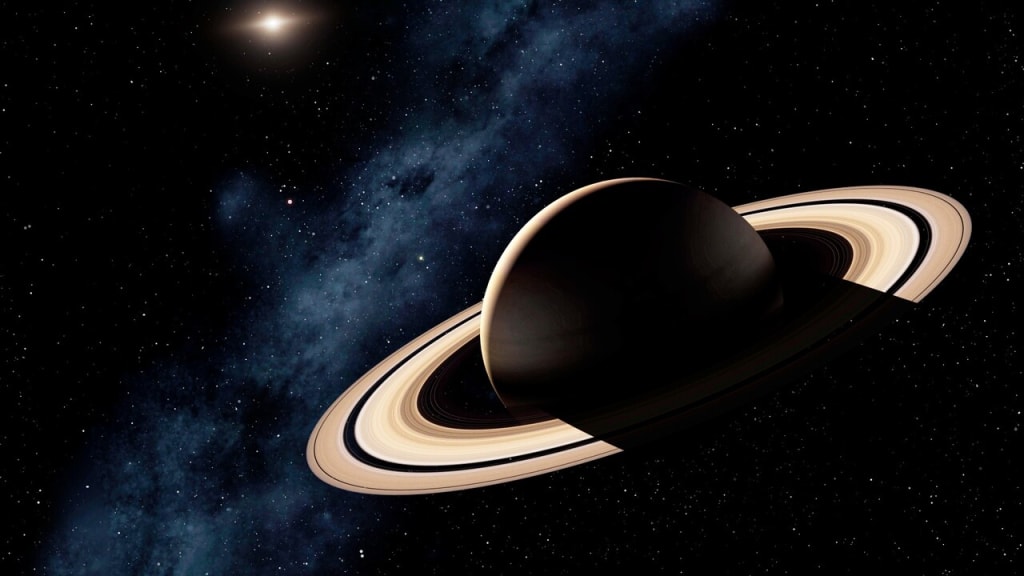
Saturn, with its magnificent rings of ice and dust, stands as one of the most iconic planets in our Solar System. Its beauty is undeniable, but what lies beneath those radiant clouds? Prepare to embark on a journey as we explore what it would be like to walk on Saturn's surface, if such a feat were possible.
Saturn, located approximately 1.2 billion kilometers away from Earth, is the sixth planet from the Sun and about nine times wider than our planet. As a gas giant, it boasts an atmosphere primarily composed of hydrogen and helium, along with a remarkable ring system and numerous moons.
As you approach Saturn, you would marvel at the breathtaking view of its majestic rings and swirling atmosphere. Passing by its moons, such as Iapetus, Enceladus, and Titan, you would set your sights on the planet itself. The journey through Saturn's massive ring system would be a fascinating experience, as these rings consist of particles ranging from tiny grains of ice dust to large objects comparable to mountains on Earth.
Finally, you would reach the vicinity of Saturn's surface, descending to an altitude of around 1400 kilometers. As you enter its atmosphere, you would encounter vibrant auras of red and purple, caused by the energetic forms of hydrogen present. However, the journey would quickly become more turbulent, as powerful winds in the upper atmosphere, particularly near the equator, could reach speeds of up to 500 meters per second—nearly five times stronger than the most powerful hurricane winds on Earth.
Choosing a descent point, such as Saturn's North Pole, wouldn't provide much respite either. Here, you would encounter a massive hexagon-shaped storm spanning approximately 30,000 kilometers. Although the winds would be slightly milder, around 90 meters per second, the extremely low temperatures of minus 250 degrees Celsius would make survival challenging.
Continuing the descent, you would encounter different layers of clouds, including freezing clouds of yellow ammonia and light brown ammonium hydrosulfide clouds. As you go deeper, the temperature would gradually rise to a more comfortable zero degrees Celsius. However, the atmospheric pressure would intensify significantly, comparable to the extreme pressure found in the Mariana Trench—the deepest part of Earth's oceans.
Despite your anticipation of reaching a solid surface, you would be disappointed to learn that Saturn doesn't have a hard surface like terrestrial planets. The concept of a surface on Saturn exists where the atmospheric pressure equals that of sea level on Earth, which occurs far above the point where you would be located. Instead, the planet's core consists of a molten rocky interior, which could be approximately ten times more massive than Earth's core, with temperatures as high as 11,700 degrees Celsius and pressures over a thousand times greater than those experienced on Earth.
Considering the hostile environment, attempting to walk on Saturn's surface would be ill-advised. The journey would subject you to freezing temperatures, scorching heat, and crushing pressure, leaving no opportunity for a pleasant experience.
However, if you were equipped with a hypothetical, advanced spacesuit capable of withstanding these extreme conditions, and managed to escape from Saturn, you could explore Saturn's moon, Titan. This moon, larger than our own Moon and even Mercury, features an atmosphere composed of nitrogen and methane. Walking on Titan's surface, which is primarily made of rock-hard water ice, you would encounter intriguing features such as dark, coffee ground-like terrain forming massive dunes. The landscape would also include rivers and lakes filled with liquid methane and ethane, as well as volcanoes spewing liquid water.
In conclusion, while walking on Saturn's surface is not possible due to its gaseous nature, exploring its mesmerizing rings and moons, such as Titan, would provide ample opportunities for discovery and wonder.
About the Creator
Keep reading
More stories from Kingtricks and writers in Fiction and other communities.
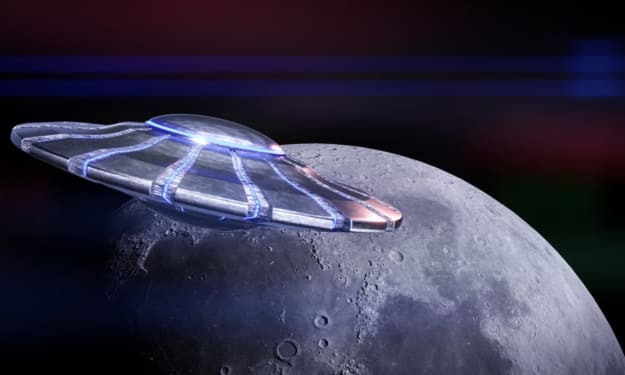
What If Aliens Lived on The Moon?
What if the moon was more than just a lifeless rock? Concealed beneath its radiant glow, there could be an alien civilization lurking in the shadows. When did this extraterrestrial life come into existence on the moon, and what would these lunar inhabitants require to sustain themselves? This is another what if and here's what would unfold if aliens actually lived on the moon.
By Kingtricks3 years ago in Fiction
The Duelist
The rays of a dying red sun flashed against the onrushing blade. The grey beards say the key to dueling lies in size, speed, reach, righteous fury, whatever the person in front of them pays them to say. Matteo knew better than any it was none of these and had an undefeated record on these sands to prove it.
By Matthew J. Fromm5 days ago in Fiction


Comments
There are no comments for this story
Be the first to respond and start the conversation.