
Where the Sky Held Its Breath
One wagon. One night. One woman carrying more than just a child.

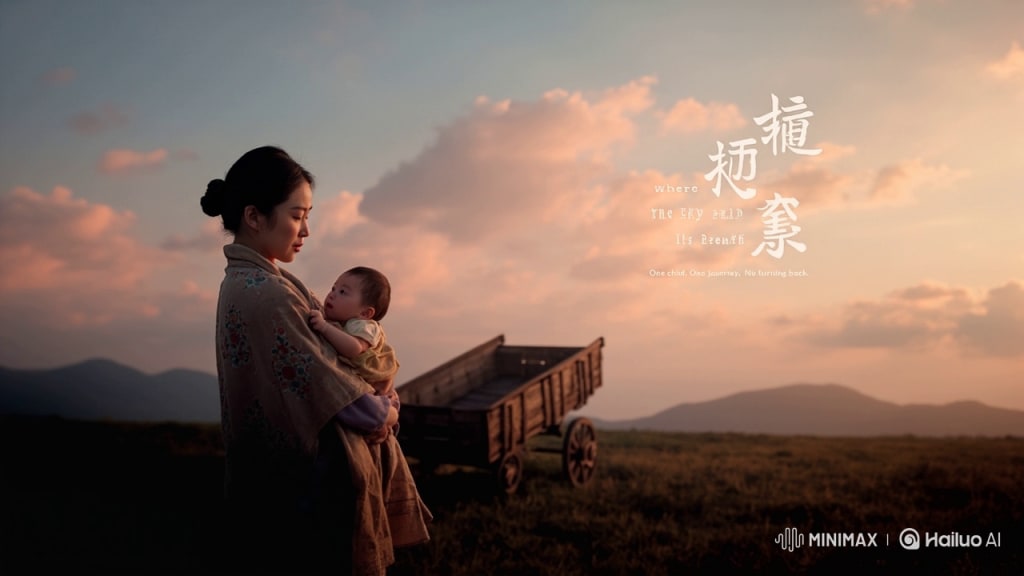
The clouds sat heavy on the horizon, glowing gold and bruised violet in the falling light. The wind had gone still. Even the insects had quieted.
Martha stood near the back of the wagon, hands resting on the worn wooden frame. Her arms ached, not just from the day’s travel, but from the child wrapped tight against her chest, dozing, as if the miles had never touched him.
They had made camp late. The wheel had cracked on one of the wagons ahead, and half the train had waited while the men repaired it with rope and borrowed wood. The tents were pitched quickly, the fires lit in silence. No one laughed tonight.
Martha didn’t speak much anymore.
There was no one left to talk to.
Her husband had died on the second week of the journey—fever, they said. She had buried him in a shallow grave off the side of the trail, covered the spot with stones, and walked on.
Two nights later, she found the baby.
Or rather, heard him.
The crying came from a canvas bundle near the remains of an abandoned cart, left half-burned at the edge of the grasslands. The others had passed it by without stopping. Martha had not.
The child was wrapped in linen, bloodied and wailing, his mother lying cold beside him. No one knew how long they had been there. The wolves hadn’t come yet.
So Martha had picked him up.
No one argued.
The wagon behind her creaked as the wind shifted. She turned toward the hills and watched the storm build, far off in the distance. The trail would be mud by morning.
“Hungry again, are you?” she murmured, feeling the child stir.
She had no milk. That had stopped days ago. Her body had long since stopped bleeding, long since stopped preparing for the child she lost two winters past.
But other women still had enough to spare.
She would walk, every night, from fire to fire. Always the same question, asked with quiet resolve.
“Will you nurse him?”
And they always did. Without hesitation. Tired women, sore and sunburnt, still opened their arms.
Not for her. For him.
He was growing. Thighs thickening. Eyes sharpening. He watched things now — the flapping of canvas, the flicker of flame, the motion of passing wagons. And sometimes he smiled. Martha hadn’t known it was possible for a smile to wound.
She stepped away from the wagon and walked slowly toward one of the nearer tents. Smoke drifted up from a small fire. A woman sat beside it, rocking gently, feeding a child of her own.
Martha hesitated, just a moment.
Then: “Ma’am… mine hasn’t eaten since morning.”
The woman looked up, eyes weary but warm. She shifted, freeing one arm. “Come sit.”
Martha lowered herself carefully to the earth. Her knees cracked as she moved, her skirts brushing the grass. The stranger took the boy without question, cradling him to her breast like he belonged there.
Silence passed between them as the baby latched, as the sun bled away behind the wagon line.
“You his kin?” the woman asked quietly.
“No,” Martha said. Then, after a pause: “But I’m all he’s got.”
The woman nodded. “Then that’s enough.”
For a moment, the weight of everything fell away. The trail. The dust. The graves left behind.
There was only this: the sound of nursing. The whisper of wind in the grass. Two women, and a child who did not yet know what it meant to be alone.
Martha stared into the fire and let herself breathe.
Tomorrow, there would be more walking. More hunger. More sky pressing down on their backs.
But tonight, there was milk. There was warmth.
And there was one more mile behind them.
---
Thank you for reading.
Inspired by the resilience of women who carried more than just their own burdens across the vast American trail.
About the Creator
Waqif Khan
i'm creating history from old people
Keep reading
More stories from Waqif Khan and writers in Fiction and other communities.
Carried Across the Dust
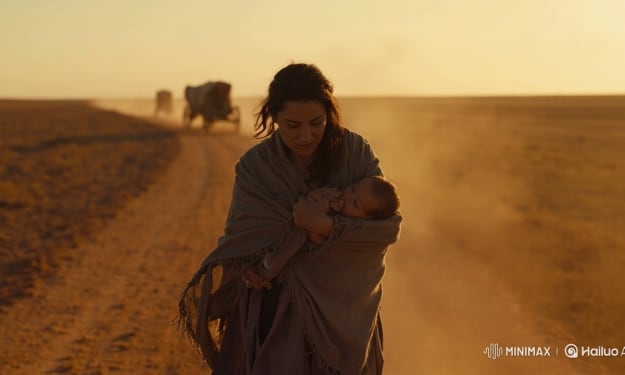
The child was heavier today. Wrapped tight against her chest, his warmth seeped into her bones, already damp with sweat under the worn shawl. He slept the way he always did on the trail—mouth slightly open, fists curled near his chin, breath warm against her collarbone. The scent of him hung in the folds of her clothing. Thick with milk, slightly sour now, mingling with dust, sweat, and the faint smoke of last night’s fires.
By Waqif Khan7 months ago in Fiction
The House at the End of Hawthorn Lane
Gail Sullivan’s house sat like a sealed envelope at the end of Hawthorn Lane, addressed to no one and opened by none. The curtains never moved. The gate never creaked. After her husband died—suddenly, mysteriously—Gail withdrew behind the tall fence that ringed her property and never crossed it again. The neighborhood filled the silence with its own explanations. They said she had learned of his betrayal and answered it with precision, increasing the dosage of his daily medications until his heart complied. They noted her grief had sharpened into something dark.
By Anthony Chan3 days ago in Fiction



Comments
There are no comments for this story
Be the first to respond and start the conversation.