
When the Sky Forgot to Rain
A story of drought, defiance, and the girl who dared to summon a storm.

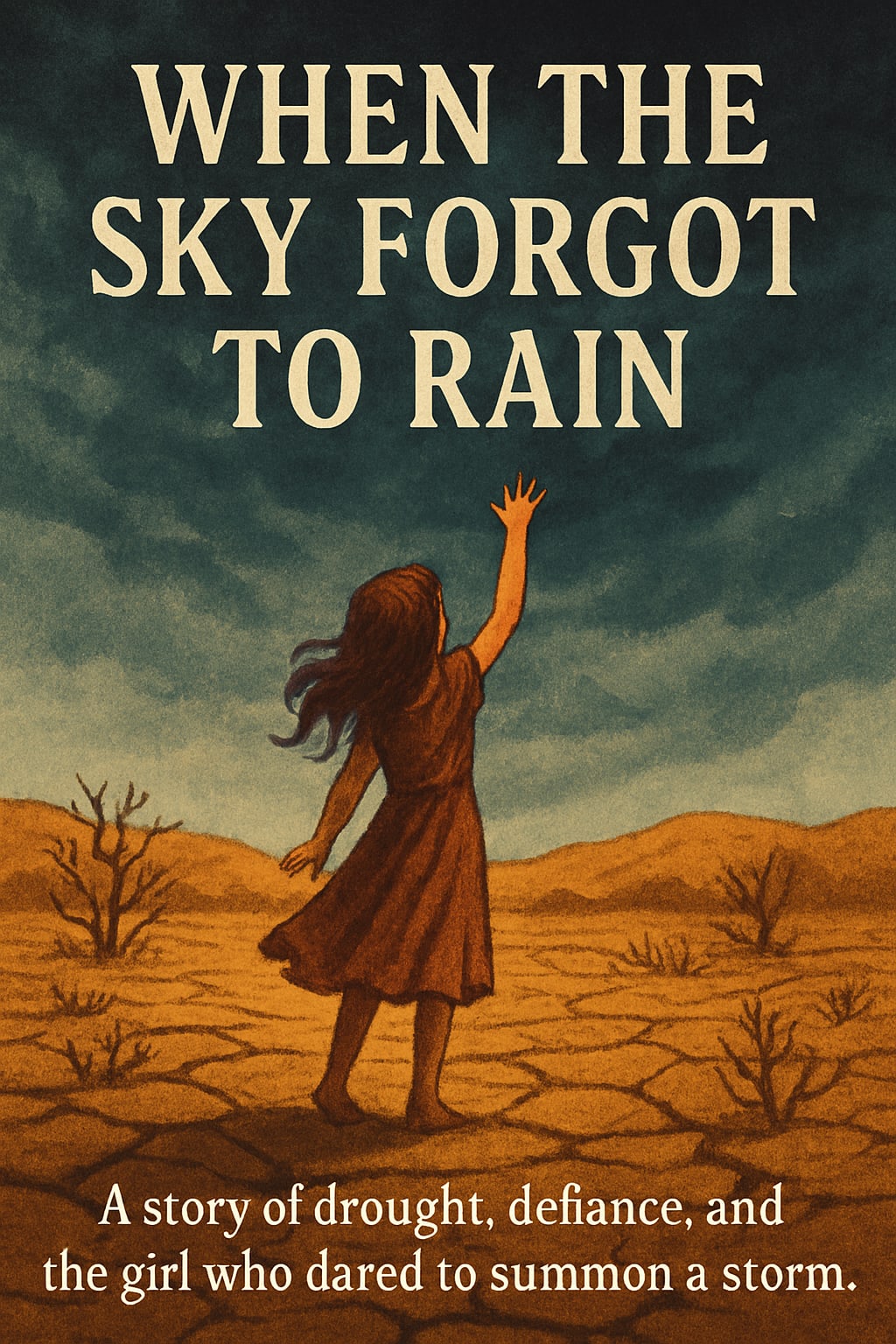
The sky had not wept in five years.
In the parched village of Dakhala, the earth had cracked wide open like a wound, and every riverbed lay empty like forgotten scars. Children no longer remembered what it felt like to run through puddles, and elders whispered tales of rain as if speaking of ghosts. The people did not look up anymore—only down, where dust choked the crops and hope had withered like the brittle stalks in their fields.
But there was one who still looked up. Her name was Anara.
She was no older than twelve, barefoot and wild-haired, with eyes like sun-polished obsidian. She had been born the year the sky forgot to rain. Her mother often said, “You came with the last storm, child. Screaming into this world as thunder cracked and the clouds grieved.” But that grief had passed, and the sky had stayed dry ever since.
Anara didn’t remember the rain. But she believed in it.
Each morning, she climbed the old stone tower that overlooked the valley—what once had been a watchtower, back when the land was green and invaders sought it. Now, there was nothing to watch but the dust. Still, Anara climbed. She would stretch her hands to the heavens, fingers splayed like tree limbs, and call.
“Rain,” she whispered. “I know you’re still up there.”
The villagers pitied her. Some laughed. Others warned her mother, claiming that hope in a time like this could be dangerous. But Anara was undeterred. She studied the old books in the abandoned schoolhouse, memorized cloud formations, mimicked the dance of winds, and spoke to the birds that still circled overhead.
One evening, a stranger came to the village. A woman draped in a silver cloak with skin the color of storm clouds. She watched Anara from afar, then approached.
“You call to the sky,” she said.
Anara blinked. “Someone has to.”
The woman crouched beside her. “What will you do if it never listens?”
“Then I’ll shout louder.”
The woman smiled. “That’s how storms are born.”
That night, the wind stirred differently. The heat pulsed not just from the sun, but from something deeper—like the earth was holding its breath. Anara could feel it in her bones, a humming, a pull. She rose before dawn and ran barefoot to the tower.
At the top, she danced.
Not like a child, but like a force of nature—spinning, stomping, clapping her hands to a rhythm only she could hear. Her voice rose into the wind. She called out names she had found in old songs: Zephyr, Tempest, Monsoon. Her hair whipped around her face, and her heart pounded like thunder.
The sky watched.
By midmorning, the villagers noticed the clouds.
They gathered at the base of the tower, squinting at the unfamiliar shadows overhead. The air changed—cooler, charged, like the moment before a great truth is spoken. A single drop fell. Then another. Then a hush, as the village froze in wonder.
Then the sky broke open.
Rain poured—not in rage, but in release. It fell like forgiveness, like memory, like love returned. Children screamed with joy, flinging their arms wide. Elders wept openly, faces tilted to the sky. Crops drank greedily. Rivers remembered their shape.
And at the top of the tower, Anara stood, drenched, defiant, and laughing.
The woman in the silver cloak watched from the edge of the village. “She summoned it,” someone whispered.
“No,” said Anara’s mother. “She reminded it.”
From that day forward, they called her the Stormdaughter.
Rain did not fall every day after that—but it returned. The land healed slowly, but surely. And Anara? She kept dancing. Not for need, but for gratitude. Because sometimes, even the sky forgets. And sometimes, it takes a girl to remind it how to cry.
The End
About the Creator
Ludacris and Nelly draw backlash over bookings at MAGA-coded music festival
Ludacris and Nelly headlining a mostly right-wing event is good for them. It’s also great for the genre of hip hop. The two rap veterans have showcased their talents on other stages. Why can’t they perform for mostly MAGA folks and grab that bag?
By Skyler Saunders6 days ago in Beat




Comments (1)
nice bro ,,,, also like my stories please