
When the Future Turns Against Us
Dark Tech. Twisted Minds.

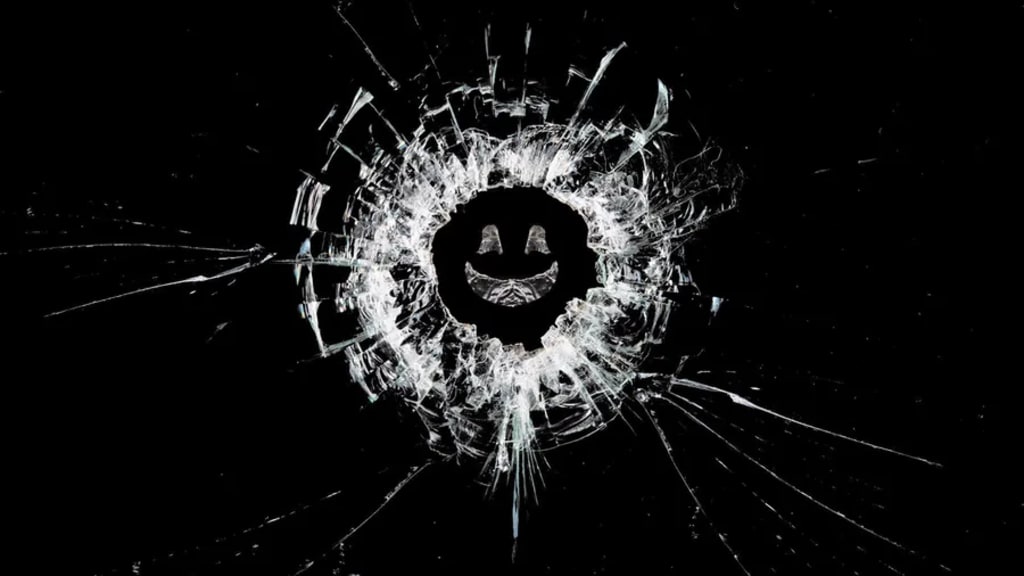
A haunting reflection on our world disguised as entertainment
What if your phone judged you? What if your memories could be replayed, paused, or erased? These aren’t just questions—they’re nightmares brought to life in Black Mirror, a show that doesn’t ask for your attention but demands your soul. With its eerily plausible technologies and morally gut-wrenching twists, Black Mirror drags us into futures so familiar they could be now. And that’s what makes it terrifying. If you think this is just another sci-fi series, think again. Black Mirror is a mirror, cracked and cruel, held up to the darkest parts of our humanity.
There’s a reason Black Mirror isn’t your average binge-worthy series. Created by Charlie Brooker and launched in 2011, the show evolved from a British cult hit into a global phenomenon. Each standalone episode offers a new cast, a new story, and a new technological terror—making every viewing a plunge into the unknown. But there’s always one constant: the uncomfortable truth that what you’re watching might just be five years away from reality.
The genius of Black Mirror lies in its ability to take emerging technologies and push them one step too far. Take “Nosedive”, for example, where your entire life is determined by social ratings—a world not so different from today’s Instagram-driven culture. Or “The Entire History of You”, which explores the ability to record and replay every moment of your life. Memory becomes weaponized, relationships crumble under forensic emotional scrutiny, and privacy is shattered—not by governments, but by ourselves. It’s speculative fiction so sharp it cuts too close to the bone.
Then there’s “San Junipero”, the rare hopeful jewel in a crown of dread. A digital afterlife where love defies death, it stands as proof that technology isn’t inherently evil—just dangerously powerful. The show doesn’t tell you what to think, but rather shows you what could happen when tech intertwines with emotion, grief, or vanity. It forces a question: are we in control of our inventions, or are they quietly rewriting the rules of being human?
Beyond the screens and dystopias, Black Mirror thrives because it reflects us. Not in the grand, cinematic sense—but in the mundane, everyday habits we overlook. That late-night scroll on your phone, the smile you fake for a social post, the attention you surrender to your smartwatch—all of it feeds a system. Brooker doesn’t create fear through monsters or space aliens. The villains are algorithms. The ghosts are in the code.
Visually sleek and psychologically brutal, every episode is a standalone parable wrapped in dark satire. It’s been compared to The Twilight Zone, but with sharper teeth and a deeper understanding of our digital age. Brooker, a former journalist, writes not with a keyboard but with a scalpel—slicing through complacency, exposing our blind trust in tech, and challenging us to question every convenience we welcome into our homes.
Despite often bleak tones, the show’s relevance remains undeniable. As AI grows, surveillance expands, and society trades connection for convenience, Black Mirror doesn’t feel like fiction. It feels like the news with a slight time delay. It’s not predicting the future—it’s warning us of the present.
And yet, we keep watching. We can’t look away. Because deep down, we know these stories aren’t just possible—they’re probable. And maybe, just maybe, they’ve already begun.
So, what does Black Mirror truly offer us? It’s not just entertainment—it’s a reckoning. An emotional confrontation with ourselves in an age where everything is connected and nothing is sacred. The most chilling episodes aren’t scary because they’re futuristic. They’re scary because they’re familiar.
In the end, Black Mirror isn’t about technology. It’s about people. Flawed, ambitious, greedy, hopeful, desperate people. It’s about what we become when no one’s watching—and what we might do when we think no one can stop us. It leaves us with one question, echoing long after the screen fades to black:
When the mirror cracks, what do we see?
If you’ve ever laughed at a meme, stalked someone’s profile, or blindly accepted terms and conditions, you’re already living in a Black Mirror episode. The show merely pulls back the curtain. It’s a wake-up call disguised as entertainment—a haunting invitation to look inward before we look outward.
So the next time your phone pings, your camera turns on, or your browser suggests something you never said aloud—ask yourself: is this still my life, or is it already fiction?
Welcome to the reflection.
About the Creator
Bubble Chill Media
Bubble Chill Media for all things digital, reading, board games, gaming, travel, art, and culture. Our articles share all our ideas, reflections, and creative experiences. Stay Chill in a connected world. We wish you all a good read.
Keep reading
More stories from Bubble Chill Media and writers in Fiction and other communities.
Is Marriage Still Worth It?
When Happily Ever After Meets Harsh Reality They say love conquers all. But does it still conquer time, bills, infidelity, and societal pressure? Is marriage—the ultimate symbol of commitment and devotion—still worth the risk in today’s fast-paced, self-focused world? Or is it an outdated ritual clinging to relevance in a world that’s moved on? These are not just abstract questions. For millions, they’re deeply personal dilemmas. Some dream of white dresses and diamond rings; others flinch at the mere mention of wedding vows. So what’s the truth? And is forever still a goal… or just a fantasy?
By Bubble Chill Media 9 months ago in Confessions
Stop Complaining
As a child, he was beaten and bullied. When he complained to his teachers and parents, he was told to stop moaning and grow up. The bullies were allowed to continue, so eventually he realised he would have to take things into his own hands, and a punch and a bully's broken nose was the action he took.
By Mike Singleton 💜 Mikeydred 7 days ago in Fiction




Comments
There are no comments for this story
Be the first to respond and start the conversation.