
What If Everything We Knew About Black Holes Was Wrong?
Delve into the fear and trepidation that people might experience when faced with the notion of black holes as cosmic anomalies. How does the fear of the unknown affect their decisions and actions?

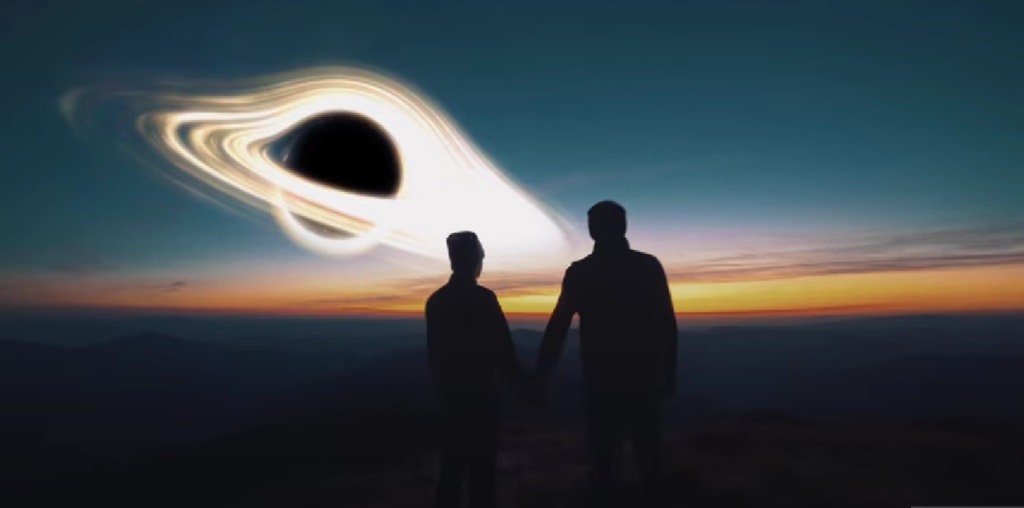
Once upon a time, in a galaxy not so far away, there were mysterious celestial objects known as black holes. These cosmic enigmas had earned a reputation for being dense and terrifying, often depicted as voracious vacuum cleaners of the universe. They were believed to suck up everything in their path, bending light and warping time itself. But what if, just what if, our understanding of these cosmic monsters was not entirely accurate?
For starters, black holes were nothing like vacuum cleaners. They didn't roam the cosmos, indiscriminately devouring everything in sight. In fact, to be drawn into the clutches of a black hole, you would have to cross a critical boundary known as the Event Horizon. This invisible line marked the point of no return; once you crossed it, there was no escaping the black hole's inexorable grasp.
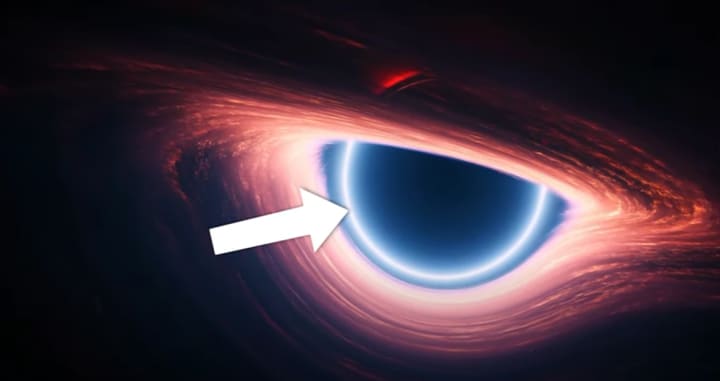
The Event Horizon was a region where the black hole's gravitational pull was so intense that even light couldn't break free. It was as if you'd have to move at the speed of light to escape, an impossibility according to Einstein's theories. Once you ventured beyond this boundary, you were doomed to be pulled into the black hole's abyss, never to return.
But, and this was a silver lining of sorts, as long as you stayed safely outside the Event Horizon, you'd be perfectly fine. No cosmic vacuum cleaner would swoop you up unexpectedly. However, should you have the misfortune of crossing that threshold, your fate wouldn't be instantaneous obliteration. Instead, you'd undergo a process known as "spaghettification."
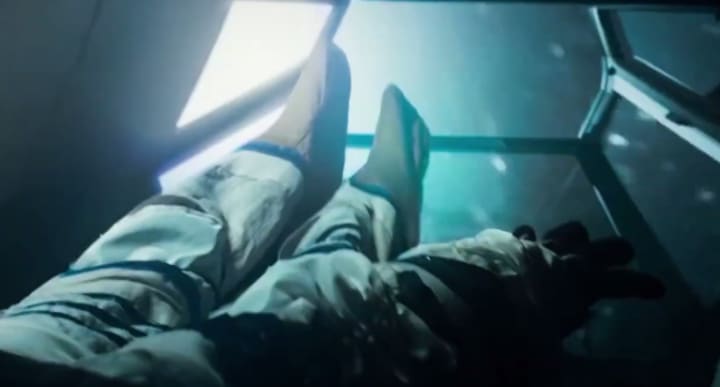
Picture this: if you approached a black hole feet-first, your legs would stretch out into impossibly long and skinny appendages before the rest of your body started to follow suit. It was a grotesque and painful transformation. The black hole didn't crush you like a soda can; it ripped you apart at the molecular level. The entire process might last only a few seconds or, at most, a few minutes, but make no mistake, it would be excruciatingly painful.
Still, there was a glimmer of hope, albeit an unlikely one. You see, despite the popular notion that nothing could escape a black hole's clutches, there was something called Hawking radiation that challenged that belief. Near the Event Horizon, particles were constantly being created, some of which managed to defy the black hole's gravity and escape as radiation. Over eons, these escaping particles could cause the black hole to evaporate entirely, as if it had never existed.
Sadly, this cosmic recycling wouldn't resurrect you. The emitted particles were far from a blueprint for reassembly. Therefore, jumping into a black hole was not advisable, especially not into the supermassive black holes lurking at the centers of galaxies.
But as our story veered away from the terrifying realm of black holes, it ventured into a different universe, one of clean and renewable energy sources. Nuclear energy took the stage, stealing the spotlight from wind turbines and solar panels. It promised zero emissions, minimal land usage, and efficient waste management—an enticing prospect for a cleaner future.
As the narrative unfolded, the focus shifted from the fearsome black holes to the awe-inspiring variety of these cosmic entities. There were stellar black holes, remnants of massive stars, and supermassive black holes, behemoths with masses dwarfing that of entire galaxies. The scientific community had recently discovered that these colossal entities might be even more massive than initially thought, raising tantalizing questions about their formation and the consequences of their collisions.
Despite their eerie reputation as cosmic vacuum cleaners, black holes weren't invisible or entirely inscrutable. Astronomers could observe their gravitational effects on nearby stars and detect x-rays when objects fell into them. Yet, the most profound mystery was what lay beyond a black hole's event horizon. Theories speculated that black holes could be gateways to other universes through something called an Einstein-Rosen Bridge—a type of wormhole. This idea was captivating, but fraught with peril, as these bridges were notoriously unstable, liable to collapse at any moment.
Even if one were to survive the treacherous journey through a black hole's gateway, the chances of emerging unscathed were slim to none. The intense gravity and radiation would likely annihilate any traveler long before they reached the other side.
In the end, it seemed that the black holes, while mysterious and intriguing, were best left to the realms of scientific exploration rather than as cosmic gateways for adventurous souls. So, for now, humanity was advised to stick to the safe confines of our own solar system, perhaps contemplating a journey to one of Saturn's captivating moons, like Titan.
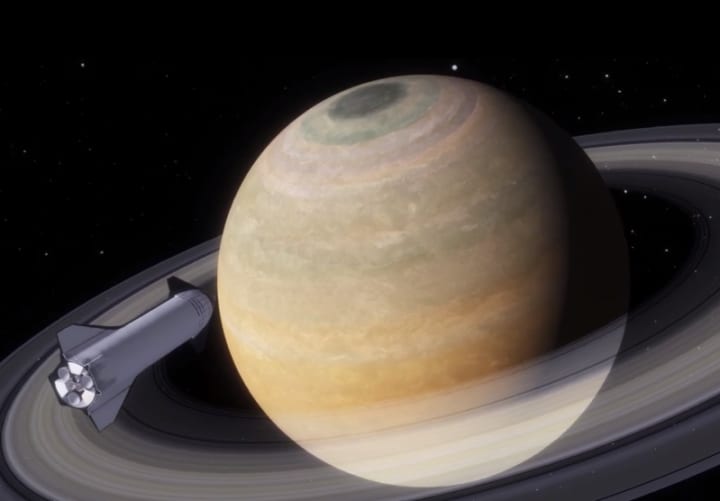
After all, the universe held mysteries beyond black holes, and it was a story for another day.
About the Creator
Keep reading
More stories from Mason Cooper and writers in Fiction and other communities.
What If You Swam in Titan's Lakes for 5 Seconds?
In the distant reaches of our solar system, beyond the shimmering rings of Saturn, lies the most majestic of all its moons—Titan. For scientists and adventurers alike, Titan held a special allure, not only for its stunning vistas but also for the tantalizing promise of life. This distant world boasted a landscape unlike any other, with liquid lakes that glistened on its surface. However, there was a catch—the lakes weren't filled with water but with liquid methane.
By Mason Cooper2 years ago in Fiction


Comments
There are no comments for this story
Be the first to respond and start the conversation.