


I sat crouched on the filthy kitchen floor, the murky water nearly covering the toes of my faded green rainboots. Leaves and moss swirled around me, mingling with brown and green foam floating on the surface as I carefully turned the pages of the old recipe book in my hands. Thanks to the scarf wrapped around my nose and mouth, I’d gotten used to the acidic, rancid smell that permeated the entire house about an hour after walking in. The water ebbed and flowed around me, sending out ripples and quiet splashes against the walls. These sounds, as well as the smell, had faded into the background.
The low shelves to my left held nearly thirty different books, all waterlogged and growing algae. I’m sure when this kitchen had been in use, when the house had been lived in, these books sat mostly forgotten. Tucked away around the corner, collecting dust. And now that they were considered treasures by others, these books had been all but destroyed in the floods.
All except the little book in my hands. It had been set atop the books on the highest shelf, just out of reach of the initial floodwaters. Although the colors on the cover had suffered some damage, through the rings of bleeding color I could make out a single, English word. A word my mother had made sure to teach me. Recipe. So there I sat, painstakingly turning the old pages, scanning the recipes for handwritten notes or comments, or anything else from the people who had lived here before. And if Mom was right, they might even been notes from my grandparents.
Mom had never been to her father’s house. The floods had happened when he was just a kid. But he had told her stories in such detail that she knew for certain that this house had been it. So when we got the chance to sneak off and look for something, anything, from our dead relatives more than a memory, Mom didn’t hesitate to send us off. I shook my head as I turned another page. Who could possibly say for certain that this house, one out of hundreds in the danger zone, was the right one? The weather had rendered most street signs illegible, and nearly a quarter of the houses had collapsed entirely. Al Mom had to go on was that the house number was 717, just south of the train tracks and across from the old grocery store. That was it. For all we knew, we could be twenty streets too far West. Did Mom realize how many grocery stores were south of the train tracks? Only a few neighborhoods had three-digit house numbers, so that narrowed the search down a little. I still thought the whole situation was ridiculous. But despite all that, like the good, obedient daughter I was, I found myself squatting in murky, stagnant water, leafing through a relic I could hardly even read.
A clatter came from elsewhere in the house, soon followed by my Aaron’s cursing.
“You alright?” I yelled as I turned to a page with a recipe with a picture of some sort of old-fashioned chocolate cake. It looked like it could be good. Maybe Mom would like to try it. She could read English. But a quick glance revealed neither handwritten notes nor recognizable ingredients, so I turned the page once more. Besides, chocolate was expensive. Too expensive to make a whole cake out of.
“Yeah,” my brother called out. “It was just a rat.”
Great. Despite myself, I looked around the kitchen. The warped wooden doors of the cabinets mostly hung open, revealing webs and abandoned rats nests between the cups and in the bowls. At the end of the cabinet line, a big metal box stood in the corner of the room with vines growing through the slightly open door, reaching up to where sunlight filtered through mud-stained windows. What was it called again? Freeze, frigid, fridge! Mom said that her dad used to tell her stories about personal coolers called fridges where he’d keep yogurt and popsicles. And he could go get some whenever he wanted. Even after midnight! Not like the public coolers back home.
I stared at the fridge, and at the roots spilling down the front to reach the water below. If Mom was right, this was her dad’s old fridge.
I shook my head and returned to the pages in my hands. If it was his old fridge, any yogurt or popsicles would be long gone. Maybe they’re what grew the roots.
The rest of the book yielded nothing worth saving until the last page. There, right beside the English word for ingredients, scrawled in pencil, a note had been written in by hand. The messy handwriting made it difficult, but I was able to sound out most the letters.
“Derek likes this one.”
What did derek mean? I didn’t recognize that word. Was it a name? Maybe. Whatever it meant, it didn’t matter. I’d found what I was looking for. I ripped the page from the book little by little, careful to take all the words with me instead of leaving a few on the spine. This recipe didn’t have a picture, but I recognized the word for coconut so I knew Mom would like it.
Once free, I tucked the page into my vest pocket, hiding it between pages of my little notebook where it had a better chance of actually making it back to the camp. I returned the book to its place, then went to explore more of the house.
Aaron’s voice shattered the gentle noise of water lapping against the walls once more.
“Maisy!” He sounded strained.
“Is it the rat again?” I made my way back down the hall.
Silence, broken only by my feet sloshing through the water, hung around the house. Just as worry started to well up within me, I reached the stairs near the front door and he called out again.
“I think I found something!” His voice emanated from somewhere upstairs. I took a moment to study the staircase in front of me.
Thin, leafy vines had wrapped up the wooden banister and woven through the spindles. The stairs and railing had rotted away in some places, yet the tendrils kept everything in place. I could almost picture what it would have looked like before succumbing to the elements. Testing each step before committing, I made my way up the staircase. The first few buckled a little under my weight, but the higher I climbed, the less they caved. By the time I could hear Aaron’s cursing, they felt as sturdy as the ground.
“What is going on?” I asked as I walked through the doorway at the top of the staircase and into the big bedroom.
A cool breeze brushed against the exposed half of my face, emanating from a huge hole in the wall. Judging by the square shape, double doors leading out to a balcony may have been there at one point. Now it was just a gaping hole standing watch over scraps and shattered beams of rotten wood, and a pretty nasty fall. The once red curtains, now a sickly pink, blew in the gentle wind as well. Little spirals of dust danced around the bedframe, which was in surprisingly good condition. A couple bushes grew out of the pillows, looking like the heads of a sleeping couple beneath the faded blue blankets that were spotted with mold.
“In here.” His voice came from the doorway beside the bed and I walked toward him, stepping over a fallen bookshelf and avoiding the broken glass surrounding it.
“What could you possibly be doing in here?” I stood in the doorway and looked inside.
Empty containers that had fallen from the cabinet Aaron had opened earlier lay scattered across the tile floor, crushing the various leaves sprouting up from the grout, along with partially unrolled towels, cotton balls, and spray bottles half-full with corroded cleaning chemicals. Large plants with bushy, scraggly foliage grew out of the toilet and shower drain, and long, dead roots hung from the shower head and curled around the handle. Aaron, all caution of the dangerous molds forgotten, lay on the floor, straining with something beneath the cabinets with the overgrown sinks.
With a grunt, he yanked his arms out from beneath the cabinet, and a wooden panel popped into view with a screech. He laughed, victorious, and pushed himself to his knees.
“I knew there was something here!” I couldn’t see his mouth beneath the scarf, nor his eyes beneath his long, wavy hair. But his glee shone bright through his little bounces and manic chuckles. Despite my frustration with his antics, I smiled. He yanked on the panel multiple times in rapid succession, each tug pulling it forward in halting, screeching steps. But by the time I crouched beside him, the contents of the secret drawer came into view. A couple fuzzy boxes lay stacked on little bags of old, green currency and folded leather booklets.
“What have we here?” Aaron opened one of the boxes, revealing a small heart-shaped necklace so tarnished I couldn’t tell its original color. He tossed it to me. “Doesn’t Mom have one of these?”
I nodded, its name close to mind but not quite tangible. What did she call these picture necklaces? Picture holders, safe-keepers? I pressed my fingers against the side of my head and squeezed my eyes shut. What was that clue she used? Oh, she said you would lock away your loved ones. Look-it?
“It’s a locket.”
Aaron nodded, looking at the green jewel he’d found in the other box before sticking it in his satchel. I fiddled with the locket for a while until I finally got my fingernail between the two halves. Time had corroded the hinges, but in one, quick movement I opened the little heart-shaped box and found myself staring into my own eyes.
I sat there, frozen, gazing at the little color photo of a woman much older than me, her short hair styled from the time before the floods. Instinctively I reached up and touched my own long hair of the same color, pulled back tight into a bun.
“Maisy…”
I tore my gaze away from the locket to find Aaron holding one of the little leather books with gold lettering on the cover. He tilted his hand so I could see that the book contained a childhood picture of himself.
No, I realized after a moment. Not of himself. This little boy, a nearly toothless smile wide across his face, wore clothes with images and symbols of the past, not present. I gently took the book from him and looked over the writing on the page beside the picture. Slowly, I sounded out the words. It took me a while, but I finally found the name of the little boy that looked just like my brother.
“Henry Daniels.” I let out a breath and stared at nothing, thinking everything over as Aaron took the picture from my hand. “Grandpa’s name was Henry.”
In an instant, Aaron was on his feet, leaning over the grime-covered counter and staring into the dusty mirror, the picture held out beside his face. In a daze, I went through the other booklets and found pictures of my mom’s aunt Jenifer, as well as pictures of who I assume were their parents. My great-grandparents. Although the grown woman, my grandmother, appeared serious in the picture in the leather book, hers was the same smiling face hidden away in the locket. All the while, my brother stood silent, his eyes drifting from the picture, to his own reflection, and back to the picture. My own gaze drifted to the name next to my great-grandfather’s sparkling eyes. Derek Daniels. I grabbed the notebook from my vest pocket and flipped though until I found the page I’d taken from the recipe book downstairs. Staring with new eyes at what was probably my great-grandmother’s handwriting, I reread the note quietly aloud to myself.
“Derek likes this one.”
A little laugh escaped me as I shook my head. Mom was right. Somehow, in spite of the impossibility of it all, she had found her father’s childhood home and told us right where to go.
After a while of searching through the drawer, looking for other secret compartments, and simply gazing at our relatives, Aaron spoke up.
“How are we ever going to smuggle all this back home?”
I shook my head.
“I don’t know.”
I stared down at the picture of my great grandmother smiling up at me from the locket.
“But we’ll find a way.”
About the Creator
Keep reading
More stories from Katelyn Prince and writers in Fiction and other communities.
The Octopus
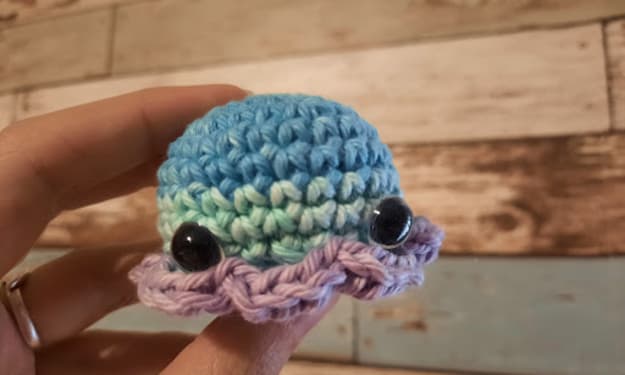
I don't know why I first made an octopus. I'm just glad I did. All I know is that, when I decided to turn a bunch of yarn into a stuffed animal, I really didn't know what I was doing. See, I didn't learn from my grandmother, like so many others have. My mom tried to teach me when I was a kid, but my obsession with doing things quickly clashed with her obsession of doing things well. I think I made a potholder, but honestly, I don't remember. I may have actually given up halfway through. But despite not having an actual product to show for that first lesson, I did gain something. My first teacher, my Mom, taught me a valuable lesson: how the final crochet product should look, and how the yarn and hook should feel in my hands as I traveled up and down the rows. I could crochet the same way a one-year-old can walk. Not well by any standard except now I had made a crochet square, while the day before I'd never held a hook.
By Katelyn Prince5 years ago in Humans


Comments
There are no comments for this story
Be the first to respond and start the conversation.