
Uncle Shu’s Window
Nothing is Free in The Utopia

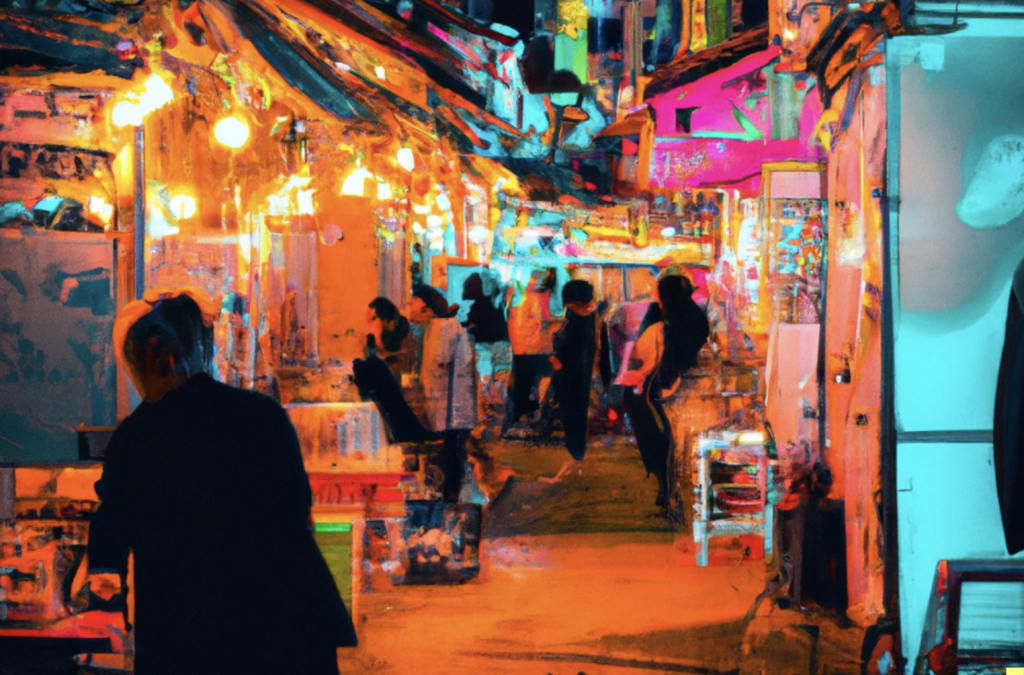
The outside world was unknown to her, but she could see a glimpse of it through the window in his room. Just the barest glimpse of the world that should not exist, and she paid dearly for the privilege. More than others, less so than some, but nothing is free. Not in the utopia of the tunnels.
Every chance she got to glimpse through the window had to be bought and paid for. The amount of time varied based on how long Uncle Shu would put up with her; on the luckiest days, he fell asleep and she would be able to watch until he woke up. Personal record ten hours, though he had strictly warned her against ever pulling that again.
She never ran to the meeting place, running would draw the attention of the security services. Unpleasant questions like ‘why are you running?’ or ‘what are you late for?’ would only serve to drive her contact into hiding. Underground, as it were. The security services might even disappear her, they were known to do that to some of the people they questioned. The Ministry of State Security was not famous for gentle treatment.
Maintaining a brisk, businesslike walk was also no defence against them, she thought as she passed under the neon signs that gated the Tenth-Level Commerce District — a district that was tolerated though officially disallowed. People were sometimes rounded up as routine parts of monthly quotas too, so even being completely innocent was, on occasion, cause for arrest.
Disinterested in being arrested, she tried her best to blend in without looking like she was trying to pass unnoticed. Making angry groans and gestures when splashing through a puddle of something unpleasant smelling, she walked with meditated nonchalance through the crowd of illegal shoppers. Unlike the shops from the Old World, the pre-virus world, none of the stores had goods in window displays nowhere had items of particular worth or interest glittering under dedicated lights.
Each of the bulkheads into the stores were already soiled and much stained. The eternal glory of the Utopia buried under a layer of grime. Some people among the crowd, would mutter that the filth was an affectation. They had not been underground that long, some of the older citizens could even remember living above ground and the Ministry of Information must be responsible for this aesthetic. However they made sure to never mutter loud enough to be heard. Informants were everywhere, and no one could ever truly be trusted.
“Jong-Hwa,” hissed Mr. Lee, poking his head out from a curtain that clashed with the walls thanks to its cleanness. “When are you going to come visit me again? An old man gets lonely sometimes.”
There were any number of things that might mean, and the name itself was a joke in a way — a name that meant virtue, ironically used in a place like the Market, it was not hers — but Jong-Hwa just waved him off. The old man cackled and returned to his hole, selling whatever he could get his hands on for whatever kind of largesse could come his way. She had, on occasion, traded any number of things with him and many others in the Market. Despite the MSS, black-market goods and services still managed to flow.
Despite the control of the Civil Authorities, it was still possible to get some things from topside into the Utopia. Even if those things were of a somewhat unvaried nature.
“I heard there was an outbreak,” Jong-Hwa overheard on her way past a small group. “Fifteen dead.”
“Hope they burned the whole tunnel system,” snorted a second man in that group. “If any of them did-” but the rest of the conversation was lost in the press of shoppers and the haste of Jong-Hwa’s own journey. Stopping to listen was a difficult thing and must be done both carefully and strategically. There were no windows she could pretend to be browsing in, and the Ministry of State Security was everywhere.
Perhaps the MSS was even having open conversations on the streets about outbreaks to catch anyone who listens more than is healthy for them or offers improper opinions.
She shuddered at the thought of an outbreak. The videos and images that came out of the west, out of Europe and even China were horrifying. Jong-Hwa doubted very much they could be faked, and if they weren’t, then the Leader had been right to take his people into the tunnels. Even if life in the Utopia was… difficult might be the most politic way to say it.
But outbreaks, the rest of the world, and even the leering of Mr. Lee were beyond worrying about as she threaded her way through the Market. At the centre, studiously reading a book of sanctioned fiction, a young man about her own age sat on a stool. He was not shopping, and the book was designed to look like a foreign translation so he still looked like he belonged here.
“Hear about the outbreak,” she asked quietly, drawing his attention to herself.
“Funny thing to start off with, Miss Virtue,” said the young man, turning a page. “Aren’t you supposed to know the codes off by heart now?”
“Aren’t you supposed to be smart enough not to read a propaganda novel in the middle of the Market?”
“For your information,” he cracked his neck and put on his best annoyed face. They were just people of the same age, maybe even former or current classmates as they both had the benefit of looking young, so there was no reason to be suspicious of them. “This one happens to be entertaining as well as brainwashing.”
“Of course,” her tone was too sweet, mocking almost. They were really layering the comedy on thick this time to cover for his mentioning of codes. “And the presence of a good little soldier reading his approved book won’t draw any attention?”
“How’d you know?”
“The state seal in the leaves on the front cover. I get that it protects from MSS taking an interest but other kinds of people around here can be… interested.”
He raised his eyes at the sudden use of the first piece of the code phrase. ‘Interested’ used at the end of a sentence in reference to the Market as a whole meant that they could proceed, of course, he did not jump into the nuts and bolts of the exchange. First there were other maters to attend to.
“Interested people can be troublesome,” he said, reminding her that what they were about to do was a risk to them both. “But I don’t think there’ll be any danger today.” From his end there was no reason to call off the meeting. “Not when everyone is happy, right?” Could she make the trade?
“True,” yes the trade was ready from her end. “You and I might as well get on with it then, what did you say you wanted here?” Since they both felt secure and she was ready, willing, and able to pay for the upcoming privilege, she thought it was a good time to move forward with the arrangement.
“I already know what I want,” he said, not taking his eyes off of her to make certain she understood the deal. “Uncle Shu though, his tastes are a little different.”
She wanted to roll her eyes. The trade was same every time, did he really think she was stupid? But the drama had to be carried out, so she made sure to tell him — one finger touching her bag for emphasis -that she had everything required for the transaction. He smiled, showing his surprisingly clean and straight teeth. Money might not exist in the Utopia, not in the way it had done before the plague, but the different means of acquisition still granted some people benefits.
In the end, the trade was pleasant for her. Everyone got what they wanted out of the deal, and the experience she was striving for made the price a bonus. She thought it might be worth any price as she followed her contact through the throng, his hand in hers to complete the illusion. Any price was a difficult concept to grasp, though, so she never went into a negotiation with that mindset.
Always know what you’re willing to give in exchange for what you want. The more you want something, the less interested one must appear. And always be prepared to walk away if the price is too high, or the merchant too unpleasant. But Fixer was skilled enough for his price to never be too high.
For a reason she never understood, despite the number of times she had possessed enough trade goods to make this deal, she always hated the walk to the first trade location. The place where she would buy passage to visit uncle Shu. Perhaps it was the Market itself, the general sense of unease and background fear of MSS notice that made her heart flutter.
Electric signs were few in the Utopia and those that did exist never advertised more than the name of the establishment. Those that did not belong directly the Supreme Leader or the Party were all part of elaborate fronts. Behind the doors marked out by those signs people did business not unlike her own in nature, dangerous and illegal business made deadly by the constant watch of the MSS.
Fixer and Jong-Hwa splashed through more puddles of filthy water. A few people leered at them as they passed, making congratulatory or obscene gestures towards what they assumed was a happy couple on their way to a clandestine meeting. They weren’t wrong, after a fashion, though she still hated the journey. Of course they could not meet in front of the establishment, that would look suspicious and potentially be reported to the MSS.
No. It was better to go through all of the motions. Two attractive young people meeting in the Market then moving briskly towards the Red Door hand in hand was normal. Reasonable. Included in the MSS reports without a doubt but with no greater importance attached to them than as they contributed to statistics.
-0-
The room was, as were most of the hotel options in this particular establishment, decorated in red. Red was the official colour of the Party, and thus should never have been used for such entertainments, but foreign trends used to be smuggled in and tended to stick around. The famous Red Light District of Amsterdam had never been far from the imaginations of people who lived on the edge of Party loyalties; their access to Western movies ensured that they would share some cultural markers.
Especially since the Party would know about the Red Door Inn. It was the most popular short stay facility in the area. If it was red, that was because the Party saw no reason to exercise its ability to change the colour.
As always, reflections chased themselves around Jong-Hwa’s mind as she gathered up her clothes. Fixer was already half-way dressed, his eyes politely on the wall. Their time together, starting with a passionate kiss from the moment they entered the room and ending after they caught their breath, often still shaking on the thin mattress, left them both satisfied and reflective.
She never understood why Fixer chose this as his piece of the exchange. Of course she knew that he liked it, his little sounds and the twisting of his face showed that much quite clearly. And she enjoyed herself too. Embarrassingly, she sometimes thought about Fixer’s attentions when alone and handling her own needs. But he did not seem to enjoy the power of it, the act of taking, as much as people who trade in sex often do.
Once she had thought about asking him but discarded the idea. Now, as she re-clasped her bra and pulled on her standard issue clothing, she reconsidered. He was strong, handsome, tall, and definitely skilled. But when she opened her mouth to ask him why, she said, “thank the Leader for birth control.” It was a stupid thing to say, but true enough. According to some of the older women life had been different before they descended into the tunnels to escape the end of the world.
Now, though, now populations needed to be controlled. There was only so much room in the Utopia, meaning that the governmental imperative on breeding was done away with. Within the first year underground, or so the old knowledge went, birthrates had dropped by nearly half as the Party exposed everyone to mandatory re-education which included birth control technologies and methods.
“Yeah,” Fixer was staring at her now, a small furrow between his eyebrows. For a moment Jong-Hwa flattered herself that he was thinking along the same lines as her, trying to understand his choice of trade. Whatever his decision, though, he kept his end of the bargain. “Come on, Uncle Shu will be wanting what you’ve got for him.”
Leaving the Red Door Inn, walking through the reception hall and out the iconic red door, was nowhere near as mortifying as entering. Perhaps it was the sense of satisfaction, the sense of a job well done, or just the bone deep pleasant afterglow, but Jong-Hwa felt that she could better bear the stares and leers of people as she left than when she entered. A thing done, and though they might not know it, done well, was not quite as embarrassing as a going to a place with that specific intention.
“You’d think he would run out of places,” she said, watching as the food vendors plied their trades — the only reputable trade in the whole Market — serving up steaming bowls that almost tasted like old world food. “How many is this?”
“There’s never a shortage of interesting places,” said Fixer, without turning to look at her. Their job together, as far as any informants watching were concerned, was done. To that end, and since they were never seen together outside of these little liaisons, he must now show her no symptom of unusual affection or interest. “Personally I think the Party likes the expanse of them. Always somewhere new to discover, makes me wonder if they’re all plants.”
Conversation sufficiently killed with that sobering thought, they walked on. Together, yet ostentatiously not together. The careful art of showing the world how uninteresting you were, without that play-acting in turn being extremely interesting to observing parties. These games we play, Jong-Hwa thought, stepping around a precarious stack of thick plastic bins. The comedy of the Utopia. Makes you wonder what it’s all for. If what Uncle Shu’s window shows us is true, then there’s no reason to stay down here. No reason to put up with any of this. Except they control the air. No reason to stay, no way to leave.
The stench of the tunnels, the heat and the steam and the sense at the back of your throat that the walls were closing in did not exist. Not officially. Yet it existed, despite what the Civil Authorities claimed. On the view screens — things similar to Uncle Shu’s window — the tunnels were always shown as beautiful things. Clean and bright, full of smiling, laughing people. Maybe tunnels like that existed, maybe the Utopia had the kind of class divide that was supposed to have been left behind before the revolution.
In such a huge complex, one that housed the entire population of the pre-plague country, minus the disappearances that never really happened, there could be any number of hidden places of true beauty. Places where the air tasted pleasant, where she would not be able to smell the past twenty-five years of human habitation. But even if there were, they weren’t for her. Her whole like would be spent in this part of the Utopia.
“There,” Fixer pointed into the darkness.
Squinting into the shadows, Jong-Hwa saw a rusted door handing off one hinge. This was not a habitation zone airlock. Odds on it being on any official plans of Utopia were slim to none. And it was exactly the kind of place that her mother had forbidden her to go as a child. She thanked Fixer, though he had already moved on and not looked back, and pushed through into the darkness.
Inside, one hand on the wall, her only perceptions were touch and smell. Even the noise, the constant babble, clatter, and clamour of the Market was blocked out by the oppressive darkness. As an experiment, something she had read about in books, she held her free hand before her eyes and waved it back and forth and saw nothing. She closed her eyes to help the fear, they wouldn’t do her any good open anyway. The air of the tunnel, the side shaft that would not be on any maps of Utopia, choked her with the stench of decay.
Nowhere ever smelled truly good in her experience, but this path to Uncle Shu was unique in its horrors. Things lived and died back here, things that the sanitation patrols would never find. Stagnant water dripped from somewhere, its fall muted by the darkness. The wall under her hand was rough and smooth, dry and slimy in turns. Step after step further from the light, the noise, from Fixer, into the dark.
Her heart was in her throat. She hated this passage, hated the dark and the stench and the horrible, constant silence. Something with too many legs crawled over her hand as she trailed it along the wall, and she fought down the urge to panic. At the end of this tunnel, at the end of the horror show would be Uncle Shu and his magical window. A vision into a world where the MSS did not hide around every corner and she did not have to spend her life in disgusting tunnels.
The dreams of the window, dreams of a better — or at least a different — life carried her through. She shut her eyes and kept walking, step after cautious step, not wanting to see the darkness. Trying to pretend it wasn’t there. Her boot splashed through something, breaking a kind of skin across the top of the awful and sending a reeking stench up at her face. She pressed on, running over and over in her mind everything she hoped the window would show her.
Finally, the wall disappeared beneath her fingers. The world through her eyelids turned from deepest black to shaded pink. There was light out there now.
Trembling, she cracked one eye, hoping against hope that this was not a trap. Hoping that she would not see agents of the Ministry of State Security standing before her in their olive uniforms and peaked caps. For once, her prayers were answered and all she saw was the frame of a forgotten doorway covered in a rough blanket around the edges of which soft, yellow light shone. She wanted to cry, that was Uncle Shu’s blanket! The same one that he always had, or at least the same pattern.
“I know you’re out there, Jong-Hwa,” came Uncle Shu’s quavering voice from beyond the makeshift curtain. “Why don’t you come in? I think you’ve had something of a journey, no?”
With a sigh that she hoped the old man didn’t hear, Jong-Hwa pushed past the curtain and all but fell into the comfortable, but worn, chair that he had waiting for her. It was always the same chair, always in the same spot relative to his own. Sometimes she wondered how he brought it form hole to hole, but in the end she knew that it did not matter. The system was in place, and everything worked.
The only thing left to do, was wait see if Uncle Shu wanted to play the game. Or if he was anxious to finish the trade.
“How’re you doing,” she asked in the most polite language.
“You and Fixer,” he shook his head with a smile on his thin, slightly sagging face. “Never would have thought it before.” Unfortunately, this was not enough to tell her if he was interested in being forthright or not.
“He’s fun,” was her only response.
“Yes. I imagine so; that’s why you never renegotiate. But let’s be straight, I know that you’re not here to keep an old man company. Did you bring what we agreed on?”
Straight forward it was today. Still though, she could see the loneliness of the very old in his eyes.
“I did, Uncle Shu,” Jong-Hwa reached into her bag and pulled out the contraband, her heart lifting a little as the bottles came into sight.
Alcohol was strictly limited in the Utopia, even outright illegal according to some members of the MSS. Which meant, of course, that it was the most common illicit trade good. Contact with the outside was all but severed, had been since the global pandemic was declared very nearly thirty years before, so nothing came in like it used to.
There were no bootleg American crime dramas, no comic books from South Korea, nothing that could be bought like in the pre-plague years. Even the foreign porn that existed — since most people had a distaste for what was released by the Party with its heavy focus on patriotism — was in short supply and jealously guarded. Jong-Hwa remembered one young man beaten to death in a public tunnel because he had hit the pages of an MSS officer’s favourite illegal magazine with his ejaculate.
Peaceful and perfect as the Utopia claimed to be, everyone who was looking could see the cracks. Even if the children that could be seen were all distressingly interested in their own indoctrination. Second, or even third generation tunnel dwellers. The Leader’s perfect race of obedient citizens.
Shuddering with the intrusive thought of the patriotic songs chanted by school children eager to show their loyalty, Jong-Hwa handed over the bottles.
Uncle Shu took them with something almost like reverence and broke one open. Smelling it with one long, savoury inhale, he smiled at her and said something completely unexpected. “I used to buy from your grandfather before we all got shuffled down here. You have no idea how thrilled I was when Fixer came to me saying that he found someone who wanted to trade and handed me something that reminded me of topside.”
She was stunned. She was terrified. She was somehow honoured. “W-what,” it was not much. But it was all she could manage give the circumstances.
“Yes,” he said, still smiling. “I’m adding one more condition to today’s little trade, I hope that’s alright,” he filled a cup with the liquor and handed it to her. “Let’s have a drink together to honour your grandfather, I know he passed recently.” They drank, Jong-Hwa still too stunned to speak. Then the old man surprised her again, “by the way. When you look through my window, what is it you look for? You know that the war has been over in most of the world for nearly fifteen years, of course. So what do you look for?”
“I just…” the outside world was unknown to her but she could see a glimpse of it through the window in his room. There was nothing in the tunnels, nothing that could interest her for long. But outside, there was a world of possibilities all completely out of her reach. Out there was freedom, a life away from the clutches of the MSS. A life under the sun instead of the almost painful lights of the tunnels.
“I look for freedom,” Jong-Hwa’s voice was almost too low for Uncle Shu to hear it, so he leaned forward. “Out there… the Americans are out there, the Europeans and the Africans. It’s a world I’ve never seen, the South and Japan and even China now that they’ve started reconstructing on the coasts. All of it, always changing always exciting.”
“I know what you mean,” Uncle Shu said, cutting off the rest of her thoughts. “Here,” he handed her the remote and let her switch on the window.
Jong-Hwa had never explained why she wanted to see what he could show her before. Never even thought through why she risked so much just for the chance to look outside, and it was breaking her heart to tell him. But as she pressed the button, and the window above his head flickered to life she felt the sorrow of the tunnels washed away.
It was raining on the other side of the window. A young girl in a red rain coat was splashing in puddles. There was text on the screen, Latin characters she couldn’t read but Jong-Hwa did not care. Through the window she could see everything that the Leader’s decision to hide them form the zombies underground had stolen from her.
With the press of another button, the scene changed and she was looking at tall trees as deer strode beneath them. People were there, too. People who looked a lot like herself. Another flick took her to Paris — Uncle Shu had told her what the city with the beautiful iron tower was called — and she marveled at its infinite lights.
Again and again, she clicked the buttons on the remote. Again and again the scene through the window changed. This was her place, she knew that. Knew that she had been destined to be out there, looking up at the millions of stars in the sky just as the young couple she could now see were doing. Briefly, she envisioned doing that with Fixer, but that image was blown away by the pictures of a raucous celebration on a tropical island that now filled the window.
Eventually, Uncle Shu would die. She knew that. Knew that all people must eventually pass from the world. Idly she sometimes thought what, if anything, happened after. The Party forbade any and all religion, so she did not even have a concept of an afterlife. But she knew what would happen to her after the old man passed. She knew that she would likely wither away to nothing without the promise of what he could show her to get her through.
Sometimes people talked of revolution. They dreamed about rising up against the Leader and overthrowing the State. They lusted after what they could never have, they imagined riches of other sectors or the ability to open the enormous doors and let them back out into the natural light. But how could one rebel against a person on the whim whom you were able to breath?
The outside world was unknown to her but she could see a glimpse of it through the window in his room. It was her escape while the Leader still ruled them. Her only escape as the rest of the world rebuilt after the horrors of the plague. His window, allowed her to feel less alone in the world, gave her hope.
0–0
This story was inspired by Max Brooks’ World War Z, one of my favourite novels ever.
To Mr. Brooks, my most heartfelt thanks for both the above mentioned and Devolution. Though I doubt very much that you will ever read it, this story is dedicated to you.
Best,
Alex
About the Creator
Alexander McEvoy
Writing has been a hobby of mine for years, so I'm just thrilled to be here! As for me, I love writing, dogs, and travel (only 1 continent left! Australia-.-)
"The man of many series" - Donna Fox
I hope you enjoy my madness
AI is not real art!
Keep reading
More stories from Alexander McEvoy and writers in Fiction and other communities.
By Firelight
Shadows danced on the wall of the long house as an old man made the slow walk to the stone circle surrounding the central fire. He was shrouded in a reverential silence spread by his passing. Even the children knew the importance of this walk and followed the silent lead of their elders.
By Alexander McEvoy3 years ago in Fiction



Comments (1)
"Jong-Hwa remembered one young man beaten to death in a public tunnel because he had hit the pages of an MSS officer’s favourite illegal magazine with his ejaculate." Hahahahhhahahahahahaha I was extremely speechless reading that! 🤣🤣🤣🤣🤣🤣 Your story was brilliant! I enjoyed reading it!