
The fire won’t light this morning.
At least, I’m not expecting it to, really. It doesn’t take much to realise it’s a lot colder down here now than when I left.
Ironic.
-
The desolate town of Reykjavík looks more bleak than when I left. Surrounded by endless fields of cracked earth and ashy snow, the barren town welcomes me home with a whistle of windchill in the trees; a familiar sound I haven’t heard since before the end of the world. Streets of silent darkness surround me, the serenity broken by the rhythmic crunch of black ice under my boots.
A few yards ahead of me, a faded line of light creeps ever so slowly forward, swallowing rusted cars and decaying buildings in its wake. As I step over the partition – the transition between dark, cold winters, and the summer days of endless (while overcast) Icelandic sun – I can’t help but to think back on the constant struggle of the last six months, wondering if my exploits had all been for nowt. Though, as the warmth rolls up my back for the first time in two seasons, my short-winded perturbation leaves, and I turn eagerly on my heels to face the new light, satisfied for having survived my quest in any case.
Peaking over the far west tabletop of Skálafell, a dim shadow of sun emanates onto the street around me, like a flood light with a towel over it. Far up Mt. Esja, a single pair of small bootsteps in the ashy snow glint longingly for daylight, as I realise I am home, and remember I am alone.
-
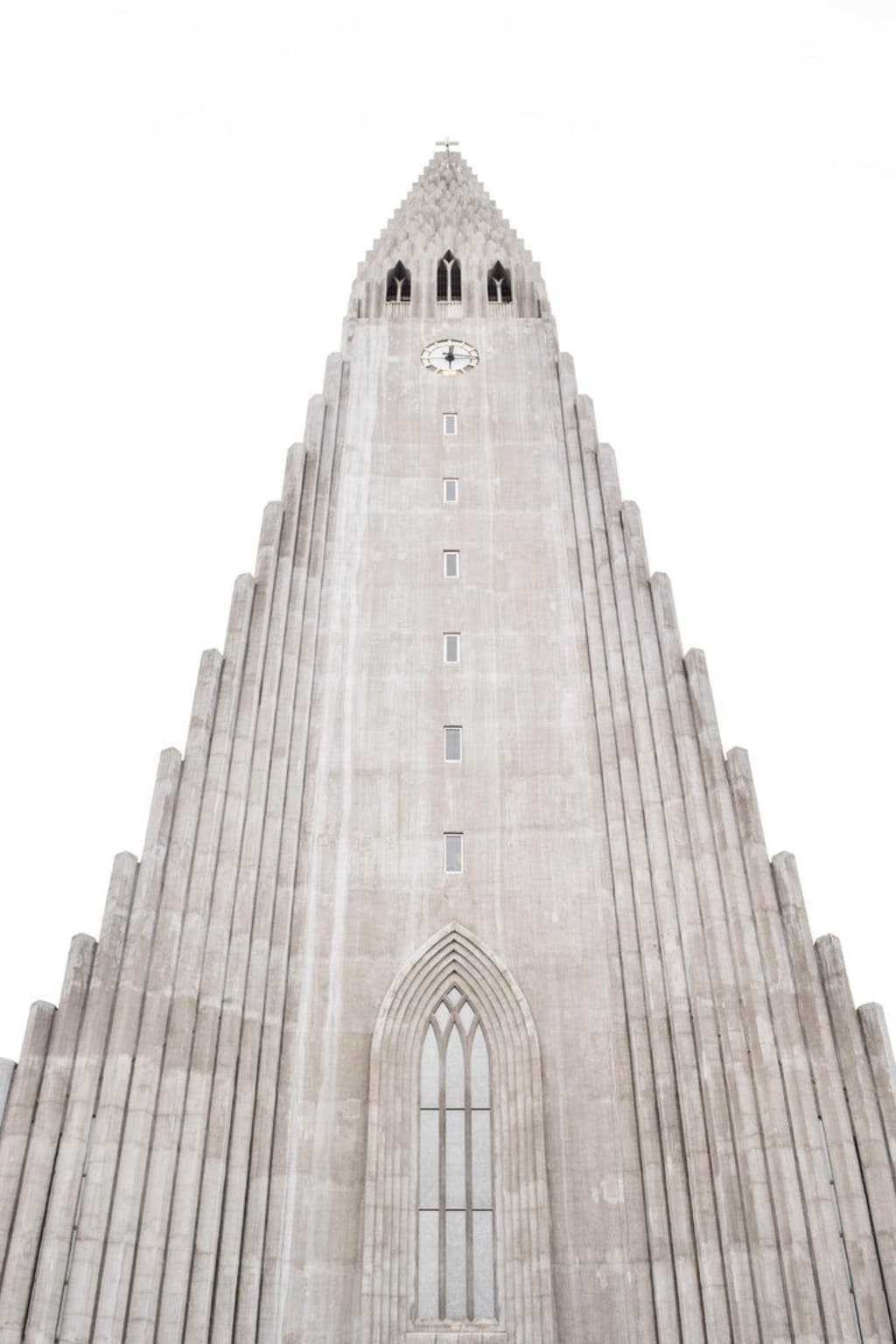
Turning the corner of Hverfisgata onto Frakkastigur, the sun tipped spire of the Hallgrímskirkja Church presents itself over the tops of the once cute, once colourful two-story houses that now sit in dust coated piles of crumbled concrete. I keep one eye trained on the ground as I step over and around icy debris. The last thing I need now is to sprain an ankle three hundred yards from the destination I’ve been trying to reach since the beginning of winter.
Without warning, the sun above comes bearing down on the world around me, as if the previously thick clouds of ash have suddenly vanished into thin air. The unfathomable heat shocks the otherwise undisturbed environment, like a pre-apocalyptic lightning bolt in a once crowded city. Ice begins to melt; muddy roads begin to dry.
Before I have time to turn around, a sharp glint of light bounces off a pile of rubble, directed into my unsuspecting face. I wince in pain and close my eyes tight. Behind shut eyelids, I notice the world go dark again, yet I hazard opening my eyes. Having spent the last six months in the dark shadows of mountains and moonlight, I had adjusted to a nocturnal ability to see and had not prepared to spend it that quick.
As I regain my vision, I look tentatively back at the blurry outline of the sun behind a deep cloud of ash. It looks exactly alike as to how it did only a few moments ago, with the steady drip of water being the only witness to anything out of the very ordinary.
I let my knapsack fall on the ground and I drop to my knees, scanning the rubble for the culprit to my temporary blindness. There, wedged between two cracked pieces of concrete, a gold heart-shaped locket sits comfortably open; untouched. The girl in the photo – a young girl with black shoulder length hair and light blue eyes – stares back at me. She has a dimple in her left cheek, and she smiles with a sort of simper, like she knows what has just happened. I want to talk to her. I want to explain the million thoughts racing around in my mind, to warn her of what’s coming. And I want her to talk back to me. To tell me that there is someone out there, that my long journeys in search of life are not for nothing. I want her to hold me like my mother would, running her long fingers through my rough, blonde hair, and telling me that I will be loved, even when she can love me no more.
The girl in the photo stares at me, unmoving.
I pick up the locket and scream as I throw it as far as I can. I was naïve to consider that there was any life worth living in a photo. I guess that God just needed a window into the world he sabotaged; a reminder of the suffering he bestowed upon his once cherished children. As the heart-shaped locket bounces off a tin roof in the distance, I pick up my knapsack and begin trudging in the direction of the church. Far away, the whistling sound in the trees escorts me to my refuge.
God.
I chuckle as I think about it.
Once upon a time, there were Gods. Plenty of them: Odin, Thor, Frigg, even Balder. When my Viking ancestors arrived on the island, the Norse Gods transcended the Nine Worlds and could protect mortals. But as Christianity was introduced in the year 1000, the Gods became jealous of the new belief towards a single, eternal One, and they banished themselves to the Icelandic underground, said to haunt the island for the past millennia. The stories my friends told me on the primary school playground were always taken with a few grains of salt, but my scepticism was later to be swiftly discouraged by my Christian parents.
As I think back on it, I can’t block out the thought that it wasn’t discouraged out of disbelief, but more as an uneasy premonition.
-
Prying open the heavy bronze doors of the Hallgrímskirkja Church, a familiar smell seeps through the cracks to greet me. “Oakwood with a hint of ancient Christianity” my father would say, taking a long sniff before following my family into the colossal church for Sunday service.
Since the end of the world many years ago, the Oakwood smell has been gradually depraved, as the heavy ashfall left a stark city of inanimation. The only reminiscence now of any organic material are me and the stack of books by the main entrance. Over the past years, I have gone into houses and libraries to recover as many books as I can, shielding them in the basalt house of God from the incessant ash rain outside. Mostly, there were tales on Norse mythology. I read them repeatedly, searching for answers. Rarely did I get any, but they were interesting reads nonetheless. My favourite author is Dan Brown. I have a few of his books stacked on top of one another, that used to lean against the altar. I was eight years old when I read The Da Vinci Code for the first time, and despite their best efforts, my parents were never able to squander my love for mysteries and symbology. An explanation, I guess, as to why I shelter in a church designed to resemble the formerly glorious volcanoes and glaciers on this island.
After I read a book, I would put it in a pile by the big bronze doors at the entrance to the Church. In past years, I would rip the pages out of the books and use them for small fires. While I was last here, over half a year ago, I had run out of books, and began using Bibles. I felt a certain level of guilt when I burnt the first Bible. I felt guilt that so many people on Earth could give their entire lives to the stories confided in those pages. I felt guilt that so many people could pray for loved ones to get better when they fell ill, yet wouldn’t question why they fell ill in the first place. I felt guilt for the people that could worship Jesus Christ, while thinking children naïve for believing in Santa Claus.
Eventually, I had burnt all the Bibles.
Before turning to my last resort, the small stack of Dan Brown books nestled sweetly against the altar, I decided I would venture out once more into the dark. I would spend the winter in the mountains, where the warmer autumn air would rise and sit under the clouds of ash looming over my world. I knew that if I returned without answers, I would also be returning to very few books, and even if I could get one fire ignited, my hypothermic body would hardly outlast the blaze. Six months later, I return with more questions than answers.
-
The fire won’t light. Not that I was expecting it to, really.
The old box of matches in my hand is frozen, unusable. Even if they thaw out now, the matches are so derelict that any trace of water-soluble components have long since been dissolved. I make one more attempt to strike. The tip of the match slides frictionlessly off the striking surface, snapping and falling into the pile of torn up books. As I lean over to pick it up, my eyes are drawn to a line on one of the pages:
“Death is followed by birth. To reach paradise, one must pass through inferno.”
As I toss the uneasy premonition over in my head, I hear a whistle in the trees...
The trees that haven't existed since the end of the world.
About the Creator
Tyler Oliver
Watch this space.
Keep reading
More stories from Tyler Oliver and writers in Fiction and other communities.
Hole 14
“Sir… You flew us to Australia just to play golf?” Standing in the gravel carpark of Carbrook Golf Club, Maya Whitney felt dubious. Not so much at the fact she had been flown 15,000 kilometres for 18 holes – her boss being known for his spontaneity - but rather that he could hold a driver in both hands without his gut getting in the way. Of course, it would come as no shock if they’d have to take a drink break at every green.
By Tyler Oliver4 years ago in Fiction
Instructions I Never Received
Not the polite kind people give you. The ones that say things like take your time or stay strong. I mean real instructions. Step by step. Like the ones that come with furniture, except no parts are missing and nothing ends up crooked.
By Salman Writes6 days ago in Fiction


Comments
There are no comments for this story
Be the first to respond and start the conversation.