
To Catch a Butterfly
“The insides of your eyelids are like film,” you’d said once. “And the pictures stored in your brain can develop on them.”
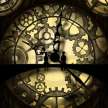

When I was five and you were eleven, I asked you why we never caught the butterflies.
“They want to fly free,” you’d said.
I’d believed you then, like any kid sister would, but I wonder now if the real reason why you never catch them is because you don’t need to.
“The insides of your eyelids are like film,” you’d said once. “And the pictures stored in your brain can develop on them.”
I squeeze my eyes shut, trying to reanimate this moment, like I sometimes try to do on the winter nights while I’m lying above the empty bottom bunk, but the picture doesn’t come out right. Some of the details—like the exact pattern of freckles on your cheekbones, the exact number of petals of the marigold that you're holding, and the exact shade of orange of the butterfly sitting on it—are hazy.
So I give up and open my eyes.
This is you, sitting perfectly still on the grass, baiting a butterfly with a marigold coated in drops of cherry 7-Up.
This is you, tracking the erratic flight of the butterfly with those instamatic camera eyes.
This, right here, is you, a feather-light snapshot that lands on my mind and flits away, evading capture even though every fiber of my being is willing it to stay.
I want to know how you do it. I want to know how you lock up the summer inside your picture-perfect mind to take back with you to the city where our father works on Corvettes for a living. I want to know your secret.
Because then our butterfly summers would never have to end.
“What were you taking a picture of?” you ask.
“The butterfly,” I lie.
“Closest thing to catching them,” you say.
I take your word for it, like any kid sister would, because as you close your eyes, etching this last day of butterflies into your brain, I know that if there was a way to truly catch them, you would’ve found it already.
The day you leave, you give me a little ice chest with a little purple bow. This is the first time Mom and I don’t drive you back to the city—you drive by yourself in the truck that Dad fixed up for your sixteenth birthday last November.
After your truck is gone, I go back into the house and climb up to the top bunk. I tug on one end of the bow until it slowly unravels and open the ice chest.
Nestled between four Styrofoam blocks is a butterfly.
It’s frozen in an ice cube, every detail captured, crystal clear. I hold it, that single fragment of your mind, until the ice cube becomes shiny and makes little drip spots on my comforter.
I hurriedly set it back in the ice chest and lock it away.
For the next three weeks, as the leaves begin to fall, I am obsessed with the butterfly.
I take it out every day after school, memorizing its nectarine wing-panes and counting the little white dots clustered in the black borders, until I can barely feel my fingers. Then I refreeze in its Styrofoam mold with some water from the sink.
But at the beginning of the fourth week, I feel something different when I take out the butterfly.
The butterfly, as always, looks exactly the same—perfectly suspended inside the ice. But today, it seems too still, too perfect. Part of me wishes that it would flutter its wings a little, that I could hold it on my finger.
But I can’t. So I hold it up to the window, tracing the butterfly’s delicate legs with my eyes over and over again.
On Christmas day, you call me and Mom.
“Did you open the ice chest?” you ask.
I tell you yes, and that I love the butterfly, that it’s perfect, just like when you gave it to me. “When are you coming back?” I ask.
“I… don’t know,” you say. “I want to get a job with Dad this summer.”
After you hang up, I take out the butterfly again. I sit with it until the water drips through my fingers and I, for a moment, let myself believe that the butterfly is crying.
But in reality, it’s exactly the same, unaware of how much time has passed outside of the ice.
I lock it away again.
By the first week of summer, the butterflies are back, but I sit on the porch alone with the ice chest.
By now, I have memorized the butterfly’s every vein, every joint, every contour, every imperfection, but I cannot truly reanimate it. It stays unchanged, as cold and lifeless as the day that you gave it to me.
So I close the ice chest, but then a truck pulls into the driveway.
You honk the horn, but I’m already running, throwing myself at you the second you open the door, making you half-drag me as you walk to the porch.
“I thought you got a summer job with Dad,” I say.
“He got me a job with his friend here so I could stay with you and Mom,” you say.
Then you notice the ice chest. You open it and hold up the ice cube, taking in the sunlit silhouette of the butterfly.
“It’s not the same as a real butterfly, is it?” you finally say.
I try to smile, but then I shake my head. I know that now, that the perfect picture album under lock and key that I imagine your mind to be is still a collection of captured stills. Real butterflies fly free.
“I know.” Your eyes, those instamatic camera eyes, meet mine. “But watch.” You cup the ice cube in your palm. I yell that it’s melting too much, but you open your hands and breathe softly on the ice cube. Slowly, the ice melts away, first freeing the edges of the wings, then the white-spotted body, drip by drip. You let me take a turn, and slowly, the ice melts away as together, we unfreeze the butterfly.
For a moment, it stands stiffly, damp on your palm and I’m afraid that it’s dead, but then there’s a slow flutter in the wings, a flick of the antenna.
It’s a butterfly again.
“Are you staying here all summer?” I ask.
“All summer,” you say.
“Promise?” I ask.
You smile. “Promise.”
I decide to take your word for it, like any kid sister would, and resist the urge to close my eyes and try to capture the exact pattern of sunlight on your forearm, still wet from ice cube drips, resting on my shoulder, and the exact curve of your smile as we watch the butterfly take off towards the marigolds by the driveway. I realize that just because a butterfly flies free, doesn’t mean it has to fly far.
It can come back, if it really wants to.
About the Creator
Valerie Ngai
Science • Psychology • Art
"Creativity isn't about being artistic, talented, or good enough. It's about creating a safe space so that your mind can play."
Keep reading
More stories from Valerie Ngai and writers in Fiction and other communities.
Heartbreaker for Hire
My name is Violet and I am a heart breaker. Like, literally, it’s a family business. We get paid for it. So that’s why it’s not a huge deal that I’m cutting a hole in someone’s skylight so I can drop into his bathroom undetected. It’s part of the job.
By Valerie Ngai5 years ago in Fiction
How to be a Good Citizen
The following guidance has been prepared by the United States government for all citizens in the wake of an uptick in domestic terrorism in the Midwest. The President and his Cabinet have heard of widespread safety concerns caused by these incidents, and they would like to reassure the American people that ICE and the military are prioritizing your safety as Americans above all else.
By Kay Husnick3 days ago in Fiction
Wild Card Weekend Recap: What Happens Now?
I think I figured out why I love Wild Card Weekend so much. It's because it's the first playoff anything of the calendar year. The NFL season starts in the fall, and once upon a time, the champion was crowned either on or slightly before New Year's. The evolution of the NFL schedule has resulted in the playoffs starting just into the New Year, and currently, the final week of the season falls on the first weekend of the New Year, with Wild Card Weekend coming a week after that. So yes, chronologically, the NFL's Wild Card Weekend serves as the first playoff anything of the calendar year.
By Clyde E. Dawkins3 days ago in Unbalanced



Comments
There are no comments for this story
Be the first to respond and start the conversation.