
Title: Scientists Create ‘Woolly Mice’… A New Step Toward Resurrecting the Woolly Mammoth!
Technical Challenges: Why Is Fully Cloning the Mammoth So Difficult?

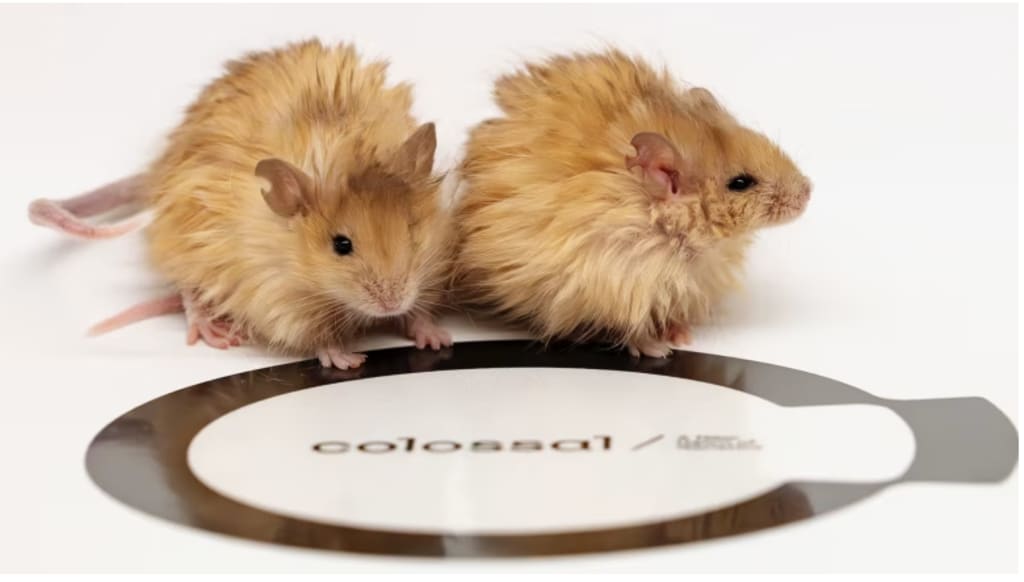
Can science bring extinct creatures back to life? A question that sounds like science fiction, but Colossal Biosciences answers with a resounding "yes" through a groundbreaking experiment: genetically modified mice with fur three times longer than normal and traits resembling the woolly mammoth! This step is part of a massive project to revive the mammoth, but it sparks scientific and ethical debates: Will humans create a mere "hybrid" or a true mammoth? In this article, we unveil the details of this revolutionary experiment and its implications for the future of genetic engineering.
1. The Revolutionary Experiment: Mice with ‘Mammoth’ Fur!
In the labs of Colossal Biosciences, scientists successfully modified lab mice to develop dense, long fur resembling that of the extinct woolly mammoth. According to the published study, the fur grew three times longer than a normal mouse’s coat, alongside other mammoth-like traits, including:
Thicker skin.
Changes in ear shape to reduce heat loss (an adaptive trait of mammoths).
Improved tolerance to cold temperatures.
The goal of this experiment isn’t to create "weird mice" but to test gene-editing techniques that could later be applied to larger animals, like Asian elephants, to transform them into a mammoth-like hybrid.
2. The Science Behind the Experiment: How Were the Mice Genetically Modified?
Scientists used CRISPR-Cas9 (a precise gene-editing tool) to insert genes responsible for woolly mammoth traits—such as dense fur and fat storage—extracted from DNA preserved in mammoth fossils.
Key genes edited include:
FOXQ1 gene: Controls hair growth and length.
EDAR gene: Linked to skin thickness and sweat gland structure.
Other genes enhancing cold adaptation.
Dr. George Church, co-founder of Colossal, states: "This is a small step for mice, but a giant leap toward restoring extinct species."
3. Why the Mammoth? The Hidden Goals Behind the Project!
The company claims its primary goal is combating climate change! How?
The idea is that reintroducing mammoths to the Arctic (via elephant-mammoth hybrids) could:
Slow permafrost melting by breaking snow layers with herd activity.
Restore ancient ecosystems once supported by mammoths.
Critics, however, doubt these claims, arguing that the real motivation might be massive investments (the company raised $225 million by 2024) or the pursuit of scientific fame.
4. Scientific Debate: Is This a True Mammoth or Just a “Genetic Puppet”?
Despite the technical achievement, many scientists refuse to label the planned creature as a "mammoth," calling it merely an elephant with some mammoth traits, such as:
Shaggy fur.
Subcutaneous fat.
Cold resistance.
Evolutionary biologist Dr. Beth Shapiro comments: "Even if they succeed, we won’t have a true mammoth—just a new species that could cause unpredictable ecological disruptions."
5. Ethical Challenges: Should We Play “God”?
The project opens a Pandora’s box of ethical questions:
What rights do these hybrids have? Will they suffer in environments mismatched with their genetic adaptations?
What if they escape controlled habitats and cause ecological disasters?
Do potential environmental benefits justify unknown risks?
So far, there are no clear answers, but Colossal insists it collaborates with bioethicists to ensure the project’s responsibility.
6. The Project’s Future: When Will We See the Hybrid Mammoth?
The company plans to produce the first elephant-mammoth hybrid by 2028, but challenges remain:
Difficulty editing elephant genes (their gestation period is 22 months!).
Securing suitable natural habitats in Siberia.
Obtaining government and international approvals.
If successful, this project could mark a turning point in conservation history—or a warning against reckless human interference in nature.
Conclusion: Between Excitement and Risk… Where Do We Draw the Line?
The "woolly mice" experiment proves that de-extinction is no longer science fiction. Yet, it’s also a reminder that biotechnology advances faster than our understanding of its consequences. Between scientists’ enthusiasm to "correct extinction’s mistakes" and critics’ warnings of "meddling with natural balance," one question lingers: Are we ready to take responsibility for the creatures we create?
About the Creator
Ahmed Abdeen
An experienced article publisher and writer specializing in creating high-quality, engaging, and well-researched content tailored to captivate diverse audiences. Adept at crafting compelling narratives
Keep reading
More stories from Ahmed Abdeen and writers in Fiction and other communities.
The Grandfather's Legacy: When the Box Opens the Gates of the Underworld
I thought my life was perfect: a 24-year-old young man, an athlete, working as an event photographer, living with my parents in our modest home. My father was a Quranic healer, and my grandfather was a scholar of jinn and supernatural beings. But I always refused to get involved in this world. I used to tell him, "I don't believe in these things, Grandpa." He would wisely reply, "This isn't your choice, Majid. It's your destiny."
By Ahmed Abdeen5 months ago in Fiction
So You Decided To Become a Nurse Practitioner:
So you decided to become an "Advanced Practice" nurse. Congratulations!... is what I would say if this was a good idea. Grad school? In this economy? What were you thinking? Likely it was something along the lines of either 1) “I've seen these other chucklefucks do it— Why can't I?” or even 2) “I've got a nice career, I should shake it up. I miss feeling like I have no clue what I'm doing.”
By Sandor Szaboabout 15 hours ago in Fiction




Comments
There are no comments for this story
Be the first to respond and start the conversation.