
Things You Were Lied to About Space
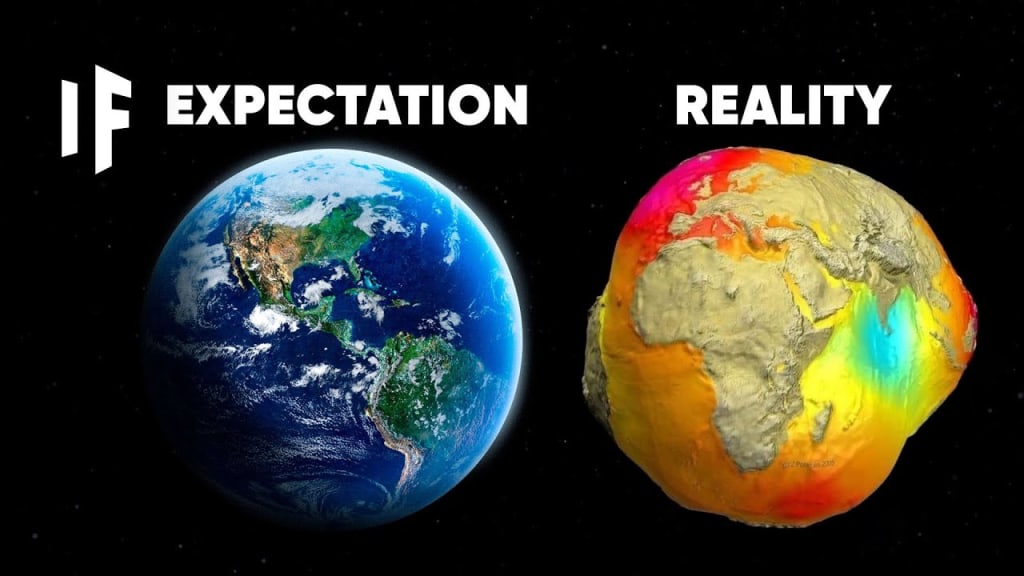
Expectation Vs Reality
Our sun doesn't resemble the traditional image of a bright yellow ball of fire; rather, it appears more greenish. The color of a star indicates its temperature, and our sun emits most of its energy at a wavelength close to green. When observed from space, it looks yellow due to our atmosphere's scattering of blue light. If the sun were actually yellow, it would be significantly cooler, causing our Solar System's habitable zone to shrink and Earth to become a frozen, lifeless rock.
Contrary to popular belief, the sun is not on fire like a burning object. It is a massive ball of gas, predominantly hydrogen and helium, and functions as a nuclear reactor, constantly fusing hydrogen atoms to create helium, which releases vast amounts of energy, resulting in its scorching heat.
Explosions, as depicted in movies, cannot occur in space because there is no air or oxygen to sustain combustion. Similarly, navigating the asteroid belt is not as treacherous as portrayed; the space rocks are spread out over vast distances, making collisions with spacecraft highly improbable.
Contrary to common misconceptions, being exposed to the vacuum of space wouldn't instantaneously freeze or cause one to explode. Heat or cold doesn't transfer rapidly in space, so freezing would take hours. However, the lack of oxygen would lead to unconsciousness within seconds and subsequent organ failure, resulting in death.
Temperature in space is a complex concept. While the vacuum of space itself doesn't have a temperature, areas closer to stars can be extremely hot, while regions farther away can be quite chilly, such as dense gas clouds reaching temperatures as low as minus 263 degrees Celsius.
Venus, not Mercury, is the most scorching planet in our solar system. Its thick atmosphere creates a greenhouse effect, trapping heat and raising the surface temperature to a scorching 475 degrees Celsius.
Our solar system is in constant motion, hurtling through space at 220 kilometers per second. It takes approximately 230 million years for our solar system to complete one orbit around the Milky Way, resulting in significant changes over vast timescales.
Planets and moons do not orbit the sun directly but rather orbit a central point between them and the sun, known as the barycenter. Earth, for instance, has a barycenter close to the sun's core, while Jupiter's barycenter is around 55,000 kilometers away from the sun's center.
While sound cannot propagate in the vacuum of space due to the lack of a medium, some regions with sufficient particles, like the gas cloud around the black hole at the center of the Perseus Galaxy cluster, allow sound to travel. However, cosmic catastrophes, such as supernovas and colliding black holes, fade away before reaching our ears.
In summary, our understanding of celestial objects and space is often shaped by misconceptions, and unraveling these truths opens up a fascinating world of scientific wonders and cosmic realities.
About the Creator
Minu Singh
My name is Minu Singh, and I am delighted to share my passion for writing an articles . As an avid writer, I aim to engage and captivate my readers, taking them on a journey of knowledge, inspiration, and thought-provoking perspectives.
Keep reading
More stories from Minu Singh and writers in Fiction and other communities.
What If Outer Space Was Breathable?
Imagine being on a routine Space Walk when your helmet unexpectedly becomes loose. Instead of suffocating, you find yourself breathing in fresh cosmic air. But what would happen if outer space was breathable? Would the breathable atmosphere reach far and wide? Why would space suddenly become so loud? And could this lead to the destruction of the entire solar system?
By Minu Singh3 years ago in Fiction


Comments
There are no comments for this story
Be the first to respond and start the conversation.