
The Village That Forgot Time
Where the clocks stopped, but life never did
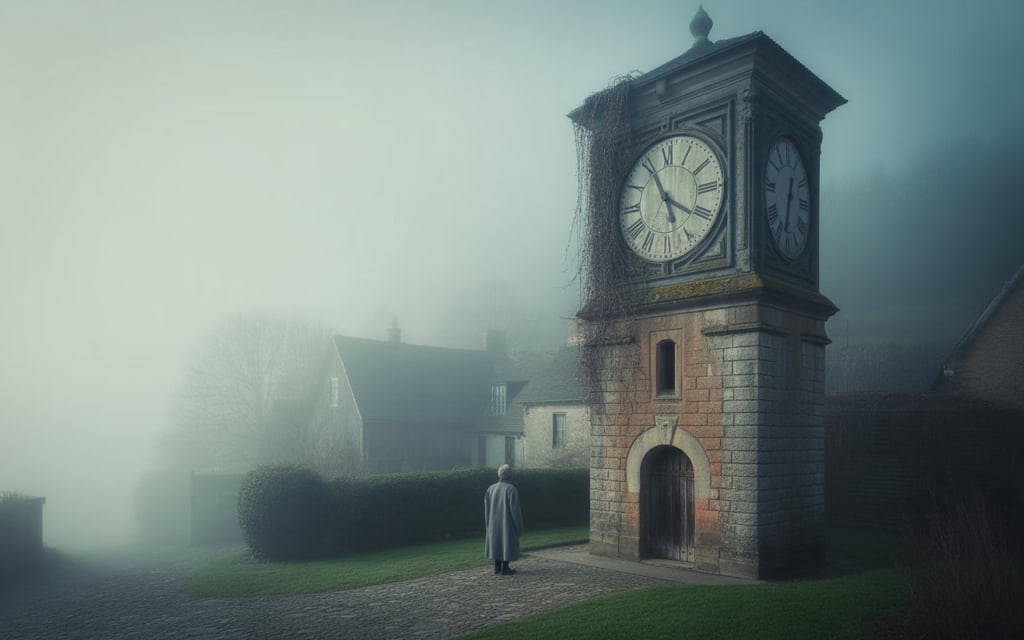
Somewhere deep in the forgotten folds of the mountains lies a village not found on maps or apps. No signs point to it, and no tour guides will take you there. But it exists — breathing, thriving, and oddly silent. The name of the village? Bhoolpur — literally, “The Forgotten Place.”
But Bhoolpur didn’t just forget its name. It forgot something much bigger: Time.
No clocks tick in Bhoolpur. No calendars hang on walls. No one counts birthdays, anniversaries, or deadlines. The villagers rise when the birds sing and sleep when the stars arrive. The concept of “late” or “early” doesn’t exist. Life simply… flows.
I’m a journalist. Skeptical by nature. When I first read about Bhoolpur in an obscure travel blog — one paragraph lost in a sea of sponsored content — I thought it was a hoax. “A village with no time? Sounds poetic. Probably a clickbait gimmick,” I laughed.
But something stuck with me. So I packed a bag, left my buzzing city, and followed the vague directions. After two buses, one broken-down jeep, and a long walk through wild terrain, I arrived.
And everything changed.
The first thing I noticed was the quiet — not the empty kind, but the full, living kind. Children ran barefoot across fields. Old men sat under banyan trees playing a game I didn’t recognize. Women shared stories while weaving mats. There was laughter. Smiles. And no rush.
I checked my phone. Dead. No signal. No charging station. “Just a day or two,” I told myself. “Then back to the real world.”
But Bhoolpur was a real world — just not mine.
I asked an elderly man sitting on his porch, “Uncle, when did you last use a clock?”
He chuckled softly, “When I used to worry about things I couldn’t control. When I thought running faster meant getting further.”
He pointed to the sky, “Now, we follow that clock. Works just fine.”
At the village’s only school — a mud-brick building shaded by trees — I met Meera, a teacher in her 30s.
“No schedule?” I asked, noticing the lack of bells or timetables.
She smiled. “Children arrive when they’re ready. We don’t teach them the hours — we teach them to notice the seasons, the wind, the soil. You’d be surprised how smart they are without ever learning to tell the time.”
It was strange. Yet beautiful. And unsettling.
On my third day, a boy named Amal sat beside me while I wrote in my notebook. He watched me for a while, then asked:
“Uncle, if there’s no time here… when does death come?”
The question hit me like a cold wind.
His mother, standing nearby, answered softly. “Here, people die, yes. But we don’t mark when. We bury them with a simple message carved on stone:
‘They lived fully.’ That’s all that matters.”
I sat quietly for a while after that.
In the world I came from, people raced against time. Watches on wrists. Alarms in pockets. Notifications, reminders, countdowns. We track every second — and still feel like we’re always behind.
But Bhoolpur? It was ahead of us, somehow — by being behind.
On my last evening, I joined the villagers around a fire. There was no celebration, no “event,” just a gathering. They sang songs passed down for generations. No one knew when they were written. No one cared.
I looked up at the stars. No streetlights to block them here. Time seemed to melt away with the firelight.
And for a moment, I understood.
Time isn’t just a number. It’s a pressure. A prison, sometimes. And Bhoolpur had quietly set itself free.
I left the next morning, not with answers, but with questions I never thought to ask before.
Back in the city now, surrounded by ticking clocks and vibrating phones, I think of Bhoolpur often.
I wonder:
What would happen if we stopped measuring life and started living it?
Would we be late — or would we finally arrive?
❓ What do you think?
Could you live in a place like Bhoolpur?
Is time a tool — or a trap?
Have we forgotten how to live by trying to control every minute?
About the Creator
The Mirror in the Attic
In the fog-drenched town of Elmsworth, nestled between tall trees and silent streets, lived an old woman named Agatha Moore. Her cottage stood on the edge of the woods, worn by time and wrapped in mystery. Children whispered about her being a witch; adults believed she had lost her mind years ago. But no one ever knocked on her door.
By farhan6 months ago in Confessions
Autonomy Is The Real Privilege
Good morning, freedom-seekers! Today we’re gonna be looking at autonomy. A strange word, I know; one many would probably look at blankly and run away from on sight. We’re gonna figure out what it actually means, consider how it’s achieved, and decipher just how deeply most of us are tangled up in dependence without realising it.
By That ‘Freedom’ Guy5 days ago in Humans


Comments
There are no comments for this story
Be the first to respond and start the conversation.