

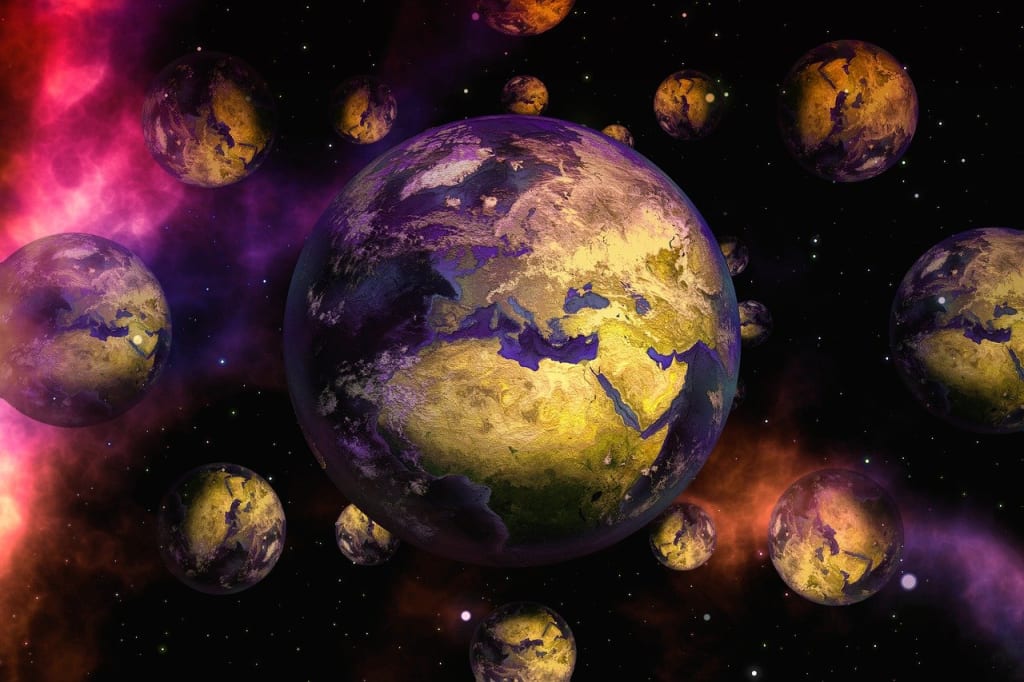
For most of human history, the night sky has inspired awe and wonder. We've mapped stars, measured galaxies, and even sent machines beyond the reach of our own solar system. And yet, as vast and complex as the observable universe is, many scientists now believe it's only a tiny fragment of something much larger—a multiverse.
The idea of the multiverse might sound like science fiction, but it’s rooted in real scientific theories. Cosmology, quantum physics, and string theory each offer glimpses into the possibility that our universe is just one of many. Each theory carries its own implications, and none are fully proven—but the questions they raise are too compelling to ignore.
One idea stems from the theory of cosmic inflation, which describes the rapid expansion of space just after the Big Bang. According to some versions of this theory, inflation might not have stopped everywhere at once. It could be ongoing in other regions of space, creating “bubble universes” with different physical constants, dimensions, and even laws of physics. If true, our universe would be just one bubble in an endlessly foaming cosmic sea.
Quantum mechanics also adds to the intrigue. In the “many-worlds” interpretation, every quantum decision point creates a branching of reality, splitting off into alternate versions of events. In this view, there could be a nearly infinite number of parallel universes—each representing a different outcome of every possible choice or event.
Then there’s string theory, which proposes that the fundamental building blocks of the universe are not point-like particles but tiny vibrating strings. Some models of string theory require additional dimensions—beyond the familiar three of space and one of time. These extra dimensions might be curled up, invisible to us, or even contain entirely separate universes.
The multiverse is a concept that stretches our understanding of reality, and for now, it sits on the edge of science and speculation. We have no direct evidence that other universes exist, and some critics argue that the idea may be untestable. But history has shown that science often begins with ideas that seem impossible.
Whether the multiverse is real or not, the pursuit of such questions reflects something deeply human. It’s not just about what’s out there—it’s about understanding our place in a possibly much larger story. The more we discover, the more we realize how much we still don’t know.
The universe may not be alone. And if that’s true, we’ve only just begun to scratch the surface of something far greater than we ever imagined.
About the Creator
Avijit Tanchangya
I'm an writer
I'm an philosopher
I'm an poet of different names
love your self, believe in God
Trust in the proses
Keep reading
More stories from Avijit Tanchangya and writers in Fiction and other communities.
Israel Launches Major Ground Operation in Gaza as Humanitarian Crisis Worsens
Jerusalem / Gaza City — Israel has commenced a large-scale ground offensive in the Gaza Strip, marking a significant escalation in the ongoing conflict with Hamas. The operation, officially named "Gideon’s Chariots," was announced Sunday by the Israel Defense Forces (IDF), signaling a new phase in the military campaign following weeks of escalating violence.
By Avijit Tanchangya8 months ago in Journal


Comments
There are no comments for this story
Be the first to respond and start the conversation.