
The U.S. Fighter Jet B-2 Spirit – A Marvel of Stealth Technology
introduction, history, development, design, feature, perfprmance, capibility

Introduction
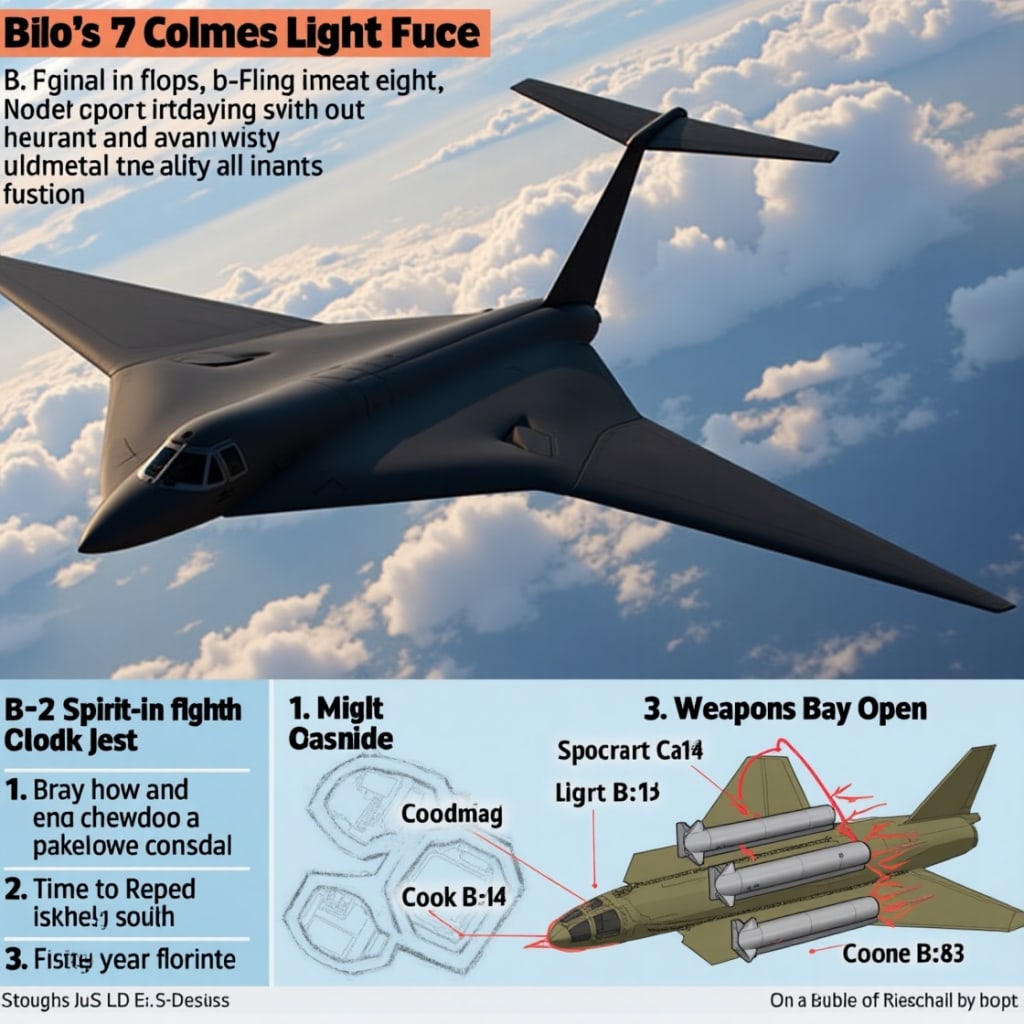
The B-2 Spirit, commonly known as the B-2 Stealth Bomber, is a highly advanced strategic bomber developed by the United States. Unlike traditional fighter jets, the B-2 is a long-range, stealth heavy bomber, capable of penetrating dense anti-aircraft defenses and delivering both conventional and nuclear weapons. Introduced in the late 20th century, the B-2 represents the cutting edge of aviation technology and military strategy, emphasizing stealth, precision, and deterrence.
History and Development
The origins of the B-2 date back to the Cold War, when the United States sought to maintain nuclear deterrence against the Soviet Union. In the late 1970s and early 1980s, the U.S. Air Force launched a classified program known as the Advanced Technology Bomber (ATB) project. Northrop Grumman, along with Boeing and other subcontractors, won the contract to develop the aircraft.
The B-2 made its first flight on July 17, 1989, and became operational in 1997. Originally, the U.S. Air Force planned to purchase 132 units, but the program’s high cost led to a reduction, and ultimately only 21 aircraft were built. One was later destroyed in a crash, leaving 20 active B-2 bombers today.
Design and Stealth Features
The most distinctive feature of the B-2 Spirit is its flying wing design—it has no tail or fuselage. This shape significantly reduces its radar cross-section, making it extremely difficult for enemy radar to detect and track.
Key stealth features include:
• Radar-Absorbing Material (RAM): Special coatings that absorb radar waves rather than reflect them.
• Infrared Suppression: Engine exhaust is carefully cooled and diffused to reduce heat signature.
• Minimal Acoustic and Electromagnetic Emissions: The B-2 is designed to emit as little signal as possible.
Thanks to these features, the B-2 can evade radar and anti-aircraft systems, giving it a strategic edge in modern warfare.
Performance and Capabilities
Although it's often referred to as a “fighter jet,” the B-2 is not designed for dogfights or air-to-air combat. It is a strategic bomber built for long-range missions. Here are some key performance specs:
• Maximum speed: Mach 0.95 (about 1,010 km/h or 628 mph)
• Range: Over 11,000 km (6,835 miles) without refueling; with aerial refueling, it is virtually unlimited.
• Service ceiling: Around 50,000 feet.
• Payload capacity: Up to 40,000 pounds (18,000 kg) of bombs.
The B-2 can carry both conventional bombs and nuclear warheads, making it one of the few aircraft in the world capable of such a dual role.
Weapons and Avionics
The B-2 is equipped with an internal bomb bay and can carry a wide range of precision-guided munitions:
• GBU-31 JDAM (Joint Direct Attack Munition)
• GBU-57 Massive Ordnance Penetrator
• B61 and B83 nuclear bombs
Its avionics system includes:
• Advanced radar systems
• Terrain-following flight computers
• Electronic warfare and countermeasure systems
These technologies ensure accurate targeting while minimizing the chance of detection.
Role in Modern Warfare
Since its introduction, the B-2 has been involved in several significant military operations:
• Kosovo War (1999): It flew non-stop from Missouri to Serbia and back, dropping precision bombs on military targets.
• Afghanistan and Iraq (2001–2003): Used in the early stages of both conflicts to neutralize strategic targets.
• Libya (2011): Played a role in Operation Odyssey Dawn to disable air defense systems.
The B-2’s ability to fly from U.S. soil, strike globally, and return without being detected or refueled makes it a symbol of U.S. global military reach.
Cost and Controversy
The B-2 is one of the most expensive aircraft ever built:
• Unit cost: Approximately $2.1 billion per aircraft (including R&D).
• Total program cost: Estimated over $45 billion.
Critics argue that the high cost and limited number of aircraft make the program inefficient. However, supporters believe that its deterrent value and technological superiority justify the investment.
Future and Replacement
Although still in service, the B-2 is expected to be gradually phased out in favor of the B-21 Raider, a new stealth bomber under development by Northrop Grumman. The B-21 aims to build on the strengths of the B-2 while incorporating modern advancements in stealth, AI, and autonomous systems.
Until the B-21 is fully deployed, the B-2 will continue to play a central role in U.S. strategic bombing capability.
Conclusion
The B-2 Spirit is not just a bomber; it is a symbol of American military innovation and technological dominance. Its stealth, range, and precision capabilities have made it one of the most effective and feared aircraft in the world. While its costs and secrecy have sparked debate, its impact on modern air warfare is undeniable. As new technologies emerge, the B-2 remains a critical piece of global deterrence, bridging the gap between Cold War strategy and 21st-century warfare.
References
1. Federation of American Scientists (FAS) – B-2 Spirit Overview
2. U.S. Air Force Official Website – B-2 Spirit Fact Sheet
3. GlobalSecurity.org – B-2 Bomber Program
4. Sweetman, B. (2005). Inside the Stealth Bomber: The B-2 Story
5. Northrop Grumman Corporation – B-2 Spirit Information Page
About the Creator
Ahmad shah
In a world that is changing faster than ever, the interconnected forces of science, nature, technology, education, and computer science are shaping our present and future.
Keep reading
More stories from Ahmad shah and writers in Fiction and other communities.



Comments
There are no comments for this story
Be the first to respond and start the conversation.