
Little Fires in a Frosted Heart
There was once a time when I used to feel everything too much. The ache of a goodbye, the thrill of a look, the pulse of a song it all lived inside me like a thunderstorm just waiting to happen. But the winters came and stayed longer each year. Not in the weather, no the weather outside was never the issue. It was the cold inside. Somewhere along the way, between heartbreaks, goodbyes, and the endless quiet that follows an unanswered message, my heart grew cold. Not out of anger. Not even out of sadness. Just… protection.
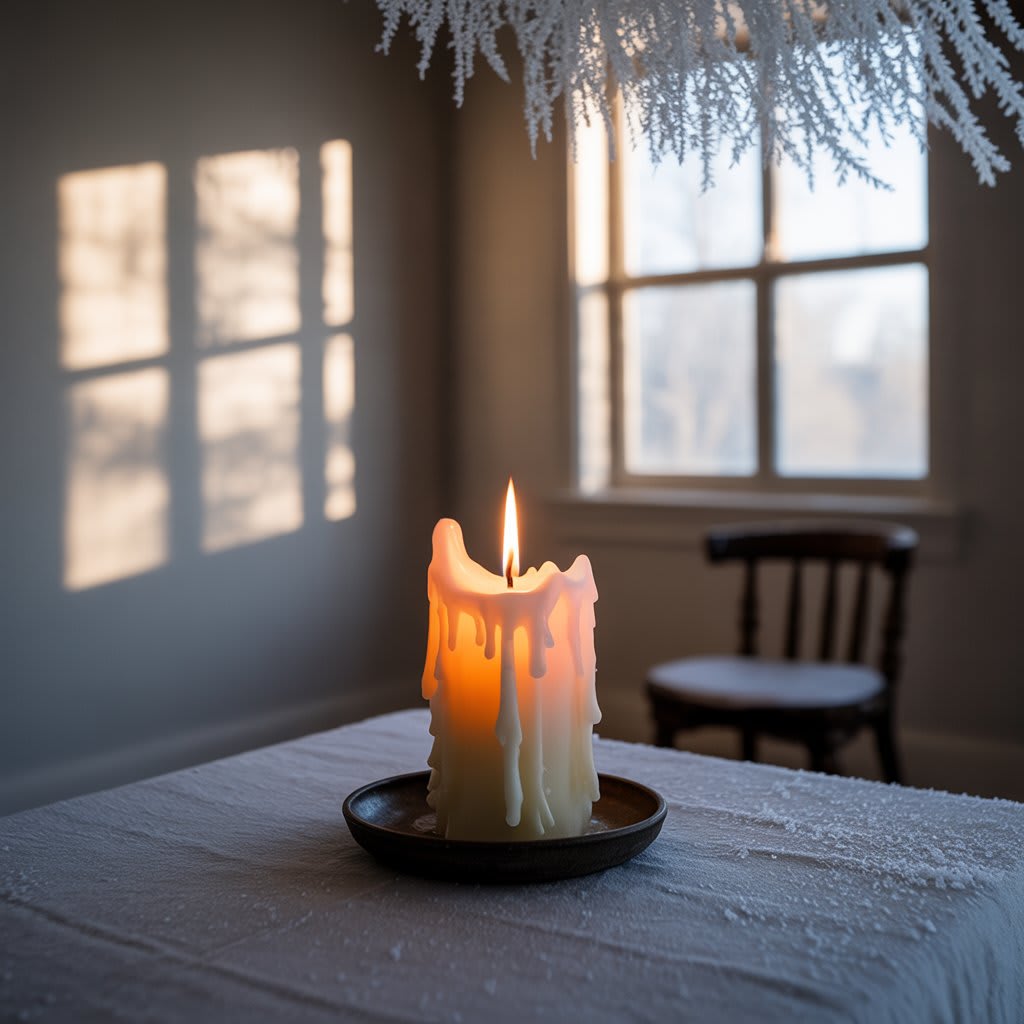
There was once a time when I used to feel everything too much. The ache of a goodbye, the thrill of a look, the pulse of a song it all lived inside me like a thunderstorm just waiting to happen.
But the winters came and stayed longer each year. Not in the weather, no the weather outside was never the issue. It was the cold inside. Somewhere along the way, between heartbreaks, goodbyes, and the endless quiet that follows an unanswered message, my heart grew cold. Not out of anger. Not even out of sadness. Just… protection.
And so I carried a frosted heart not frozen, but cold enough to stop the flooding.
I met him at a bookstore, in the poetry aisle. He had a scarf that looked like it had seen many winters, a smile that came with a bit of shyness, and eyes that didn’t look through me like most people’s did.
“You like Rupi Kaur?” he asked, noticing the book in my hand.
I nodded, trying to keep my voice even. “She says the things I’m too afraid to say out loud.”
He smiled, as if he knew exactly what that meant. “I get that.”
We didn’t exchange numbers that day. Just smiles. But that moment stayed like an ember on a cold night glowing quietly.
He started showing up more always near the same shelf, pretending to browse. We’d talk for minutes, then longer. And then one rainy evening, over hot coffee and quiet jazz, he told me about his mother. How she had passed during a November storm and how every year since, he felt that storm in his chest.
“Grief has seasons,” he said. “But sometimes, one of them lasts a lifetime.”
I looked at him, and for a second, I forgot about my frozen walls. I felt the warmth of understanding. His pain made room for mine. And I realized: sometimes it’s not the grand gestures that melt the ice it’s small, steady flames.
Days became weeks. We started calling each other “home” in small ways. He would bring me wildflowers from corners of the city I’d never seen. I would write poems I never meant to share and read them to him in whispers.
I never told him about my frost. I didn’t have to. He saw it in my hesitation, in the way I flinched at tenderness. But he never pushed. Instead, he lit small fires.
When I couldn’t sleep, he stayed up sending me songs. When I cried without explaining, he held silence with both hands, not asking questions. When I told him I wasn’t sure if I was capable of love anymore, he said:
“Maybe love doesn’t need to be sure. Maybe it just needs to be real.”
But fire is a wild thing.
It gives warmth. It burns. It needs air, space. It flickers with every change in wind.
I started noticing it: the way I was pulling away, even as I wanted to stay. The way I was doubting something that had never given me a reason to fear. I had spent so long surviving with a frozen heart that the idea of warmth felt dangerous. Like something I could lose.
And so, one day, I stopped answering. First his message. Then his call. Then another. Until silence grew thick between us like frost on glass.
Weeks passed. I pretended I was okay.
I busied myself with old routines. Made tea I didn’t drink. Watched sunsets I didn’t feel. My heart, once flickering, was cold again safer, I told myself. Quieter.
Then one day, while organizing my drawer, I found a note. His handwriting.
“You don’t have to burn bright for me. I’ll still stay. Even the smallest spark is enough.”
I read it again. And again. Until the tears came, fast and unforgiving.
Because I realized: I had let go of something rare. Someone who saw my cold not as rejection, but as a place where fire still tried to live.
That night, I walked to the bookstore. I didn’t know why — maybe out of hope. Or guilt. Or both.
He wasn’t there. But the poetry shelf was.
I stood there, staring at the spot we used to meet, heart heavy with all the things I didn’t say.
A voice behind me broke the silence.
“I still read Kaur. Still waiting for someone to tell me what I’m too afraid to say.”
I turned.
He looked the same maybe a little more tired, maybe a little more guarded.
“I’m sorry,” I whispered.
He didn’t speak right away. But his eyes softened, and he reached into his coat.
About the Creator
Ahmad shah
In a world that is changing faster than ever, the interconnected forces of science, nature, technology, education, and computer science are shaping our present and future.
Keep reading
More stories from Ahmad shah and writers in Fiction and other communities.
Becca
"Everything is so... flat." Denille said stupidly as she looked around her new neighborhood. She looked around at the muted desert where even the smallest sign of life seemed to have given up. The plant life was shrubs that were half cooked by the heat and where there should have been a lawn, a mess of white rocks laid glistening in the sun. Even the sky looked stretched thin, like the sun had ironed it smooth. She’d moved from Riverside, where at least there were hills, but here in Barstow, everything felt baked and brittle.
By Sara Wilson7 days ago in Fiction
Ghost Kitten Rise
There is another world that exists parallel to our own. It sits right beside us, and above us, and below us, and all around us, yet we never see it, and only very few of us ever sometimes feel it. That feeling may come as a cold chill, or a whisper from an empty room, or a tingle running down the spine, or any of a million other barely noticed disturbances to our ordinary everyday lives. We only notice because the feeling is so non-ordinary, so different from what we expect and are used to. Some people call it the spirit world, or another dimension or heaven or hell, but the name is not important, at least not for purposes of this story. What is important to understand about this other world is that it is inhabited by many creatures, some of which are formerly living beings from our own planet earth. Most people refer to these as ghosts, and they are feared by the still living. Some of these ghosts should be feared, but others are innocent and kind, even helpful to the living. There are other things in that world that are much more fearsome than the former living. They are natives of that world, and it is all they have ever known. However, they also know of the ghosts, and they know they come from another place. They very much desire to know what this other place is, where it is, and how to get there. They wish to conquer that world, our world, and make it their own. The reasons for this are not understood and there may be no reason, at least not one we could ever hope to comprehend. For countless millennia these beings have waited and watched and plotted and planned and made attempt after attempt to breach into our world.
By Everyday Junglist6 days ago in Fiction


Comments
There are no comments for this story
Be the first to respond and start the conversation.