
The Truth Revealed: Decoding the Mystery of the Elusive Yeti
Exploring the Scientific Evidence and Legends Behind the Legendary Himalayan Creature

Debunking Cryptid Myths: The Truth Behind Yeti and Bigfoot
For centuries, legends of mysterious creatures have captivated our imaginations. From the Yeti in Nepal to Bigfoot in North America, these creatures, collectively known as cryptids, have been the subject of countless stories and sightings. But as much as we want to believe in these fantastical beasts, real science continues to refute their existence. So, let's explore how some of the most famous cryptids have been debunked.
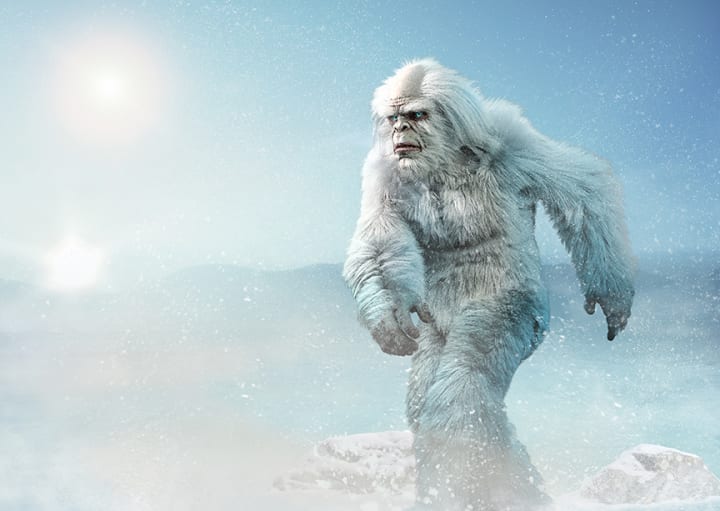
Let's start with Yeti and Bigfoot, two creatures that are nearly identical in appearance. Yeti, also known as the Abominable Snowman, is described as a massive, white-furred creature that roams the Himalayan mountains. Bigfoot, on the other hand, is a large, bipedal creature said to inhabit the Pacific Northwest region of North America. Despite their geographical differences, both cryptids share a similar physical description: a cross between a bear and a primate.
Despite the popularity of Yeti and Bigfoot in folklore, there has yet to be any objective evidence that these beasts actually exist. While many people claim to have seen them or found footprints in the woods, most of these sightings have been proven to be hoaxes or misidentifications. For example, many alleged Yeti footprints have been traced back to human-made impressions or the tracks of known animals like deer, bulls, and bears.
Similarly, the infamous Bigfoot video that surfaced in 1967, which purportedly showed the creature walking through the woods, has been heavily scrutinized over the years. While some believe it to be authentic, others argue that the figure on screen is simply a person in a gorilla costume.
The Truth Behind Chupacabra and Other Monsters
Despite advancements in science and technology, people continue to believe in the existence of fantastic creatures like Bigfoot, Yeti, and Chupacabra. While some sightings are fueled by imagination and a desire for the unknown, others have more logical explanations.
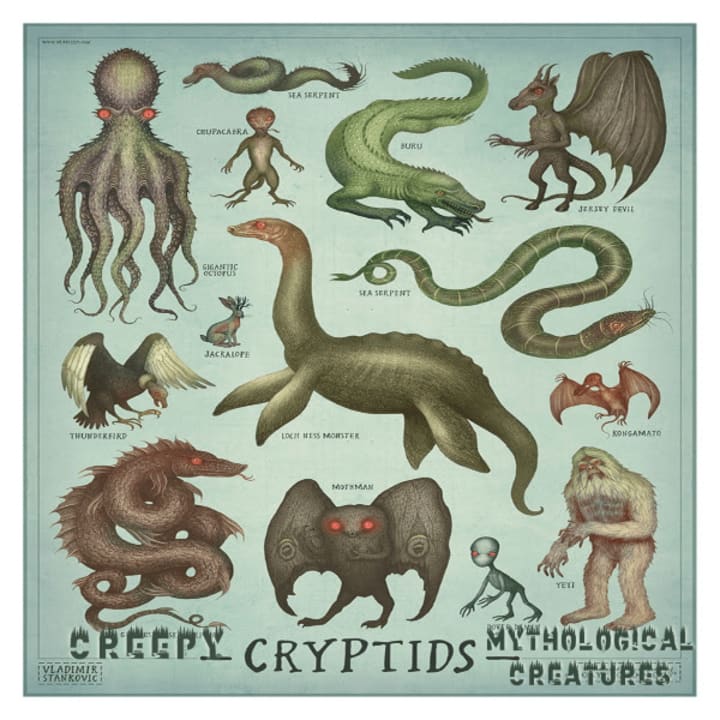
Take the Chupacabra, for example. Reports of this monster in Puerto Rico caused a stir in the late 1980s. People claimed to have seen a creature with smooth skin, fangs, and an unpleasant smell attacking their livestock. But, after thorough investigation, scientists from the University of Michigan revealed that the Chupacabra was likely just a coyote with a severe case of scabies.
Ticks that climb on coyotes cause them to lose their hair, emit an unpleasant smell, and develop thickened skin. This condition leaves them weaker and choosing easier prey, such as livestock. In the darkness of night, this animal's appearance was enough to spark fear and turn it into a monster in people's minds.
Similarly, research on Bigfoot and Yeti sightings has shown that people often mistake these creatures for American black bears and rare species of bears and dogs, respectively. While people may genuinely believe they have seen these mythical beasts, the evidence suggests otherwise.
In the end, the debunking of Cryptids may disappoint some fans of the fantastic, but it is essential to distinguish truth from fiction. Who knows, with the progress of science and technology, maybe we will one day discover new species that will make the Cryptids pale in comparison.
From Mothman to Stellar's Sea Ape
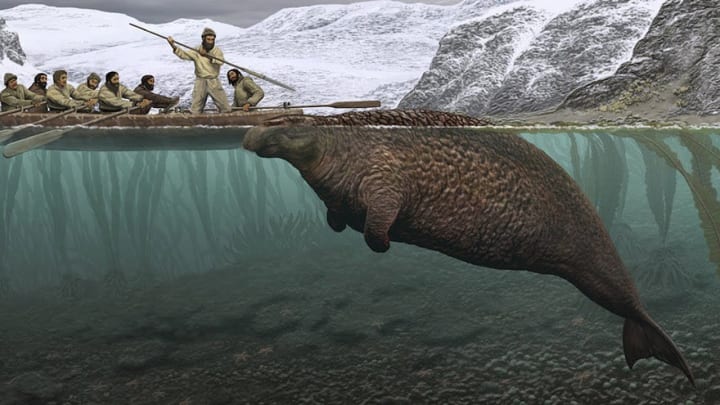
Now, let's dive into the depths of the ocean to meet another fascinating creature - Stellar's Sea Ape. This mysterious monster has been described as a six-foot-long creature covered in thick, reddish-colored hair, with a white stripe on its back and a head resembling a cross between a walrus and a dog. But despite the intriguing description, sightings of Stellar's Sea Ape have been rare, and its existence remains highly debated in the scientific community.
The first recorded sighting of this creature dates back to the 18th century when naturalist George Wilhelm Stellar wrote about his encounter with an unusual creature while on a voyage to the Bering Sea. However, the validity of his account has been questioned, and some have dismissed it as a mere hoax.
Despite the skepticism, sightings of this elusive creature continue to this day, with some claiming to have seen it swimming in the waters of the Pacific Northwest. But with no concrete evidence to support its existence, the legend of Stellar's Sea Ape remains shrouded in mystery and ambiguity.
Whether you believe in the existence of these cryptids or not, there's no denying their enduring popularity and the sense of wonder and excitement they evoke in people's imaginations. From the eerie Mothman to the elusive Stellar's Sea Ape, these creatures continue to capture our fascination and curiosity, reminding us that there is still much to be discovered and explored in our world.
The Science Behind the Legend: Could Loch Ness Monster be Real?
The Loch Ness Monster, or Nessie as it's affectionately known, is undoubtedly the most popular Cryptid in the world. For decades, people have been searching for evidence of this mysterious creature lurking in the depths of Scotland's Loch Ness. But is there any scientific basis to the legend?
One theory suggested that Nessie might be a descendant of the ancient marine dinosaur, the plesiosaur. However, this idea was quickly dismissed because plesiosaurs were only found in saltwater environments. But a recent discovery by a group of paleontologists has given a glimmer of hope to Nessie enthusiasts.
Fossils of the plesiosaur were discovered in a 100 million-year-old river system that was freshwater. This finding opens up the possibility that plesiosaurs could have lived in the giant lake of Loch Ness, and perhaps one of their descendants has managed to survive to this day.
Of course, there are still thousands of records and messages about Nessie, making it difficult to separate truth from fiction. But the possibility that this creature could be real has ignited the imaginations of people around the world. So why not take a trip to Loch Ness and dip your toe in the water? Who knows, you might just catch a glimpse of Nessie herself.
So why do people continue to believe in these mythical creatures? The answer may lie in our human fascination with the unknown and our love of a good story. But in the end, science and logic prevail, and the evidence simply does not support the existence of these cryptids.
In conclusion, while the allure of cryptids like Yeti and Bigfoot may be tempting, it's important to approach these legends with a healthy dose of skepticism. As much as we want to believe in the fantastic, we must also acknowledge the reality of the world around us. While the mystery of these creatures may never be fully solved, we can continue to seek the truth through scientific inquiry and critical thinking.
About the Creator
Raza Abbas
I am a content creator and have completed my A-levels and now i am looking for a side hustle to earn some money
Keep reading
More stories from Raza Abbas and writers in Fiction and other communities.
"From Pisa to Montreal: A Look at Leaning Towers Around the World"
The Leaning Tower of Pisa: A Wonder That Almost Fell It's a sight that's been captured in countless photos: the Leaning Tower of Pisa, seemingly defying gravity as it leans at a precarious angle. But this iconic structure almost met a much different fate. Despite the efforts of hundreds of thousands of tourists who push and pose with the tower each year, could anyone really save it from toppling over?
By Raza Abbas3 years ago in Fiction
So You Decided To Become a Nurse Practitioner:
So you decided to become an "Advanced Practice" nurse. Congratulations!... is what I would say if this was a good idea. Grad school? In this economy? What were you thinking? Likely it was something along the lines of either 1) “I've seen these other chucklefucks do it— Why can't I?” or even 2) “I've got a nice career, I should shake it up. I miss feeling like I have no clue what I'm doing.”
By Sandor Szabo5 days ago in Fiction



Comments
There are no comments for this story
Be the first to respond and start the conversation.