
"From Pisa to Montreal: A Look at Leaning Towers Around the World"
Exploring the Fascinating History and Quirky Features of These Iconic Landmarks
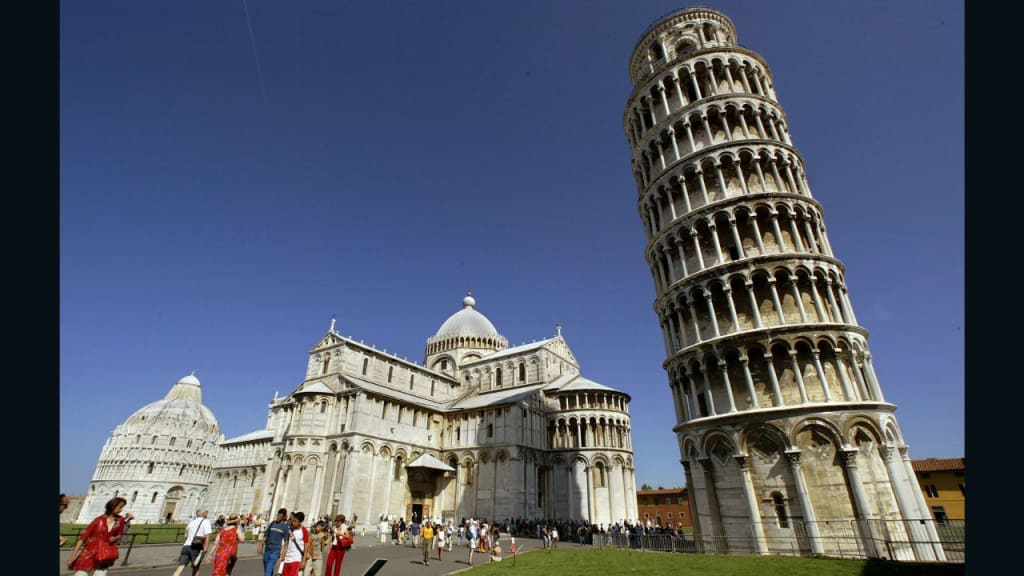
The Leaning Tower of Pisa: A Wonder That Almost Fell
It's a sight that's been captured in countless photos: the Leaning Tower of Pisa, seemingly defying gravity as it leans at a precarious angle. But this iconic structure almost met a much different fate. Despite the efforts of hundreds of thousands of tourists who push and pose with the tower each year, could anyone really save it from toppling over?
The Tower's Origins
The Leaning Tower of Pisa is part of a larger complex called Pisa's Field of Miracles, and it's one of the most famous examples of medieval architecture. When construction began in the 12th century, it was already unusual for a bell tower to stand away from a cathedral. However, that's not the most unique feature of the tower. In fact, no one planned for it to lean at all.
A Tilt Toward Disaster
Unfortunately, things started to go wrong early on. The tower began tilting southward shortly after construction began because the soft ground under its foundations couldn't handle the weight of the heavy white marble. In a creative attempt to fix the tilt, the builders added each floor at an angle. However, this only made the problem worse. By the time three of the eight floors were finished, the tilt was so obvious that construction had to be halted.
A Century of Waiting
A major conflict between Pisa and the city-state of Genova caused construction to stop for around 100 years. During this time, the soil underneath the tower had a chance to stabilize and get in better condition. When a new architect took charge of the process in 1372, the tower was finally ready. However, it still had a tilt of 1.6 degrees.
Galileo and the Tower
A popular legend surrounding the tower involves Galileo Galilei, a famous Italian astronomer and physicist. According to the tale, Galileo dropped two different weights from the tower to prove that lighter and heavier objects fall at the same speed. If the legend is true, he would have done it when the tower was tilted at about 3 degrees.
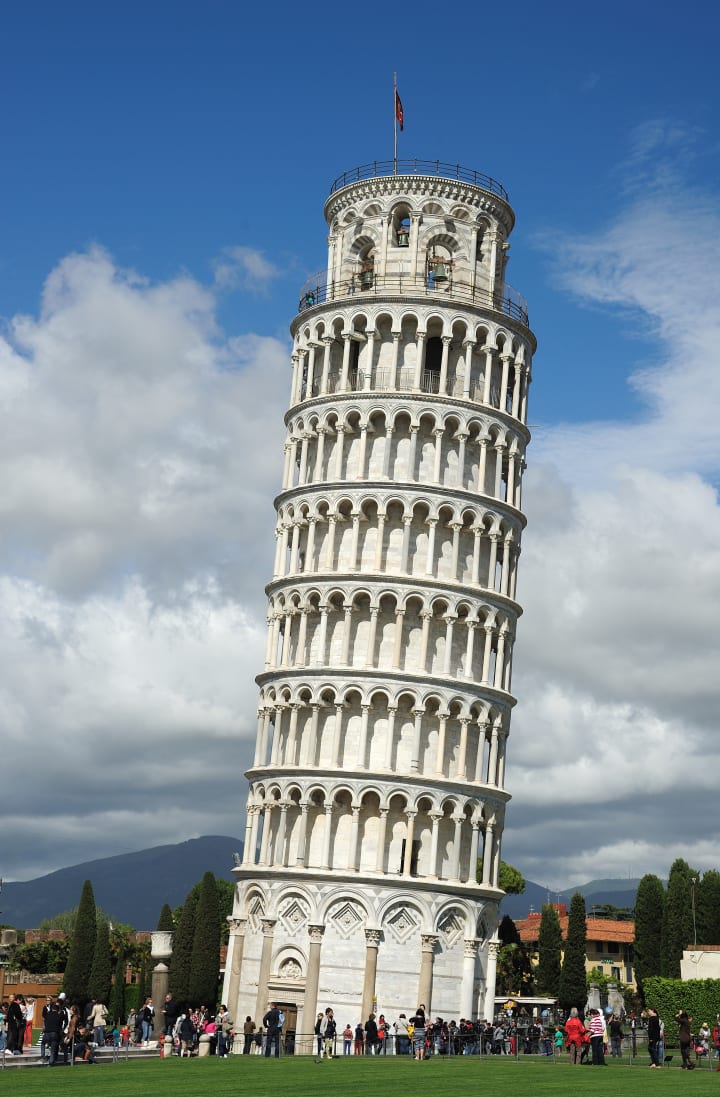
How Experts Saved the Leaning Tower of Pisa from Falling Over
The Leaning Tower of Pisa, with its tilted and majestic stance, has been an iconic symbol of Italy for centuries. However, as time went on, the tower's tilt became increasingly concerning, and experts feared that it would eventually topple over completely.
In the mid-20th century, Italian officials decided to take action and invited experts from around the world to save the ancient monument. The international committee tasked with finding a solution came up with a daring plan that involved extracting soil from beneath the tower's northern foundation to bring it back to an upright position.
To make this plan work, workers wrapped steel bands around the first level of the tower to protect the stone, then put an impressive amount of lead weights on the northern side of the tower and connected them to cables set deep underground. They started drilling and removing the soil step by step, pulling the tower against the direction of the tilt.
This method proved successful, but it was no easy feat. The team had to repeat the process over 41 different locations around the tower, showing remarkable perseverance in their efforts to save this iconic monument.
Despite the tower's tilted history and multiple attempts to straighten it out, it has managed to survive numerous earthquakes and stand the test of time. Today, it remains one of the most recognizable and beloved structures in the world, a testament to human ingenuity and determination.
The Leaning Towers of the World: From Pisa to London
We all know about the Leaning Tower of Pisa, but did you know that there are other leaning towers around the world? Some of them are even more tilted than the famous Italian landmark. While the Tower of Pisa has been stabilized and is expected to stand for another 200 years, the future of these other leaning towers is still uncertain.
Take, for example, the bell tower of Sirazen in Germany. For years, it held the official title of the world's furthest leaning church tower. Built more than 625 years ago on marshy soil, the tower's foundation was made of oak tree trunks. When the water in the ground was drained in the 19th century, the wood deteriorated and the tower started tilting. They had to close it to reinforce the tower, and it has been functioning as a church since it became safe again.
But now, there's a new record holder for the world's furthest leaning tower: the Leaning Tower of Galweinheim in Germany. This medieval fortified tower has a tilt of 5.42 degrees, and its bell still rings three times a day. While it may not be as famous as the Tower of Pisa, it's still an impressive sight to see.
And let's not forget about London's Big Ben, or rather, the Elizabeth Tower. While it may not be as visibly tilted as the other towers on this list, it is still leaning about one quarter of a degree to the northwest. Experts aren't sure what's causing the tilt, but there's a theory that says that the London Clay on which it stands is drying out. The keeper of the great clock has mentioned that it could be between four thousand and ten thousand years until the tilt becomes a serious problem. So, for now, we can all breathe a sigh of relief.
While these leaning towers may be a cause for concern, they are also a testament to the ingenuity of humans throughout history. From the creative solutions of the builders of the Tower of Pisa to the modern engineering techniques used to stabilize it, these towers remind us that even the most precarious structures can still stand the test of time.
The World's Tilted Towers: From Survivors to Skyscrapers
In our previous discussion of leaning towers, we explored the history and future of the famous Leaning Tower of Pisa, as well as other tilted constructions around the world. But there are more fascinating examples to uncover, from the resilient survivors to the towering skyscrapers purposely built on a slant.
One such example is the Belfry Tower of Bruges, a UNESCO World Heritage Site and a true survivor. Despite being struck by lightning and engulfed in flames over the centuries, the tower has been rebuilt time and time again. Today, visitors can climb to the top and enjoy panoramic views of the city, even with its noticeable 34-inch tilt.
But leaning isn't just a thing of the past. The Millennium Tower in San Francisco is the tallest residential building in the city, and it's tilting more than two feet to the north and west. The cause? Sinking into the ground. The proposed solution is to install steel pipes deep below the tower to halt and possibly reverse the tilting, but the issue remains a pressing concern.
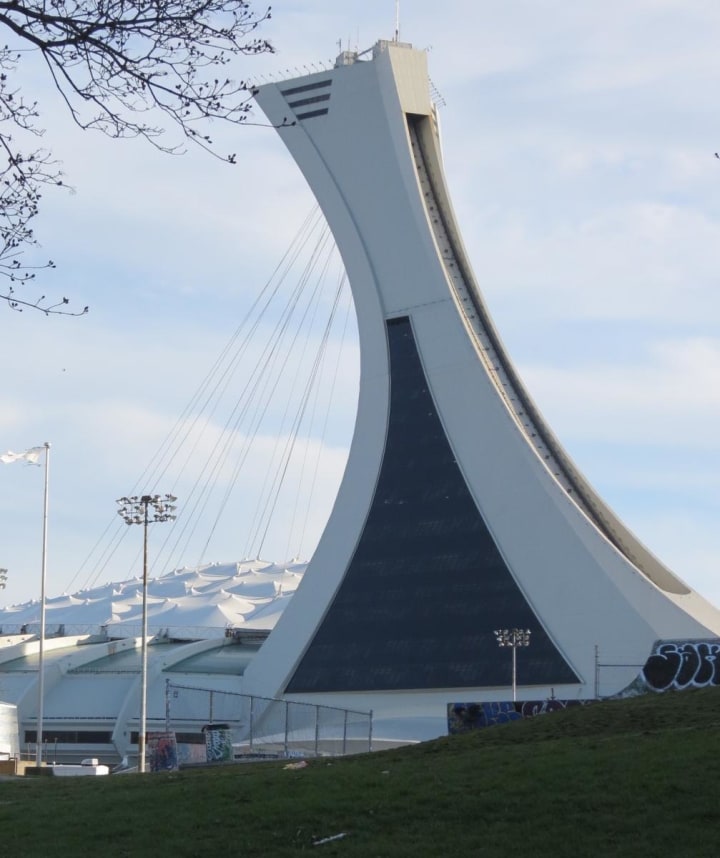
On the other hand, some buildings are purposely built on a slant, such as the Capital Gate Tower in Abu Dhabi. This architectural masterpiece leans at an angle of 18 degrees and features unique shapes and sizes on every floor. Meanwhile, the Montreal Olympic Stadium Tower in Canada leans a whopping 45 degrees and supports most of the weight of the main building's roof. Visitors can take a funicular up to the observatory for breathtaking views.
From survivors to skyscrapers, tilted towers continue to capture our fascination. Whether it's a matter of history, engineering, or design, these buildings prove that even a little tilt can go a long way.
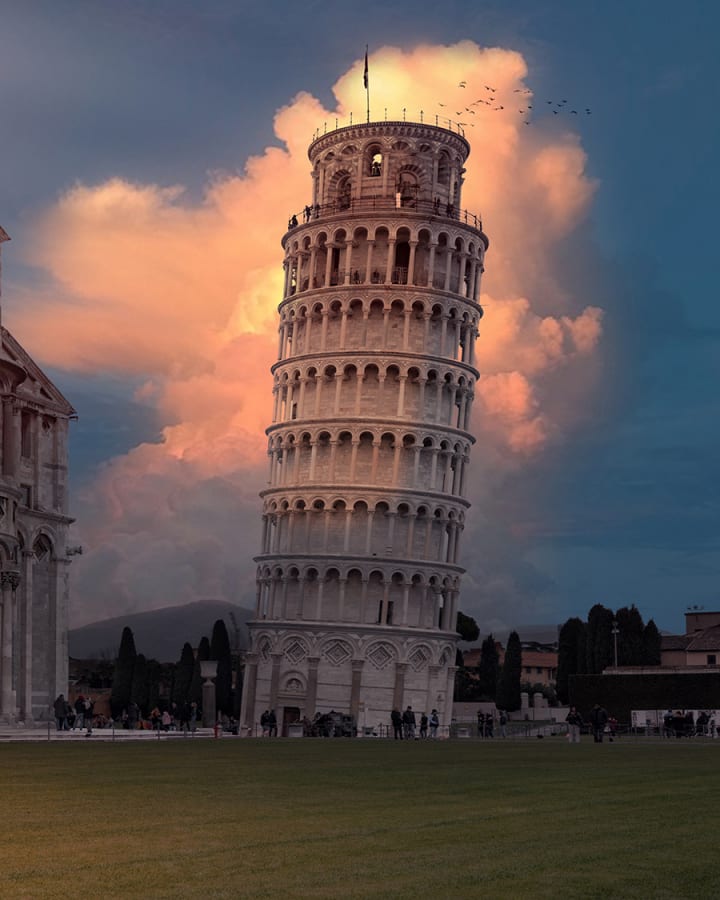
The Fate of the Tower
So, can anyone save the Leaning Tower of Pisa from falling over? The answer is yes, thanks to a series of renovations and modifications that have been made over the centuries. In fact, the tower has been stabilized to the point where it's unlikely to fall anytime soon.
Despite its rocky beginnings, the Leaning Tower of Pisa remains a beloved landmark that attracts millions of visitors every year. So next time you're in Italy, go ahead and give the tower a push for a cool photo. But rest assured that this wonder of medieval architecture is here to stay.
About the Creator
Raza Abbas
I am a content creator and have completed my A-levels and now i am looking for a side hustle to earn some money
Keep reading
More stories from Raza Abbas and writers in Fiction and other communities.
"The Elusive City: Accounts of Sightings with No Solid Evidence to Back Them Up"
Uncovering the Secrets of the Oasis of Zerzura: A Mysterious City Lost in the Sands of Time Get ready to hear about one of the most mysterious and intriguing places in the world: the Oasis of Zerzura. This ancient city has been said to be hidden deep within the Sahara Desert, and the discovery of it could mean unimaginable riches and untold secrets.
By Raza Abbas3 years ago in Fiction


Comments
There are no comments for this story
Be the first to respond and start the conversation.