
The Timeless Appeal of The Godfather: A Cinematic Masterpiece
The ultimate saga of family, ambition, and sacrifice.

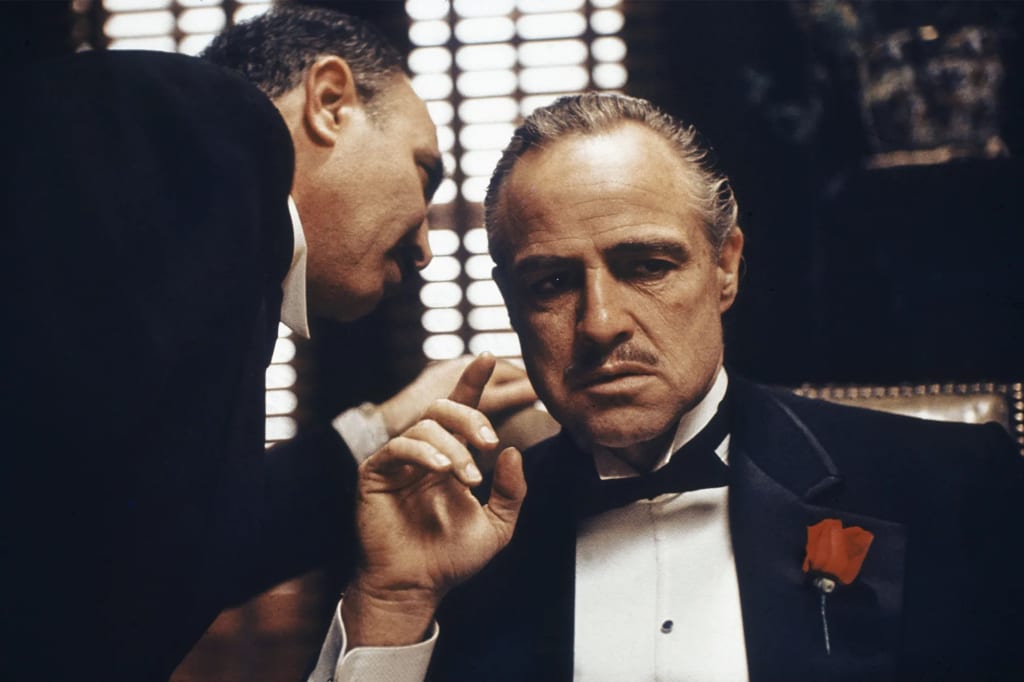
Few films in history have managed to transcend their era and remain as iconic as Francis Ford Coppola's The Godfather (1972). Adapted from Mario Puzo's bestselling novel, this masterpiece is not just a story about organized crime but a deep dive into family, loyalty, and power. With its remarkable storytelling, unforgettable performances, and hauntingly beautiful score, The Godfather continues to captivate audiences decades after its release. Let’s explore its brilliance through three key subtopics.
The Corleone Family: A Portrait of Power and Fragility
At the heart of The Godfather lies the Corleone family, whose saga is both grandiose and intimate. Vito Corleone (played by Marlon Brando), the patriarch, represents the embodiment of calculated authority. His leadership style, rooted in respect and subtle coercion, sets the foundation for the family's success in the criminal underworld. Brando’s iconic performance, punctuated by his raspy voice and gentle mannerisms, portrays Vito as a man of immense power who is deeply protective of his family.
The film artfully contrasts Vito’s reign with the transformation of his youngest son, Michael (Al Pacino). Initially an outsider to the family’s illicit activities, Michael’s journey from a clean-cut war hero to a ruthless mob boss encapsulates the central tragedy of the story. The famous restaurant assassination scene, where Michael takes his first decisive step into his father’s world, is a masterclass in tension and character development.
Despite their power, the Corleones are not invincible. The loss of family members, betrayal by allies, and internal struggles highlight the fragility of their empire. This duality of strength and vulnerability makes the Corleones compelling, reminding viewers that even the most powerful families are not immune to the forces of change and decay.
Themes of Loyalty and Betrayal: The Double-Edged Sword
One of the film’s most profound explorations is the concept of loyalty, which serves as both the glue that binds the Corleone family and the weapon that threatens to tear it apart. Vito’s famous line, “I’m gonna make him an offer he can’t refuse,” underscores the transactional nature of loyalty in the mafia world—an exchange built on favors, debts, and obligations.
However, loyalty in The Godfather is rarely straightforward. It is often intertwined with betrayal, creating a web of complex relationships. The betrayal by Paulie, who conspires against Vito during the assassination attempt, and Carlo, who plays a role in Sonny’s murder, are stark reminders of the dangers that come with misplaced trust. These moments not only drive the plot but also serve as cautionary tales about the cost of disloyalty.
Michael’s ascent to power also redefines loyalty within the family. Unlike his father, who rules with a combination of respect and fear, Michael’s approach leans heavily on ruthless control. His decision to have Fredo, his own brother, killed for betraying the family is a chilling depiction of how absolute power can corrupt the very bonds it seeks to protect.
The Cinematic Brilliance: A Symphony of Visuals and Sound
The Godfather is not merely a narrative triumph but also a technical masterpiece. Coppola’s direction, Gordon Willis’s cinematography, and Nino Rota’s iconic score create an immersive cinematic experience that lingers long after the credits roll.
Willis, often referred to as the “Prince of Darkness” for his use of shadows, employs lighting to convey mood and character depth. The dimly lit interiors of the Corleone home, for instance, evoke a sense of secrecy and foreboding. One of the most memorable visual motifs is the juxtaposition of violence and serenity, as seen in the climactic baptism sequence where Michael consolidates his power through a series of assassinations. The interplay of sacred and profane in this scene underscores the moral complexities of the story.
Nino Rota’s score, particularly the haunting main theme, amplifies the film’s emotional impact. The music not only sets the tone but also becomes an extension of the characters' inner lives. The melancholic strains of the score mirror the film’s themes of loss, ambition, and inevitability, making it an integral part of the storytelling.
Conclusion
The Godfather is much more than a crime saga; it is a timeless exploration of human ambition, morality, and the ties that bind us. Through its rich characters, intricate themes, and unparalleled artistry, the film continues to resonate with audiences across generations. Whether you’re drawn to the tragedy of Michael Corleone’s transformation, the intricate web of loyalty and betrayal, or the sheer cinematic brilliance, The Godfather stands as a testament to the enduring power of storytelling in cinema.
About the Creator
Keep reading
More stories from Willow Writer and writers in Fiction and other communities.
Into the Wild: A Soul-Stirring Journey Beyond Society
In a world obsessed with material possessions and societal expectations, few stories capture the allure of liberation and self-discovery as poignantly as "Into the Wild." This cinematic masterpiece, directed by Sean Penn and based on Jon Krakauer's non-fiction book, chronicles the real-life odyssey of Christopher McCandless, a young man who abandoned his conventional life to embrace the raw, untamed wilderness. The film—part introspective drama, part existential exploration—offers a compelling meditation on freedom, the human spirit, and the cost of chasing one’s dreams.
By Willow Writerabout a year ago in Fiction
Miss Persephone's Manual to a Seemingly Ordinary Life
Miss Persephone was found at the dining table, her blue eyes swollen, her tears arriving and retreating like the tides of the ocean. Earlier that day, her family had visited her in the retirement home where she had lived for eight years. It was her eightieth birthday.
By Imola Tóth4 days ago in Fiction


Comments
There are no comments for this story
Be the first to respond and start the conversation.