
The Silence Between Raindrops
"A Mother, A Daughter, and the Years Between"


In the old yellow house on Maple Street, Eleanor lived alone. The walls whispered in the quiet, not in malice, but in remembrance. Each creak in the floorboards, each sigh of the old windows, held echoes of lives once full and voices now absent.
Outside, spring was pushing through winter’s final resistance, and the garden was just beginning to stir. Crocuses breached the soil like shy promises. Eleanor watched them from her kitchen window, hands wrapped around a chipped mug of tea that had gone cold before she’d ever taken a sip.
She did most things slowly now. With intention, yes, but also a kind of invisible weight. It wasn’t age, though she had plenty of that. It was something else. Something heavier. Something you couldn’t put down or explain without sounding foolish—grief, maybe. Or memory.
Each morning, she fed the cat, turned on the radio to the classical station, and opened the curtains wide, as if sunlight alone could keep the loneliness at bay. She was not a sad woman, but she was a quiet one, and sometimes it was hard to tell the difference.
The neighbors, young families mostly, didn’t know much about her. They waved politely, offered help with groceries, but never stayed long. Eleanor didn’t mind. She liked to think of herself as the last line in a poem—something brief, fading, but essential to the meaning of everything that came before.
Once, the house had been full. There had been a husband—Arthur—and a daughter, Lily. They had laughed in the kitchen, argued in the hallway, danced in the living room. The walls had heard lullabies and music and thunderous joy. But life, as it does, had taken more than it gave back.
Arthur had passed quickly, with little warning. A heart attack while raking leaves. He had always been practical, even in death, sparing her the slow unraveling of sickness. Lily had left in a different way—quietly, painfully, with tears and slammed doors. That was twenty years ago. They hadn’t spoken since.
It was the not-knowing that stung the most. Was she happy? Safe? Did she hate Eleanor, or simply forget her?
There was no grave to visit for a daughter who had only disappeared. Just the photographs, the birthday cards in a shoebox, and the quilt Eleanor still pulled over her lap each night, stitched from Lily’s childhood dresses.
On a rainy Tuesday, the letter came. Thin envelope, unfamiliar handwriting. Eleanor’s hands trembled slightly as she slit it open. Inside, the words were few but heavy.
Dear Eleanor,
I don’t know if you want to hear from me. But I hope you do. I have a daughter now. Her name is June. She asks about her grandmother. I’d like her to meet you. I’d like to see you again.
If you’re willing, we’ll be at the park on Saturday. Near the willow tree. Around noon.
—Lily
The letter sat on the table for days, a paperweight on all the questions Eleanor had learned to stop asking. She picked it up, put it down, reread it until the ink seemed to blur. What did you say after twenty years of silence? What did you wear to a reunion built from absence?
Saturday came with a pale sun and hesitant warmth. Eleanor chose a gray cardigan, soft from years of wear, and tucked the letter into her coat pocket like a map she was too nervous to follow. At the park, the willow stood as it always had—tall, a little wild, its branches low and swaying.
They were already there.
Lily looked older, of course. Her hair held more silver than Eleanor remembered, and her eyes were tired, but familiar. At her side was a girl—no more than six—with wide eyes and a cautious smile.
“Mom,” Lily said, her voice catching like a skipped record.
Eleanor didn’t speak. She simply stepped forward, arms open, and let her daughter fall into them. It wasn’t perfect. It wasn’t the movies. But it was real.
June tugged gently at Eleanor’s sleeve.
“Are you really my grandma?”
Eleanor knelt, her knees protesting. “Yes, sweetheart. I am.”
And with that, something shifted. The weight Eleanor had carried, silent and invisible, seemed to lift. Not entirely—some things never do—but enough to let her breathe deeper.
They sat on the bench beneath the willow. Talked in starts and pauses. Shared sandwiches and stories. Laughed once—maybe twice. It wasn’t about fixing everything. It was about starting again.
That night, Eleanor returned to her quiet house. But it felt different. Lighter. The silence had changed. It was no longer empty, but waiting—like the pause between raindrops.
She picked up the cold mug of tea she’d left that morning and warmed it in the microwave. Then she sat by the window, looking out at the garden, and whispered, “Thank you,” to no one in particular.
And this time, the walls didn’t whisper back. They simply listened.
About the Creator
A Knight of the Seven Kingdoms Review – Small Stakes, Strong Impact
As one of the most celebrated fantasy universes ever created, A Song of Ice and Fire continues to command a loyal global audience. After diving deep into Targaryen history with House of the Dragon, the franchise now pivots to something more intimate. A Knight of the Seven Kingdoms trades dragons and dynastic wars for a grounded, character-driven journey—and the result is surprisingly refreshing.
By Fawad Ahmadabout 9 hours ago in Fiction
A Historic Declaration
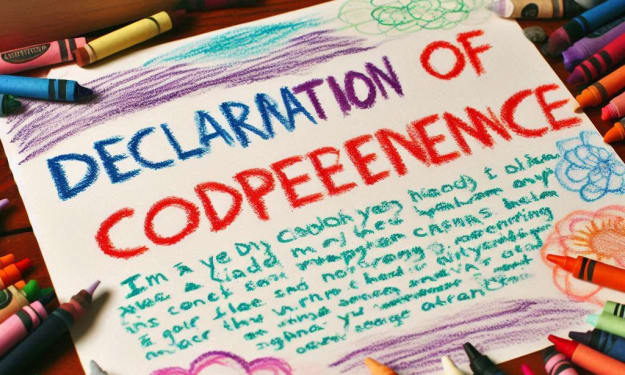
We the People of the Husbands of the United States of America, in Order to form a more perfect Union, and I mean you...with me...establish Justice, insure domestic Tranquility, provide for the common defence, promote the general Welfare, and secure the Blessings of Liberty to ourselves, after Puberty, do ordain and establish this Declaration of Co-Dependence.
By Gerard DiLeo5 days ago in Humans



Comments
There are no comments for this story
Be the first to respond and start the conversation.