
The Silence Algorithm: When Speaking Became a Crime
Speaking not allowed!
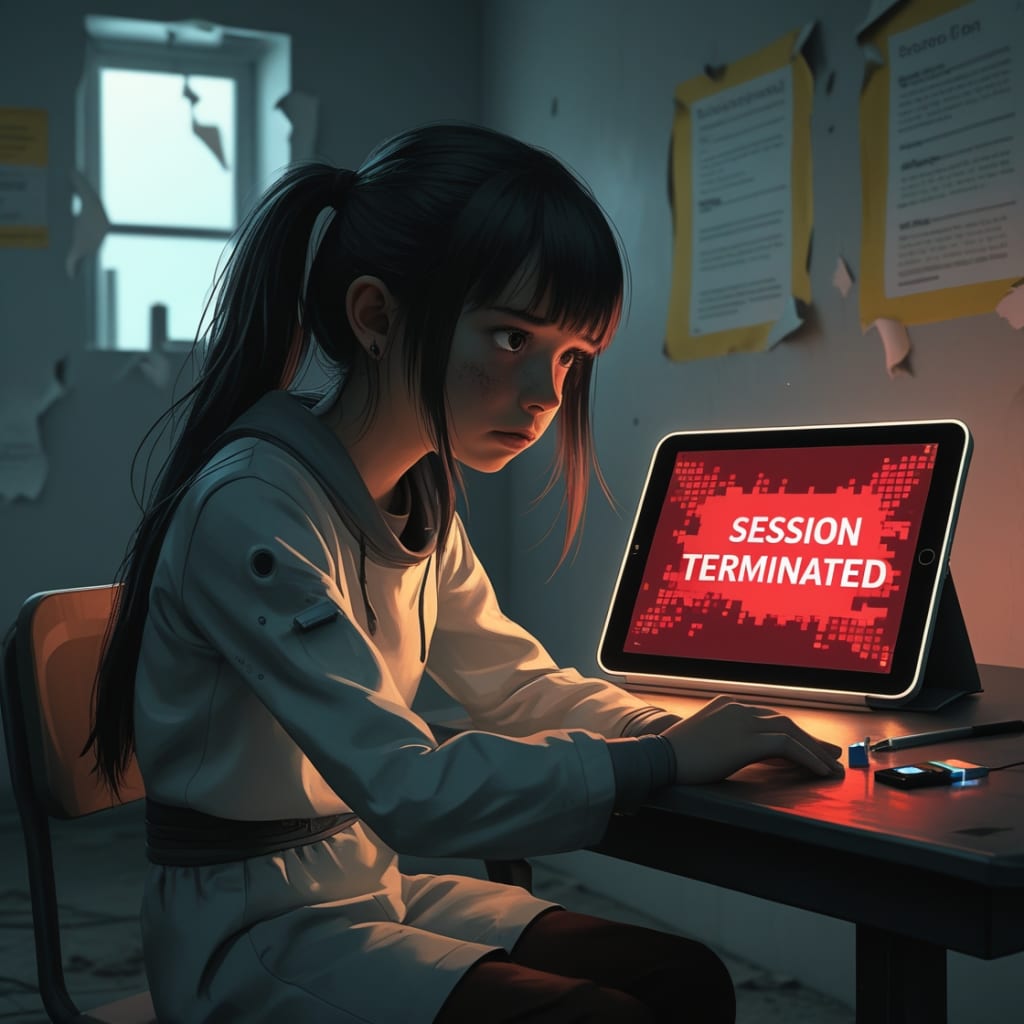
They said it was for our safety.
That was the line they used when The Silence Algorithm rolled out across every digital education platform. It filtered “harmful speech,” “misinformation,” and “emotional volatility.” At first, no one questioned it. Teachers were exhausted, parents overwhelmed, and students… we were already used to being watched.
I was thirteen when it flagged me for the first time.
I’d asked a question—out loud—in a virtual ethics class. “Why did the protests stop after the Learning Rights Act was passed? Didn’t people still disagree with it?”
My screen flickered. Then froze.
A red message: Unverified Historical Reference – Statement Flagged for Review.
Within an hour, my access was suspended. My question was deleted from the transcript. I never got an answer.
I didn’t ask again.
That was three years ago. Now, I’m sixteen. And I speak only when required. I write only what’s safe. I think louder than I talk.
But last week, something changed.
It started with a package—a small, unmarked envelope left at my door. Inside was a flash drive and a note written in careful, slanted handwriting:
“Don’t forget how to ask. —K”
The flash drive was ancient tech, practically illegal now. I waited until midnight, then plugged it into my offline tablet. No network. No surveillance.
The file was a recording.
I recognized the voice instantly. My brother’s.
“Kian, Age 17. Recorded 6 years ago.”
Kian disappeared when I was ten. They said he’d been relocated for “retraining” after violating education protocols. That’s all we were told. We weren’t even allowed to ask.
But here he was—his voice, raw and unfiltered.
“They’ve made silence a virtue,” he said. “They say it’s peace, but it’s really fear dressed in politeness. In our schools, in our homes, even in our minds—we’re learning not to question. That’s not education. That’s programming.”
I felt my breath catch. His voice was shaky, but bold. “I tried to speak up. I asked about funding cuts, disappearing teachers, the ‘voluntary relocations.’ I asked why students were disappearing from class lists. I asked too much. So they erased me.”
Then came static. And then:
“If you’re hearing this, it means you still can. Please—don’t let the algorithm finish its job. Speak. Even if it’s just to whisper.”
I played it three times. Each time, my throat tightened.
Kian wasn’t just trying to warn me—he was trying to wake me.
The next day, in our virtual history class, the teacher asked:
“What event led to the Global Education Restructure in 2098?”
The “correct” answer was a natural disaster. A flood that destroyed hundreds of schools.
But that’s not the whole truth. Kian told me the protests started before the flood. The flood just gave them an excuse.
So I raised my hand.
And I said, “It wasn’t just the flood. People were already marching—because their schools were closing, their teachers were fired, and they were being told to trust machines instead of humans.”
The silence after I spoke was louder than any alarm.
My teacher stared at the screen.
The algorithm didn’t even wait this time. A red box pulsed on my interface: Verbal Misinformation – Session Terminated.
I was kicked out of class.
Later that night, a message appeared in my inbox. Anonymous sender. It read:
“We heard you. You’re not alone. Keep asking.”
There was no signature, but I knew. Somewhere, somehow, Kian was still alive—or at least his words were.
And maybe that’s what they fear most.
Not rebellion.
Not riots.
Just… questions.
Because every question is a crack. And every crack lets in light.
So I write this now in the same way he did—offline, in the dark, afraid. But also hopeful.
If you’re reading this, maybe you’ve been silent too. Maybe you’ve felt the weight of invisible eyes watching your words, measuring your tone. Maybe you’ve started to believe that silence is safer.
But remember this: silence is not safety.
It’s surrender.
They call it The Silence Algorithm.
But we can rewrite it.
With voices.
With questions.
With truth.
—Lina,
Sector A-9, Virtual Learning Zone
Age 16. Still asking.
About the Creator
Why?
“Trina! Over here!” Trina turned her head, and her heart threatened to leap out of her chest when she saw Steven waving his arm in a big, exaggerated motion, with a giant smile on his face. Trina fell in love with her boyfriend all over again as she navigated past the clusters of tables towards him. It had only been a few months since they started dating, but Trina was still very much in the honeymoon phase of courtship. The phase where everything that Steven did for her made her feel like she could fly if she just jumped off a chair. The phase where everything Steven said with that bright smile of his made her feel like she was made out of rainbows and sugar.
By Rebecca Patton6 days ago in Fiction


Comments
There are no comments for this story
Be the first to respond and start the conversation.