


# The Sahara: A Sea of Sand

The Sahara, the world's largest hot desert, is a landscape of endless fascination and extreme contrasts. Covering an area of over 9 million square kilometers, it stretches across much of North Africa, from the Atlantic Ocean to the Red Sea.
## Geography and Climate

The Sahara is not just a sea of sand dunes, known as ergs. It also comprises vast gravel plains (reg), rocky plateaus (hamada), and high mountains (djebel). The highest peak is Jebel Toubkal in the Atlas Mountains, reaching 4,167 meters.
The Sahara's climate is one of the harshest on Earth. With temperatures that can exceed 50 degrees Celsius, it is scorchingly hot during the day. At night, however, temperatures can plummet due to the lack of humidity to hold the heat.
## Flora and Fauna

Despite the harsh conditions, life has found a way to survive in the Sahara. Plant species like the date palm and acacia have adapted to the arid conditions. Animals such as the fennec fox, dromedary camel, and various species of reptiles and rodents have also made the Sahara their home.
## Human Habitation

Human habitation in the Sahara dates back millennia. The ancient Egyptians, for instance, thrived along the Nile River. Today, the Sahara is home to various cultures, including the Berbers and the Tuareg, who have adapted to the desert life over centuries.
## The Sahara's Role in Climate

The Sahara plays a significant role in the world's climate. It affects the Atlantic Meridional Overturning Circulation, a major ocean current system. The dust from the Sahara that gets carried over the Atlantic also contributes to the fertility of the Amazon rainforest.
# The Sahara: A Deeper Dive
## The Sahara's Geological History
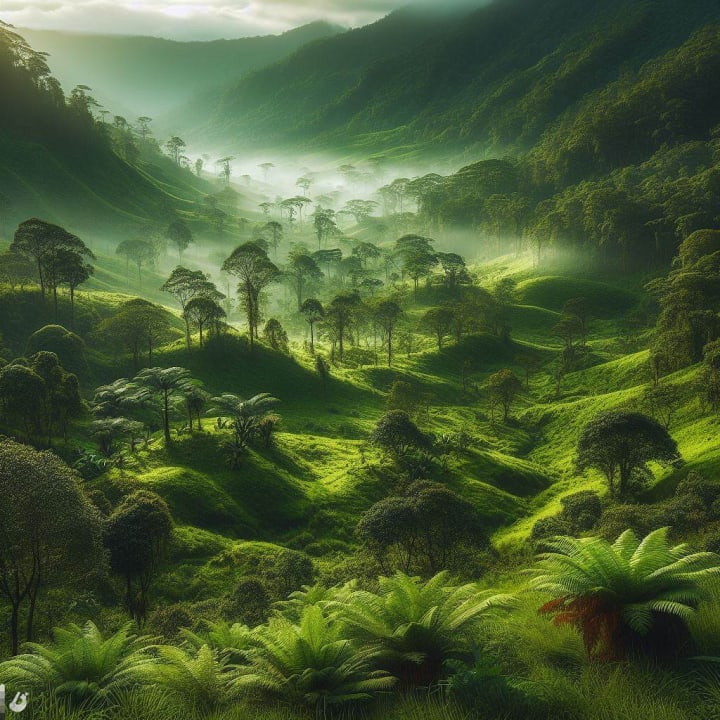
The Sahara has not always been a desert. Around 10,000 years ago, during the Holocene Wet Phase, it was a lush, green landscape teeming with life. This period is evidenced by rock paintings found in areas like the Tassili n'Ajjer in Algeria, depicting vibrant scenes of animals and human life.
## The Sahara's Economic Significance

The Sahara is rich in natural resources. It holds substantial deposits of phosphates, oil, and natural gas, which are vital to global industries. Additionally, the Sahara's vast expanse of sunlight and wind makes it an ideal location for renewable energy production.
## The Trans-Saharan Trade Routes

Historically, the Sahara was a significant hub for trans-Saharan trade routes, where gold, salt, and other goods were transported. These routes facilitated cultural exchange between North Africa and Sub-Saharan Africa.
## The Future of the Sahara

Climate change poses a significant threat to the Sahara. Rising temperatures could make the desert even more inhospitable, affecting the livelihoods of the people who live there. On the other hand, some studies suggest that climate change could also lead to increased rainfall in the Sahara, potentially transforming parts of it back into a green landscape.
# The Sahara: Unveiling More Mysteries
## The Mirage Phenomenon in the Sahara

The Sahara is known for its mirages, a natural phenomenon caused by the refraction of light due to extreme temperature variations. These optical illusions have been a source of both awe and confusion for travelers.
## The Sahara in Literature and Film

The Sahara has been a source of inspiration in literature and film. From Paul Bowles' "The Sheltering Sky" to Michael Ondaatje's "The English Patient", the desert's vastness and mystery have fueled many narratives. It has also been the backdrop for numerous films, including "Lawrence of Arabia" and "The Mummy".
## The Sahara and Space Exploration

Interestingly, the Sahara has links to space exploration. Its dry, rocky landscapes are often used as analogs for Mars in scientific research. Meteorites from Mars have been found in the Sahara, providing valuable insights into the Red Planet.
## The Sahara's Archaeological Significance

The Sahara holds significant archaeological interest. Ancient rock art, tools, and other artifacts have been discovered, shedding light on the people who lived there thousands of years ago when the climate was wetter.
## Conclusion
The Sahara, a place of extreme conditions and stark beauty, continues to captivate us. Its geological history, rich biodiversity, and cultural heritage make it a fascinating subject of study. As we continue to explore and understand this vast desert, we uncover not just the secrets of the Sahara, but also broader insights about our planet and beyond.
About the Creator
J. Revs
> A passionate and dedicated individual, I thrive on challenges and constantly set goals for myself to ensure I'm always striving to achieve my best.
Affection and Healing for Yourself
During the night of the last quarter moon, I gathered my ritual supplies. I carefully handled the chunk of black tourmaline that would protect me from your overall negative and narcissistic energy. I carefully walked the house with my stick of selenite in hand, asking the universe to cleanse our working space.
By Alisha Wilkins ✒️🦋🖋️2 days ago in Fiction


Comments
There are no comments for this story
Be the first to respond and start the conversation.