

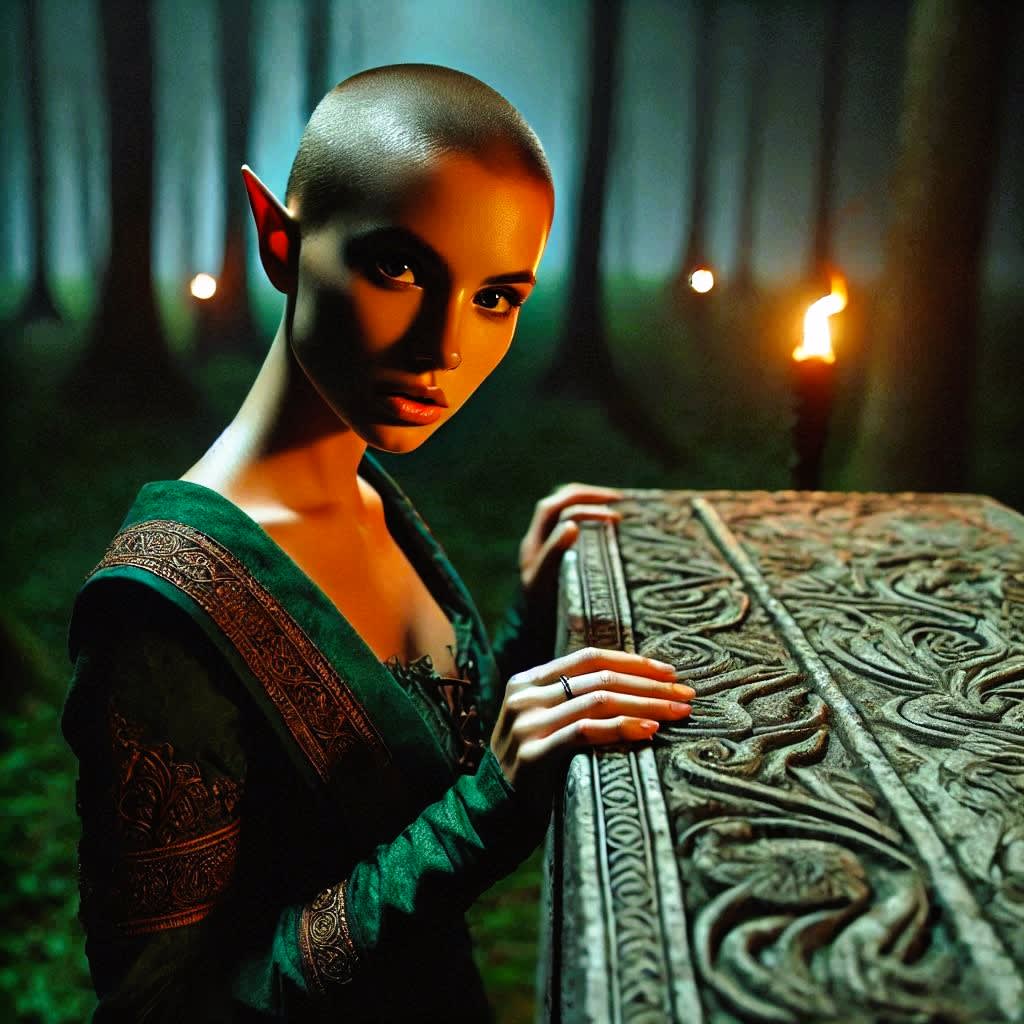
They leave you alone for a long time after you volunteer.
There are sacred, mysterious reasons for this practice. I don’t care to know much about them. The quiet solitude—which I was sternly told to spend in prayer and sincere reflection upon my life, my transgressions, and the forgiveness the gods might grant me—gives you plenty of time to think.
You probably won’t believe me, but I am telling you the truth when I admit that, having thought about the crucial moments in which I could have done something differently, I can’t say I’d change one thing.
“Hubris. What a proud fool!”
That’s the sort of thing you’re thinking at the moment, if you are one of those who made the world (or the part of it that matters most to me and those who share my plight) in such a way as to make me glad to leave it. If you are like me, you will understand. In fact, it is more likely, given where I’ve hidden this, that you are a stranger, a foreigner who found it by chance. I think I’ll write as if you are. You’ll need someone to translate, of course.
Find a gnome. Gnomes translate well because they are burrowers by nature. They are not above living in others’ burrows, either. The know how to get into the dirt and find out how someone else made it comfortable and familiar. Language is the mind’s burrow. Gnomes can live comfortably in someone else’s, and find what’s valuable in it right away. This also makes them excellent burglars, but I digress. I can help you plan a burglary later if you like. I’ve a flair for it, as some of the elders’ wealth attests. Not mine, mind you.
Their wealth. It all belongs to them.
I’ll write as if you are not one of us. That way, you will see what I mean, and anyone who is not a stranger will find out what I really think of my fellow elves. Things I would never say to their faces will be plainly put. This will be great fun either way.
You see, I volunteered for something pretty mad. I knew what I was getting into, but you’re sure to think I’ve many arrows missing from the quiver between my ears. I’ve not lost my wits, I assure you. I’ll explain it as best I can.
I know our ways are strange. They are strange to me. That’s how I knew. I realized that I could use what I did not really understand, to get what I desired most. They would all have to take it for granted that I am sincere. If they don’t, others will question their seriousness, their faith, the ancient stories that they use to justify everything they say and do.
It hit the mark.
When this season began, I decided. We call this season rushka. I understand that others call it "autumn," or "harvest," or something of the sort. Our name for it means “the leaving,” which suits me well. At the end of this season, something happens that we—I mean elves like me—mustn’t ever discuss with anyone who is not one of us. Not even in an innocent chat in a pub with someone who is too drunk to remember, or talking idly with some sorcerer or scholar who is curious about our ways. No one.
After all, there are some wonderful stories out there about us. The elders, the ones who make the important decisions about our lives, whether we like it or not, find them useful. It wouldn’t do to have the truth come out. Everyone who learned the truth would see us with fresh, horrified eyes. The lid stays on the pot, while they cook their plans.
I’m sure you have heard these stories. Most of them are woven from truth and falsehood, like the hair of two heads in one braid. It is true that elves seldom die of age or illness. Someone has to want us to die pretty badly, or we don’t. That is, I’ve not seen or heard or read about any of us just lying down one day and never getting up again.
There are many rumors about why this is true. When they decide that we are no longer children, they mark their decision with a special ritual. The name for elves like me in our tongue is vaymo. You probably call us women, or disparagingly, she-elves. The elders say that vaymo is an ancient and honorable name that means “beloved.” A little reading of the right, dusty tomes shows that it actually means something closer to “good servant.” Mere words contain treasure, if you know how to open them.
After we bleed for the first time, we are deemed worthy of ritual induction into the ranks of adults. The last part of the ritual involves an intoxicating drink (for you, not them) and some strange talking and gesturing, and then they tell you.
As soon as they told me, I saw a new path.
I’m quite sick of it, you see. Being an elf, I mean. It is not at all how it seems from outside. Yes, we are blessed in many ways. But when fools make decisions about who are and how you ought to be that kind of elf and how much freedom you have, whether walking around or in your own head, things do not go well. The funny thing is that they left a door open, thinking it leads somewhere it probably doesn’t. I don’t much care. I just want out.
And now, they are about to let me go, and thank me for leaving! It will probably hurt quite a lot, at first. So does life, so that makes sense. As I understand it, after I’ve had plenty of time alone, there will be a ritual bath, and I’ll be anointed with odd substances that smell rotten or best forgotten. Then I’ll have to put on an elaborate, lovely robe, and lie there for a while as they gesture and mumble.
All the gesturing and mumbling is just a pantomime based on events no one can remember, despite the fact that we so seldom die compared to outsiders. That makes me wonder if the events were real. That’s dangerous thinking, according to the elders. Once again, it is hard to be told what to do by fools.
I don’t mean to say that they are stupid. They can be terribly clever. The problem is that they are terribly clever for the sake of keeping things going exactly as they have always gone. They keep us on a path, without letting us see it as a sparrow might. Seen from above, it eats its own tail. But we are not supposed to look at it from on high. That is the province of the gods.
I am a female elf. The elders insist that I must be desperate to have many offspring. Being a mother is one of the roles I was born to play, according to them. I like messing with the minds of our young, for sport, but I have never wanted any of my own. I think you ought to know what you’re doing and why before you ask an innocent to join in.
That did not please my parents, or any of the men who were eager to show me what I really want. I got into plenty of trouble. I was beaten. I was never violated in other ways, though I was close a few times, because that is alright in the minds of some. To treat a fellow elf like a bow or a sword. Just a thing to be used as you like. Bows never refuse to hurt anyone, nor do they make a fuss when they break. That may be why the elders, and the gods, are so fond of them. A tool, a weapon, mustn’t have thoughts or feelings about what is done with it. What would get done, if a bow had a squeamish conscience?
I did like studying, though. If the world as it is turns out to be rather awful, stories about how it used to be, or how it might be different, can get a grip on you. My masters were always puzzled when I asked them for more books. They told me that ordinary young elves would rather do things worthy of being written about than read about the deeds of others. I tried to tell them that studying is something one does, but they didn’t seem to understand. They gave me the books.
They left me alone with the books for a while, but then the prodding began. My mother wanted me to do as she had done, and my father thought she was right, though he often did what she wished with the uneasy, skeptical look of a bear made to dance at a fair. His heart wasn’t in it, but my mother’s contentment was the only guarantor of his.
They couldn’t understand why I did not want to put my books away and find a husband and make more elves with him. I showed no interest in hunting or making war or weaving or sowing or washing or cooking. I did as I was bid, but without passion or conviction. They liked my obedience, but not my attitude.
When my lessons were over, my masters pressed me to teach children. When I told them that I found most children sloppy and obtuse, I was reprimanded and beaten. Then they asked if I might be persuaded to study what they call taikla, which you probably call “magic” or “witchcraft” or something of the sort. That did fascinate me for a while, but after I had done some reading and practiced a little, they gave me a new master. He was forever shepherding me toward the parts of the books devoted to using the elements, or the spirits of the dead, or beasts and birds and insects, or the very stuff of space and time to harm our enemies and protect us and our friends.
Elves have learned to do all kinds of amazing things in this realm. I found all of it boring, which shocked and angered my new master. When we argued, he looked at me in a way I found familiar. As I told you before, I’ve had some close calls. A knee, driven into the source of the misguided appetite, was all it took. Doubled over and gasping, he shouted at me to seek out the paraja. He must have thought I was mad. Many men do, when you refuse them.
“Nurse, midwife, apothecary,” she taught me all of these names for her and her work in other tongues. She taught me what wisdom is, and how it differs from mere knowledge. You can know how to make or wield a bow. Knowing why those things are worthwhile, and the best reasons to do them: that gets closer to wisdom. But real wisdom is knowing the limits of your knowledge. She taught me that all of her arts could mend a bone or heal a wound or drive out one of the few illnesses that can make the life of an elf ugly and bitter, but she told me always to respect the body and acknowledge that it knows itself better than we do. She was never afraid to admit, when someone asked her a desperate, sweaty question late at night, that the answer was beyond her. I treated my parents and the elders with respect because I was told to do so. The paraja, I treated with respect because my heart gave me no choice.
I became a sort of apprentice to her. One day, a very old elf came to see her. As I said, we seldom die, but we do age, though much less rapidly than other forms of life. I have seen two hundred rushkas come and go, and I am young as compared to most elves. But the visitor that day had seen almost a thousand seasons blossom and wither. His body was still mobile and active, but his mind had begun to rust like an old knife. I told him my name, which is Tikko, a dozen times. He forgot many times, and would call me Myilla instead, because he caught me smirking once at something he had said. He had various, minor ailments that the paraja helped him with: hemorrhoids, gout, aches and pains. Why we like having bodies so much, I don't know.
One night, I overheard them talking. I was lying in my bed in the attic of the house of healing where she plied her trade, and their words rose up to me like steam from a pot. The old elf was trying to persuade the paraja to simply let him die. He was weary of life. His beloved had been slain in battle, most of his old friends had gone to explore the world beyond our borders, and he was tired of being himself, especially given the slow decay of his mind. I was astonished. I had never heard any elf broach the subject. It seemed frightening, absurd!
Then I realized that I felt exactly the same way, though I am young and healthy and have never had a love to lose.
The paraja said some soothing, encouraging things to the old elf. She offered him tinctures that could ease his discomfort and suggested books and plays and pieces of music he might enjoy. She even went so far as to suggest that he might go to the Temple of Hyväilä for comfort. You see, Hyväilä is our goddess of love and beauty. Her priestesses sometimes offer certain…comforts to the faithful, usually in exchange for some donation to their order. You get the gist, I’m sure.
But the old elf was determined. So, the paraja told him that rushka was coming, and that he ought to volunteer. The elders frown upon harming oneself, she reminded him. But the gods never refuse a sincere and devout sacrifice.
That sorted things out for me. The elders say that the secret of our laughably long lives is an ancient sacrifice, made to the gods by one of our holy and venerated ancestors, Orja. You probably have heroes of your own, who do and say the sort of thing beings like you are supposed, ideally, to do and say. Orja, so the story goes, grew weary of watching others grow old and sick and die. He offered himself to the gods, and asked that they ease and prolong the lives of elves in return. The gods accepted his sacrifice, and granted his wish in return. This much I had learned when I was inducted into the preening, obedient ranks of the vaymo.
What I did not know until the old elf asked my mistress for aid is that the sacrifice of Orja is echoed by a ritual, which is repeated every time the orange leaves of rushka appear to confirm that everything must fall. You know, it has just occurred to me that the difference between the rituals and customs and prayers and sacrifices of the elders, and real taikla, is like the difference between acting like someone and being that person. It’s holy theater, but sometimes, the blood is not fake.
I put the corner of my blanket into my mouth to keep from laughing with delight, as I knew that the old elf and my kind mistress, the paraja, would be angry if they knew I had been listening. Like a mouse being batted about for sport by a cruel cat, I spied a little hole that night that would grant me liberty.
I volunteered this time. I had to be cunning. I answered their questions just the right way. I did not protest when they shaved my head and said strange things and gestured. I mouthed the prayers and performed the rites. Yesterday, we had a somber walk around the old stone altar where it will happen. I saw the antique sword and the bowl they will use to collect what it frees.
Soon now, they will come for me, so I had better stop writing. I hope my story will show you that I am not mad. Instead, I am tired of being an elf. Helping others to bear it and reading were my favorite parts.
But I know it is all just a way of making more elves, and convincing them that they ought to obey the elders and say and do and think the right things, until their minds decay, or an arrow or a sword or some spell ends them. In fact, the circle closes in every case. Bakers need mouths to feed, and mouths need bakers and their bread. You know what all of that bread eventually becomes.
Come to think of it, I wonder if the elders want everyone to obediently play along because, if they don’t, the whole play will dissolve. No actors, no audience, no need for them to be dramaturges or directors. Just an empty stage.
I am glad the theater has an exit. I’m not even sure that the gods exist, but this way, I see two alternatives: either there will be nothing, or there will be something other than this, and it might include gods. I don’t know, but I might find out!
Perhaps, if they exist, they have enjoyed my clever ruse, and will tell me as much. I hope you have enjoyed reading about it. I will step out of the circle. I might even see it from on high. If I have the chance, I’ll let you know.
About the Creator
D. J. Reddall
I write because my time is limited and my imagination is not.
Keep reading
More stories from D. J. Reddall and writers in Fiction and other communities.
The Elixir of Erasure
The river ran backwards on the day the Queen vanished. I was delighted. I was sure the elixir would fail, that some courageous, charming hero would intervene to rescue her at the last moment and skewer me with a shining blade. Decades of assiduous study and practice would have been for naught. All of my planning and scheming and careful manipulation of each source of ingredients, from the snotty stable boy to the gruff, clumsily shaved keeper of the inn, to the lugubrious ambassador from Obstinatia and the senile, jabbering High Priest of Huronia: my whole web of contacts and conspirators could have dissolved like a cube of sugar in a cascade of emerald absinthe.
By D. J. Reddallabout a year ago in Fiction
Miss Persephone's Manual to a Seemingly Ordinary Life
Miss Persephone was found at the dining table, her blue eyes swollen, her tears arriving and retreating like the tides of the ocean. Earlier that day, her family had visited her in the retirement home where she had lived for eight years. It was her eightieth birthday.
By Imola Tótha day ago in Fiction


Comments (6)
This is great, D.J. The voice was strong and wise and that of a person (elf) who know what they wanted and what they didn't. Well done.
Tikko's disillusionment with the expectations placed on her, especially the pressure to marry and bear children. This was a fantastic piece, DJ! 💌🌟
Wow, this was such a cool read! Tikko’s voice is sharp and kinda sarcastic but also really relatable. I love how she questions everything and finds a way out of the life she never wanted. The whole “life is just a play” idea really stuck with me. It’s deep but also kinda funny in a dark way. The little details about elven culture and her rebellious streak made it feel so real. Honestly, I was hooked the whole time. Great job!
Heyo✨ Let's do a teamwork I like your stories and you gonna like mine 🫶🏻♥️
"skeptical look of a bear made to dance at a fair" Hahahahahahaha that made me laugh so much! Also, I related so hard with Tikko because I too have no desire to have a husband or kids. And I'm also so tired of life. Can I volunteer to be sacrificed too hehehehehe. Loved your story!
Great story! Good work